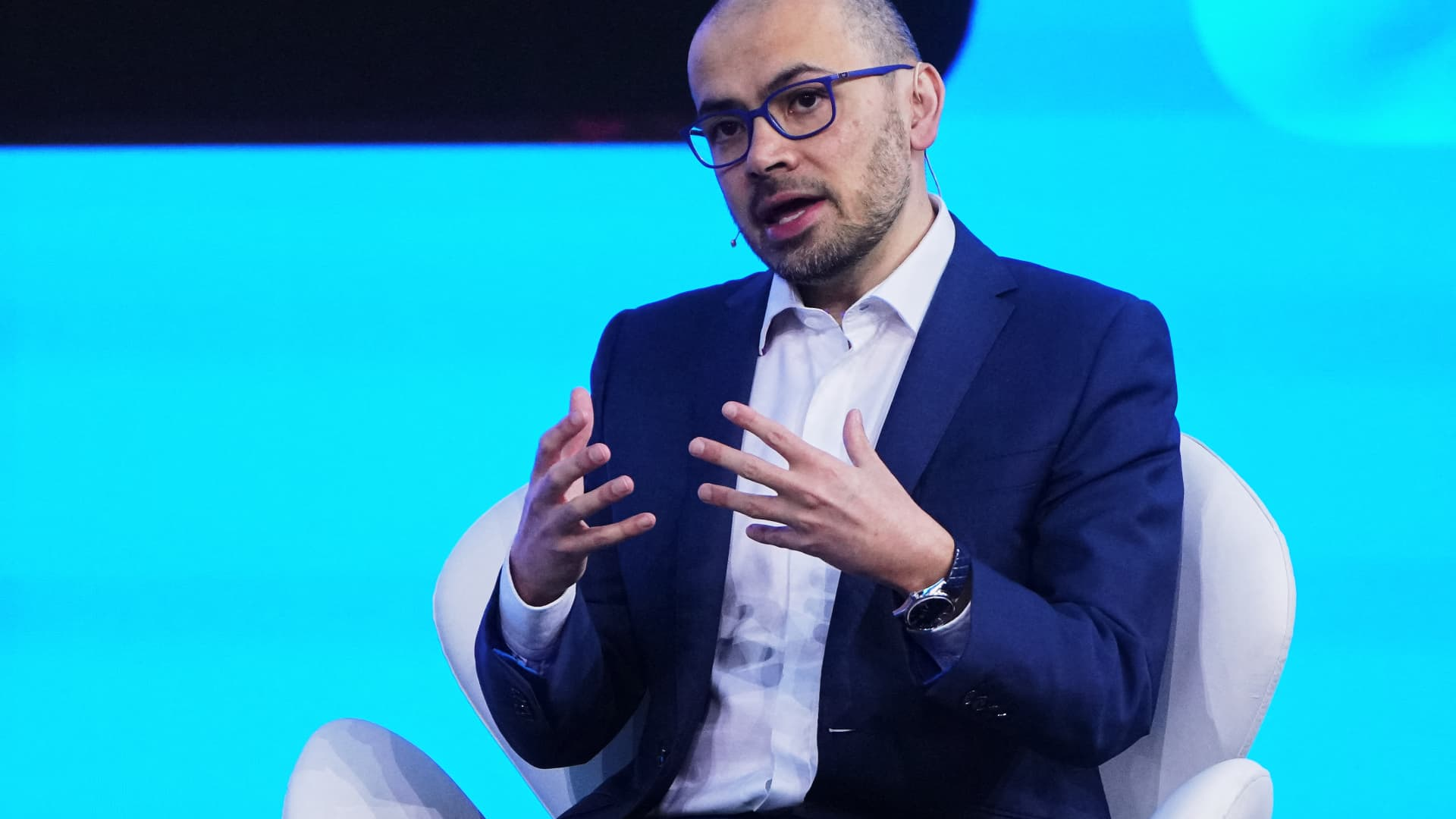
The CEO of Google DeepMind has warned that advanced artificial intelligence systems pose urgent risks, urging stronger safety safeguards and international coordination.
Artificial intelligence leaders are increasingly sounding caution alongside optimism.
The CEO of Google DeepMind has warned of “urgent” risks associated with advanced AI systems, emphasizing the need for stronger safeguards as models grow more capable. The remarks reflect mounting concern within the industry that progress in frontier AI may outpace governance mechanisms.
The warning comes amid rapid scaling of large language models and multimodal AI systems capable of complex reasoning tasks.
Escalating capability, escalating responsibility
Frontier AI models have advanced in:
- Autonomous problem-solving
- Code generation
- Scientific reasoning
- Multimodal understanding
As systems approach higher levels of generalization, researchers worry about unintended consequences, including misuse, disinformation amplification, and loss of human oversight.
DeepMind has historically positioned itself at the forefront of both AI breakthroughs and safety research.
Safety research versus commercial deployment
Technology firms face dual incentives:
- Accelerate model capability
- Ensure alignment and safety
Balancing innovation speed with precaution has become a central tension in the AI race.
Industry leaders have called for:
- Red-teaming exercises
- Model capability thresholds
- International standards
- Transparent reporting of risks
The DeepMind CEO’s comments reinforce calls for global governance structures.
Regulatory momentum
Governments in the United States, European Union, and parts of Asia are advancing AI regulations.
The EU AI Act, executive orders in the U.S., and voluntary commitments among AI labs illustrate growing political engagement.
However, regulatory frameworks often lag behind technical progress.
Calls for international coordination suggest concern that fragmented rules may create enforcement gaps.
Competitive dynamics complicate caution

AI development is intensely competitive.
Companies racing to release increasingly powerful models may face market pressure to prioritize speed.
Warnings from industry executives highlight recognition that unchecked capability scaling carries systemic risk.
Yet competitive incentives remain strong.
The AGI horizon debate
Discussions of advanced AI frequently intersect with debates about artificial general intelligence (AGI).
While timelines remain uncertain, leaders caution that systems approaching general reasoning capabilities could introduce novel risks.
The DeepMind CEO’s framing of urgency suggests the conversation is shifting from hypothetical to practical preparation.
Industry self-regulation under scrutiny
AI companies have introduced internal safety teams and alignment research divisions.
Critics argue that self-regulation alone may be insufficient.
Supporters contend that technical expertise resides primarily within AI labs themselves.
The tension between innovation autonomy and public oversight remains unresolved.
A strategic signal
Public warnings from top AI executives serve multiple purposes:
- Alert policymakers
- Shape regulatory narratives
- Signal corporate responsibility
- Manage public expectations
The urgency language underscores that advanced AI is no longer treated as distant speculation.
It is a present governance challenge.
Whether global coordination can keep pace with technical acceleration remains uncertain.
But the message from DeepMind’s leadership is clear: capability growth must be matched with safety infrastructure.
In the AI era, caution and ambition are advancing in parallel.