
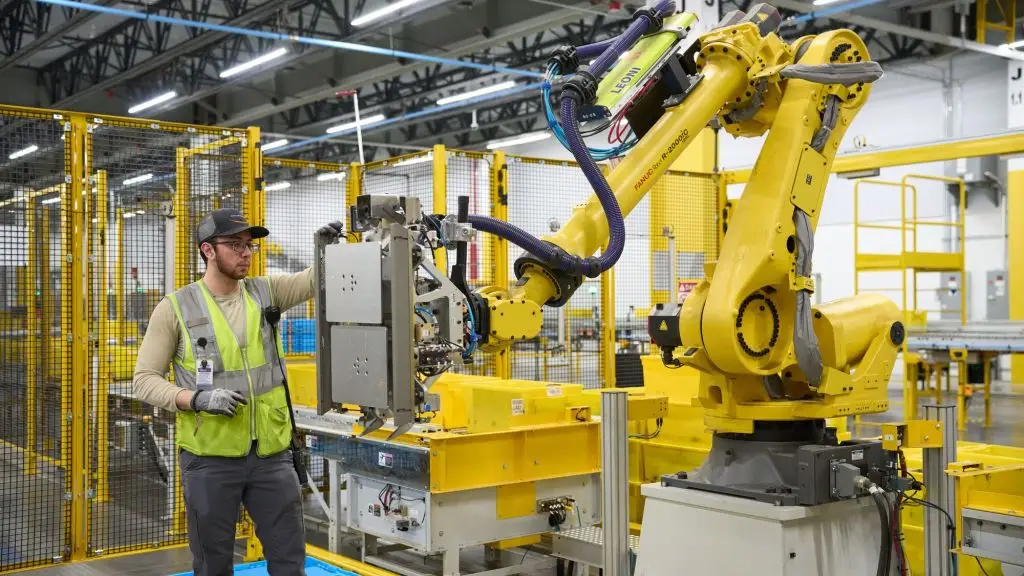
Amazon has halted its Blue Jay robotics project less than six months after initiating development, according to reports. The decision reflects the company’s ongoing reassessment of research and development priorities within its automation portfolio.
Amazon has been a pioneer in warehouse robotics, integrating autonomous systems across fulfillment centers globally.
Strategic reprioritization
Large technology companies frequently initiate experimental projects to explore new automation efficiencies.
However, rapid halts often indicate:
- Cost-benefit reassessments
- Overlapping internal initiatives
- Shifts in capital allocation
- Technical feasibility constraints
In capital-intensive robotics, early termination can limit sunk costs.
Amazon’s robotics footprint
Amazon’s logistics network relies heavily on robotics for:
- Inventory transport
- Sorting
- Packaging assistance
- Route optimization
The company has invested heavily in automation to manage rising fulfillment volumes and labor challenges.
Blue Jay’s discontinuation suggests the initiative did not align with immediate strategic priorities.
Broader robotics landscape
Warehouse robotics remains a competitive field, with startups and established players innovating in:
- Autonomous mobile robots (AMRs)
- AI-driven picking systems
- Collaborative robotics (cobots)
As AI capabilities improve, robotics projects must demonstrate tangible efficiency gains.
Capital discipline in Big Tech
Tech companies have increasingly emphasized operational discipline amid macroeconomic shifts.
Even R&D-heavy firms are scrutinizing experimental spending.
Halting projects early can signal tighter investment frameworks.
Innovation risk calculus

Robotics development entails:
- Hardware prototyping costs
- Safety compliance testing
- Deployment logistics
- Workforce integration challenges
Not all initiatives reach commercial viability.
Amazon’s decision underscores the inherent experimentation risk within industrial innovation.
Competitive implications
While one project ends, Amazon continues broader automation efforts.
The company’s scale allows parallel experimentation.
Competitors may interpret the halt as either retrenchment or strategic focus.
Structural takeaway
Automation remains central to Amazon’s long-term efficiency model.
However, innovation pipelines are iterative.
Projects are launched, tested, and sometimes discontinued.
Blue Jay’s brief lifespan highlights the rapid evaluation cycles within large tech R&D ecosystems.
In automation, ambition must be matched by measurable returns.
And even industry leaders recalibrate when projections fall short.



