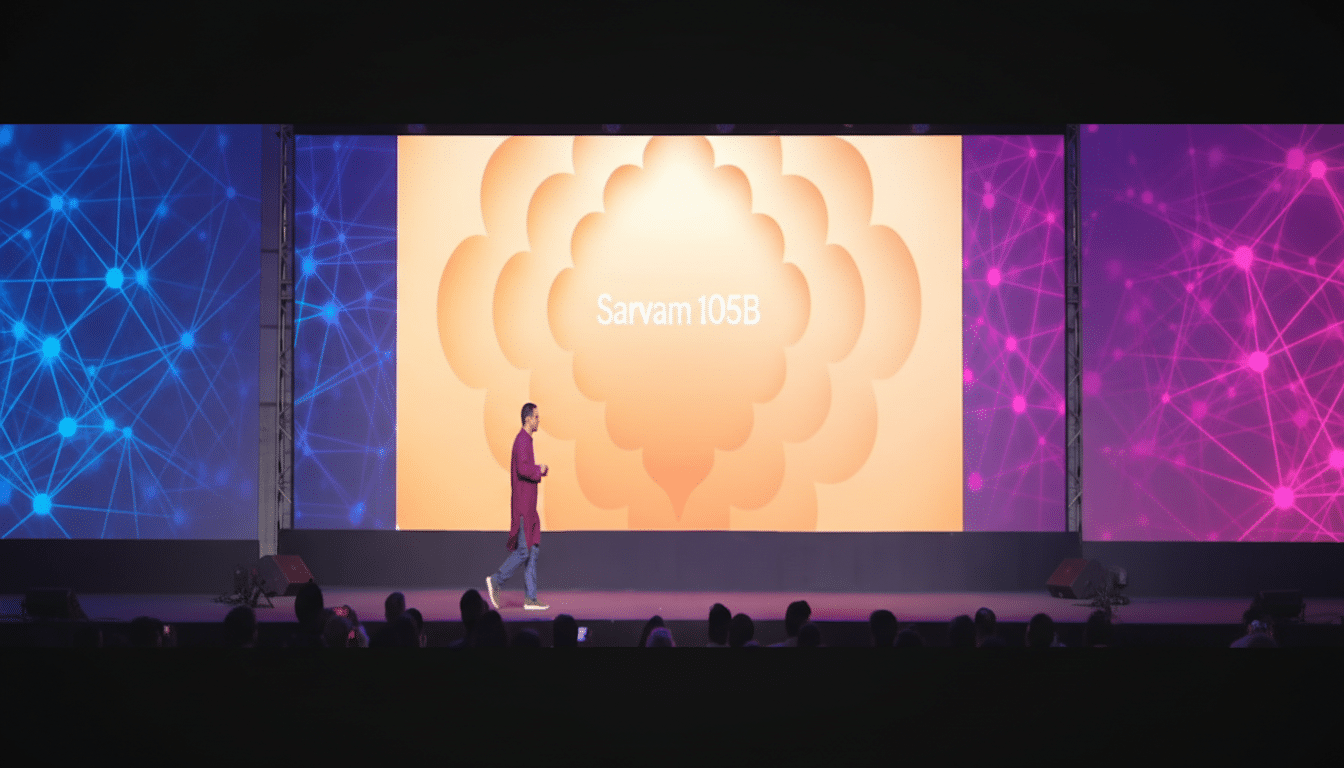
Sarvam AI has released new AI models as part of a broader strategy to back open-source development, aiming to strengthen India’s AI ecosystem and multilingual capabilities.
India’s AI ambitions increasingly hinge on ecosystem participation rather than closed development silos.
Sarvam AI has introduced a new set of models that double down on the viability of open-source artificial intelligence. The move reflects a strategic bet that collaborative model development can accelerate adoption, particularly in multilingual and region-specific use cases.
As global AI leaders pursue proprietary model advantages, Sarvam appears to be positioning itself within a more open framework.
Open-source as ecosystem strategy
Open-source AI models allow developers to:
- Inspect and modify model weights
- Fine-tune systems for niche applications
- Deploy locally without vendor lock-in
- Build derivative commercial tools
For emerging markets like India, open models can reduce dependence on foreign proprietary systems.
Sarvam’s strategy suggests that localized adaptation may prove more valuable than raw parameter scale.
Multilingual differentiation
India’s linguistic diversity creates technical challenges often underrepresented in global AI development.
Open-source models facilitate:
- Community-driven fine-tuning
- Dataset contributions from regional contributors
- Rapid experimentation across dialects
By releasing models openly, Sarvam invites broader participation from researchers and startups.
This approach aligns with national objectives around digital inclusion and sovereign AI development.
Competitive landscape
The open-source AI ecosystem includes contributions from global labs and independent communities.
However, localized models tailored to Indian languages and contexts remain relatively underdeveloped.
Sarvam’s bet appears to rest on first-mover advantage in India-centric open AI tooling.
In contrast, closed models often prioritize enterprise monetization over ecosystem flexibility.
Infrastructure considerations

Open-source models still require compute infrastructure.
Adoption depends on:
- GPU availability
- Cloud hosting affordability
- Developer tooling
- API deployment frameworks
India’s expanding AI infrastructure ambitions may indirectly support such initiatives.
Business model implications
Open-source strategies must balance accessibility with revenue sustainability.
Companies often monetize through:
- Managed hosting services
- Enterprise customization
- Support contracts
- Verticalized AI solutions
Sarvam’s long-term success will depend on converting ecosystem traction into durable revenue streams.
A strategic divergence
The AI market is splitting between proprietary frontier labs and open collaborative ecosystems.
Sarvam’s release signals confidence that openness can drive innovation in markets where localization is critical.
For India, the open-source route may accelerate grassroots experimentation and SME adoption.
In global AI competition, openness can serve as leverage — particularly when addressing diverse linguistic and regulatory environments.
Sarvam’s move suggests that India’s AI playbook may differ from Silicon Valley’s.
Whether the strategy scales commercially will determine its long-term impact.
But the direction is clear: in India’s AI ecosystem, open may be the strategic edge.