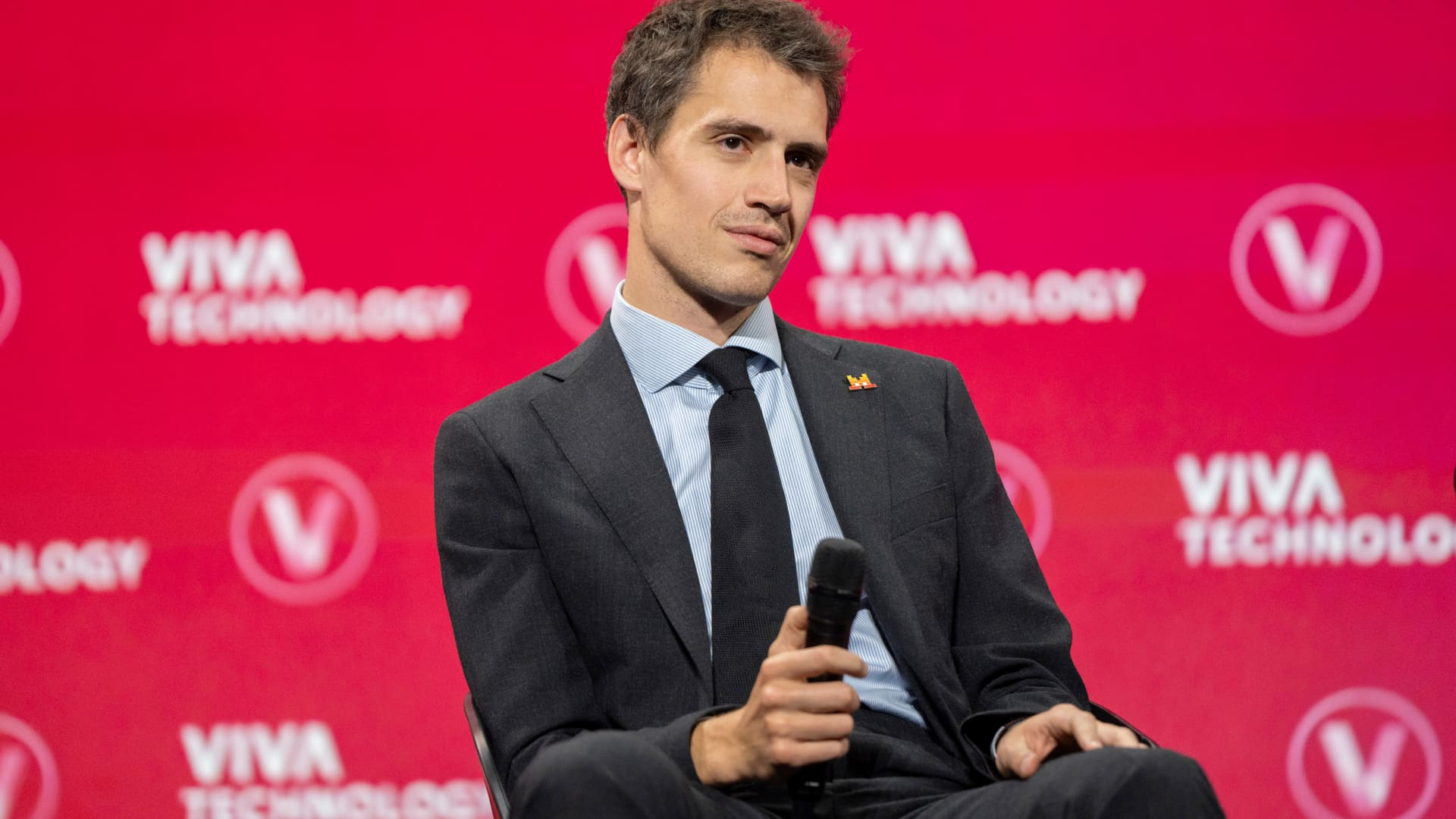
That was the core message from the CEO of Mistral, who warned that increasing concentration of power among a small number of dominant players could create structural risks for the global AI ecosystem.
His comments arrive at a pivotal moment. The generative AI market is rapidly consolidating around companies that control three critical layers: large-scale compute infrastructure, proprietary foundation models, and global distribution platforms. Together, those layers form the backbone of modern AI deployment.
The Infrastructure Bottleneck
At the center of the concentration debate is compute.
Training advanced foundation models requires massive GPU clusters and access to specialized semiconductor supply chains. A limited number of cloud providers and chip manufacturers dominate this infrastructure, creating high barriers to entry for startups and independent labs.
For emerging AI companies, access to compute has become as strategic as access to capital.
Mistral’s CEO Flags Competitive Risks as AI Power Consolidates CEO’s warning reflects a broader European concern: that AI innovation could become structurally dependent on a small number of U.S.-based hyperscalers and chipmakers, limiting regional autonomy.
Distribution Power and Platform Leverage
Beyond compute, distribution channels also shape market power.
Large technology platforms can integrate proprietary AI models directly into search engines, productivity tools, developer ecosystems, and operating systems. That integration provides immediate scale and user access.
Startups, by contrast, often rely on API partnerships or enterprise sales cycles, which can limit speed and bargaining power.
For European AI firms like Mistral, the challenge is not just building competitive models — it is ensuring those models reach global users without being structurally dependent on competitors.
Policy Context in Europe
The warning also intersects with regulatory developments.
The European Union has advanced comprehensive AI legislation in recent years, positioning itself as a global regulatory leader. At the same time, policymakers have expressed concern about digital market concentration in cloud infrastructure and platform services.
While Mistral’s CEO did not frame his remarks as a direct policy appeal, the timing aligns with ongoing European debates about digital sovereignty and technological independence.
For regulators, the question is whether existing competition frameworks are sufficient for foundation model markets — where scale advantages compound rapidly.
A Startup Perspective

Unlike established Big Tech companies, Mistral operates as a high-growth startup seeking to compete in foundation models.
Its business model centers on building open and semi-open large language models intended to offer alternatives to proprietary systems. That positioning makes market openness a strategic necessity.
From a startup standpoint, concentration can affect:
- Access to GPUs and compute credits
- Cloud pricing leverage
- Enterprise distribution partnerships
- Data acquisition pipelines
In concentrated markets, incumbents can bundle services across layers, making competition more complex.
Global Implications
The concentration trend is not confined to Europe.
In the United States, policymakers have also scrutinized AI partnerships between model developers and cloud providers. Meanwhile, governments in Asia are investing heavily in domestic AI infrastructure to reduce dependency.
The AI market is increasingly defined by scale economics: more data, more compute, more users. Without intervention or structural shifts, those dynamics can entrench incumbents.
For investors, the debate introduces uncertainty. While concentrated markets may produce stable leaders, they can also limit long-term innovation diversity.
Looking Ahead
The generative AI boom is still in its early stages. Market structures are not yet fixed.
However, if infrastructure and distribution layers continue consolidating, startup pathways could narrow significantly.
For Mistral and other independent AI firms, maintaining competitive plurality is not just ideological — it is existential.
The coming years will likely test whether the AI ecosystem evolves as an open innovation network or hardens into a vertically integrated oligopoly.