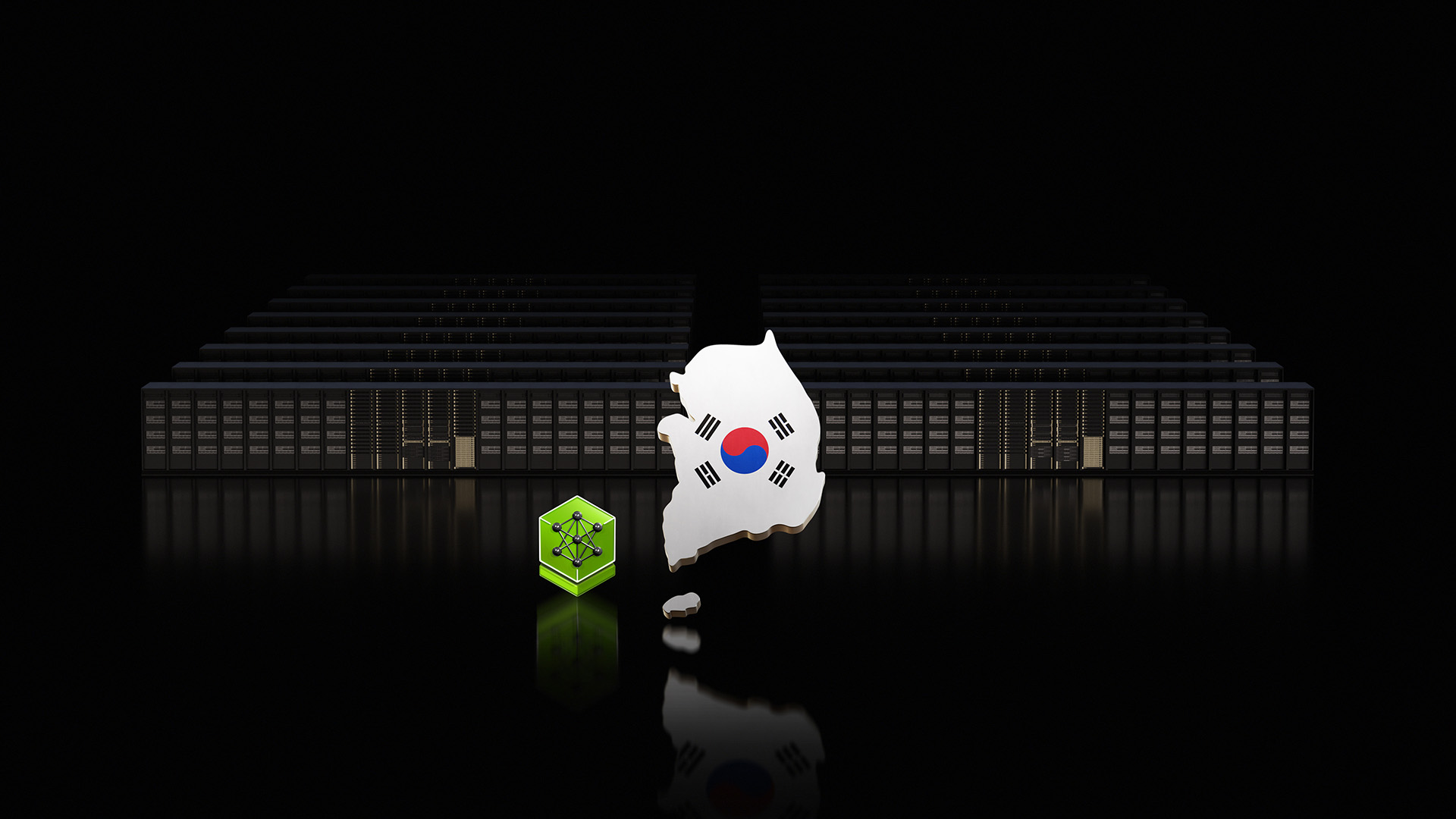
South Korea is moving to roll out 10,000 GPUs from Nvidia to accelerate domestic AI research and enterprise adoption. The large-scale deployment signals Seoul’s intent to secure the infrastructure required for next-generation artificial intelligence systems.
As global competition intensifies, access to advanced GPUs has become as strategically important as talent and capital.
Closing the Compute Gap
Training advanced AI models requires large clusters of high-performance accelerators.
Countries without sufficient domestic compute capacity often rely on foreign cloud providers, potentially limiting control over data governance and research direction.
By expanding GPU availability within national infrastructure, South Korea aims to:
- Support university research labs
- Enable startup experimentation
- Strengthen enterprise AI deployments
- Reduce dependency on overseas compute resources
The initiative reflects a broader recognition that AI sovereignty depends on hardware access.
Strategic Timing in the AI Race for GPUs
The global race to secure GPUs has intensified amid surging demand for generative AI.
Supply constraints in recent years highlighted vulnerabilities in semiconductor logistics and allocation priorities.
South Korea, already a semiconductor manufacturing powerhouse through companies such as Samsung Electronics, is now reinforcing the downstream AI application layer.
Bridging chip production strength with AI model development could enhance national competitiveness across the technology stack.
Industrial and Academic Impact

Expanding GPU clusters benefits multiple sectors.
Startups developing AI-driven healthcare diagnostics, robotics systems, or financial analytics require compute access that is often cost-prohibitive.
Universities conducting frontier research in machine learning depend on scalable GPU environments.
The rollout could democratize access within the domestic ecosystem, reducing bottlenecks that slow experimentation.
For enterprises, greater local availability may lower latency and improve compliance with national data regulations.
Regional Competition
Across Asia, governments are investing heavily in AI infrastructure.
Singapore, Japan, and China have each advanced national AI capacity strategies. South Korea’s deployment places it firmly within that regional competition.
The country’s advanced broadband networks and strong engineering talent base provide favorable conditions for scaling AI applications.
However, maintaining long-term competitiveness will require continuous hardware upgrades as model complexity grows.
Infrastructure as Policy
AI strategy has evolved beyond research grants and startup incentives.
Hardware procurement and allocation are now central levers of policy.
By committing to large-scale GPU deployment, South Korea signals that AI is a foundational economic priority, not merely a sectoral initiative.
The success of the program will depend on transparent distribution mechanisms and effective integration into industry pipelines.
For global observers, the rollout illustrates a clear trend: compute capacity is becoming national infrastructure — akin to energy grids or telecommunications networks.