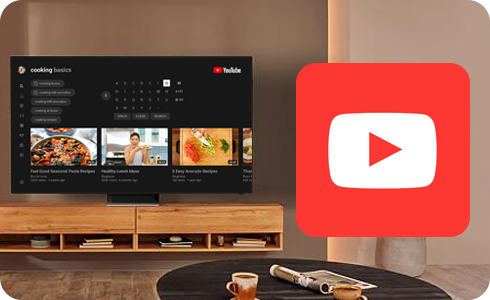
YouTube is expanding its conversational AI feature to smart TVs, bringing interactive search and assistance to the largest screen in the household. The move reflects broader efforts by streaming platforms to integrate generative AI directly into content discovery workflows.
As viewers spend more time consuming long-form video on televisions rather than smartphones, platforms are adapting AI features to fit lean-back experiences.
From Search Bar to Conversation
Traditional TV interfaces rely on remote-controlled navigation and keyword search.
Conversational AI introduces a more flexible model: users can ask natural-language questions such as requesting documentaries about climate change or comedies suitable for family viewing.
On a TV interface, such functionality could:
- Reduce friction in browsing
- Surface more personalized recommendations
- Increase time spent on platform
Bringing AI chat tools to TVs requires redesigning interaction flows to accommodate voice input or simplified remote navigation.
Discovery as Strategic Advantage
Content libraries are expanding rapidly, and competition among streaming services is intensifying.
Discovery has become as critical as content acquisition.
AI-powered conversation can help viewers:
- Summarize videos before watching
- Explore related topics
- Find clips within long-form content
For YouTube, whose content spans user-generated videos, professional productions, and livestreams, conversational assistance may help organize an otherwise vast and fragmented library.
Monetization and Engagement Implications

Improved discovery can influence advertising performance.
The more effectively a platform matches viewers with relevant content, the more likely it is to sustain engagement — a core metric for ad-supported models.
AI-driven interaction also provides data insights into viewer intent, which may refine recommendation systems.
However, platforms must ensure transparency regarding how conversational tools use data and shape results.
AI in the Living Room
The integration signals a broader shift in how AI enters daily routines.
While conversational assistants have become common on smartphones and laptops, smart TVs represent a new surface area for AI experimentation.
Because television viewing often involves shared audiences, AI tools must account for multi-user contexts.
Balancing personalization with communal viewing dynamics presents both design and privacy considerations.
Competitive Landscape
Streaming platforms are exploring AI summaries, recommendation engines, and voice-enabled search.
By extending its conversational tool to TVs, YouTube positions itself within a growing wave of AI-enabled media interfaces.
The long-term success of the experiment will depend on usability and whether viewers adopt conversational search as a natural part of the TV experience.
As AI increasingly shapes digital interaction, the boundary between passive viewing and active engagement continues to blur.