
A growing number of online creators are reducing reliance on platform advertising revenue and instead building their own consumer brands — ranging from food products to apparel — or even acquiring stakes in fintech and software companies. The move reflects rising skepticism about the sustainability of ad-based monetization models.
For creators with large, loyal audiences, ownership is increasingly seen as more valuable than views.
The Limits of Ad Revenue
For years, digital creators depended primarily on:
- Platform ad sharing programs
- Sponsored brand deals
- Affiliate marketing
While these channels remain significant, they come with volatility.
Advertising rates fluctuate with macroeconomic cycles, algorithm changes can alter visibility overnight, and platform policy shifts can affect income streams.
In contrast, owning a product or company stake provides greater control over margins and long-term value creation.
From Influence to Equity
Some high-profile creators have launched consumer brands — including snack foods, beverages, and beauty products — leveraging audience trust to drive direct-to-consumer sales.
Others are investing in or acquiring fintech startups, seeking to diversify beyond media.
This model shifts creators from content distributors to equity holders.
Benefits include:
- Recurring revenue streams
- Higher gross margins
- Exit opportunities through acquisitions
- Reduced dependence on algorithmic reach
The approach resembles entrepreneurship more than traditional media monetization.
Platform Power and Algorithm Risk
Creators operate within ecosystems controlled by large platforms.
Changes in recommendation systems or monetization policies can significantly impact earnings.
Diversifying into owned businesses reduces exposure to platform risk.
It also allows creators to monetize audiences across multiple channels rather than relying solely on ad impressions.
The strategy reflects a broader understanding that audience attention is an asset — but only if converted into durable economic structures.
Venture Capital and Creator Businesses
Investors have taken notice.
Creator-led brands can scale quickly due to built-in distribution networks.
Venture firms increasingly evaluate creator businesses similarly to direct-to-consumer startups, assessing:
- Brand loyalty metrics
- Customer acquisition cost
- Repeat purchase behavior
- Community engagement strength
Some creators are even forming venture studios to incubate multiple brands under one umbrella.
Fintech and Ownership Infrastructure
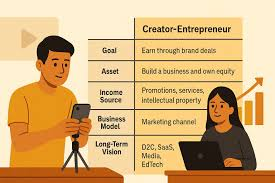
Fintech plays a complementary role in this shift.
Tools that enable creators to manage payments, offer subscription products, or tokenize ownership are expanding.
Acquiring or partnering with fintech startups allows creators to integrate financial services into their ecosystems — from fan memberships to branded payment products.
Ownership infrastructure deepens monetization potential.
A Maturing Creator Economy
The pivot away from pure ad revenue signals maturation.
In earlier phases, creators prioritized audience growth above all else.
Now, many are prioritizing equity, control, and asset-building.
The shift also reflects lessons from traditional media: ad-dependent models can be unstable without diversified income streams.
Long-Term Implications
As more creators build companies rather than rely solely on sponsorships, the boundary between influencer and entrepreneur continues to blur.
Platforms may need to adapt monetization incentives to retain top talent.
Meanwhile, consumer brands and fintech startups backed by creator audiences could become significant acquisition targets.
The creator economy is no longer just about content. It is increasingly about capital formation — and who ultimately owns the value generated by digital influence.