
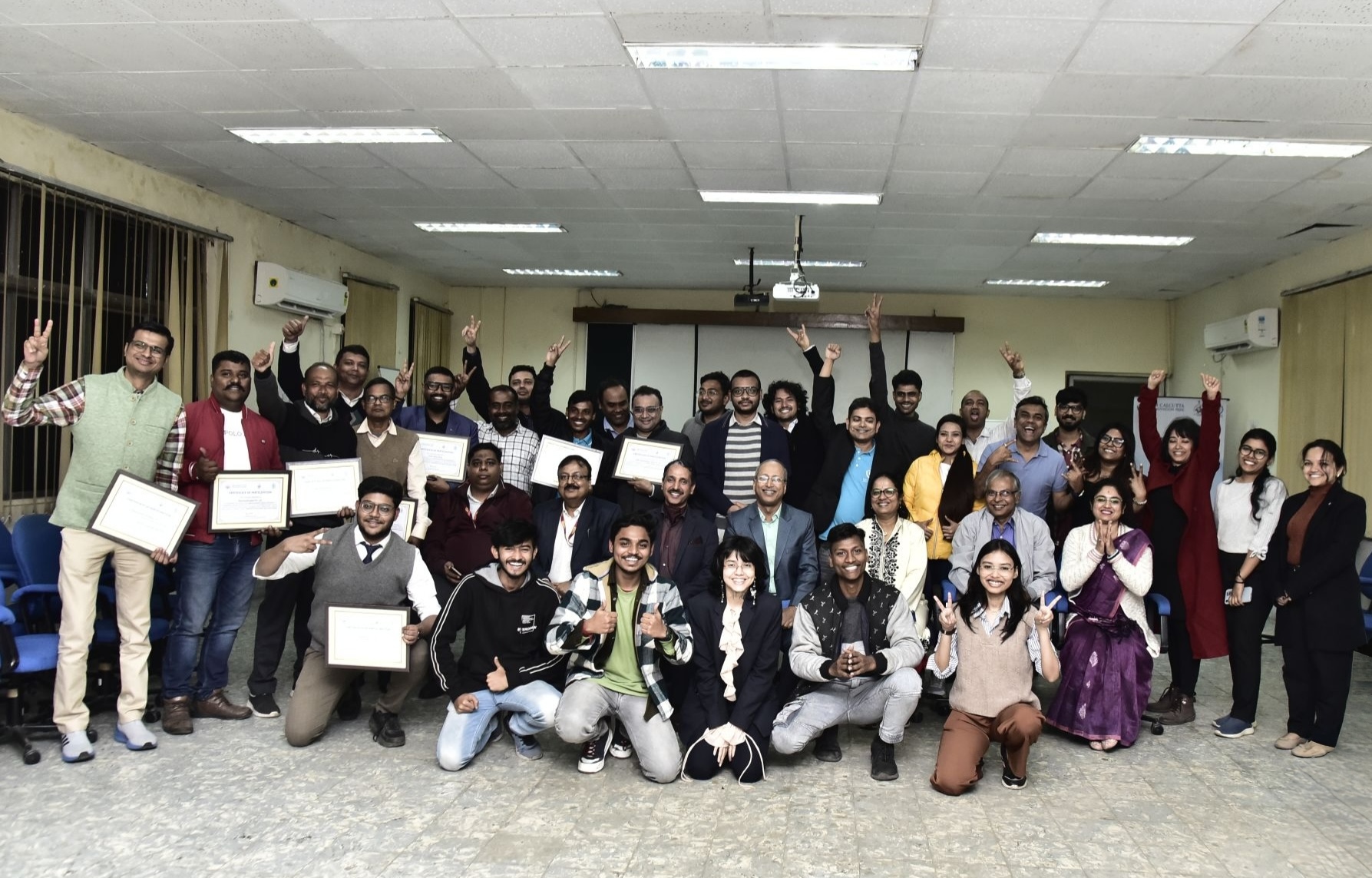
West Bengal’s startup policy push reached a visible milestone this week as 25 early-stage ventures graduated from the Bengal Business Accelerator Programme with investor-facing Demo Day presentations at the Indian Institute of Management Calcutta campus.
The second cohort of the programme concluded with structured pitch sessions before investors, bankers, and ecosystem leaders — marking a transition point from mentorship to market engagement.
The accelerator is a Government of West Bengal initiative implemented in collaboration with IIM Calcutta Innovation Park (IIMCIP) and supported under the World Bank-aided RAMP (Raising and Accelerating MSME Performance) Scheme.
From Concept to Investor Readiness
The Bengal Business Accelerator Programme is designed to bridge a persistent gap in India’s startup pipeline: the move from early validation to investment readiness.
Cohort 2 startups underwent structured mentoring, market validation support, and direct access to capital networks over a defined timeframe. The programme’s stated objective is not only to strengthen business fundamentals but to create a comprehensive support system linking founders with investors and markets.
At Demo Day, participating startups engaged in pitch sessions aimed at initiating early investment discussions and receiving strategic feedback from experienced capital providers.
The 25 graduating ventures were formally recognised during a Valedictory Ceremony attended by government officials and ecosystem stakeholders.
Institutional Collaboration as Ecosystem Strategy
The initiative reflects a broader policy approach in India, where state governments are increasingly partnering with academic incubators to strengthen local entrepreneurship ecosystems.
IIMCIP, a Section 8 not-for-profit entity established under the aegis of IIM Calcutta and recognised by the Department of Science & Technology, has mentored more than 2,000 startups and seed-funded 124 ventures to date. Those ventures have collectively raised over ₹2,000 crore and built portfolio valuations nearing ₹8,000 crore, according to publicly available figures.
By aligning with IIMCIP, the Government of West Bengal is leveraging institutional incubation expertise to enhance the state’s startup pipeline.
Dr. VK Rai, CEO of IIMCIP, said the programme aims to build a comprehensive support framework that helps ventures strengthen business models, access markets, and connect with appropriate investors.
Bengal’s Startup Positioning
West Bengal has historically played a central role in India’s intellectual and industrial landscape, though it has lagged some other states in venture capital concentration.
Accelerator programmes such as this are part of a broader effort to reposition the state as an innovation-led economy.
A Special Secretary from the MSME & Textiles Department of the Government of West Bengal emphasized that the programme reflects the state’s commitment to rebuilding its entrepreneurial legacy and fostering sustainable socio-economic growth.
The RAMP Scheme backing adds another layer of institutional support, tying state-level acceleration to broader MSME performance initiatives supported by multilateral funding.
Investment-Ready, but What Comes Next?
Graduation from an accelerator does not guarantee funding, but it often improves visibility and preparedness.
For the 25 startups, the next phase will depend on:
- Converting investor interest into term sheets
- Demonstrating traction in target markets
- Strengthening governance and compliance
- Scaling operations efficiently
Structured accelerators can reduce friction in these transitions by aligning founders with mentors and capital networks early.
The Bigger Signal
The conclusion of Cohort 2 signals continuity rather than a one-off initiative.
As Indian states compete to attract talent and capital, institutional accelerator models backed by public funding are becoming more common.
For West Bengal, programmes like the Bengal Business Accelerator represent a strategic bet: that structured ecosystem building, rather than isolated grants, can catalyze durable entrepreneurial growth.
With 25 startups now positioned for investor engagement, the test shifts from incubation to execution — a stage where policy support meets market discipline.


