
As artificial intelligence adoption accelerates globally, the underlying infrastructure required to support it is struggling to keep pace. Enterprises are moving rapidly from experimentation to production-scale AI, but much of today’s cloud infrastructure remains optimized for traditional workloads rather than compute-intensive AI applications.
Nava, formerly known as Kluisz, is positioning itself to address this gap. The company has raised $22 million in a Series A round led by Greenoaks, with participation from RTP Global and Unicorn India Ventures.
The funding marks a significant step toward building what the company describes as a foundational cloud infrastructure layer for AI across Asia-Pacific.
From neo-cloud concept to full-stack infrastructure
A rebrand signals broader ambition
Alongside the fundraise, the company announced its rebranding from Kluisz to Nava, reflecting an expansion in scope. What began as an AI-native cloud platform is now evolving into a vertically integrated infrastructure provider.
The company is also establishing Singapore as its regional headquarters, positioning itself closer to key Asia-Pacific markets and global talent pools.
A vertically integrated AI stack
Nava’s approach centers on building a full-stack AI cloud platform that integrates multiple layers of infrastructure:
- AI-optimized data centers
- High-performance GPU compute
- AI-native orchestration and inference layers
- Developer-friendly tooling and access
This vertically integrated model is designed to give enterprises greater control, efficiency, and performance when building and deploying AI applications.
Why legacy cloud falls short for AI
The shift from general-purpose to AI-specific infrastructure
Traditional cloud platforms were built for general-purpose computing. AI workloads, however, require specialized hardware such as GPUs, along with software layers optimized for training and inference.
This mismatch has created a growing demand for “neo-cloud” platforms — infrastructure built specifically for AI from the ground up.
A regional capacity challenge
The infrastructure gap is particularly pronounced in Asia. Estimates suggest that data center capacity in Southeast Asia will need to triple by 2030 to meet AI-driven demand, with similar shortfalls expected in India.
Nava is targeting this structural gap, aiming to build capacity that is purpose-built for AI rather than retrofitted from legacy systems.

Founding team and execution focus
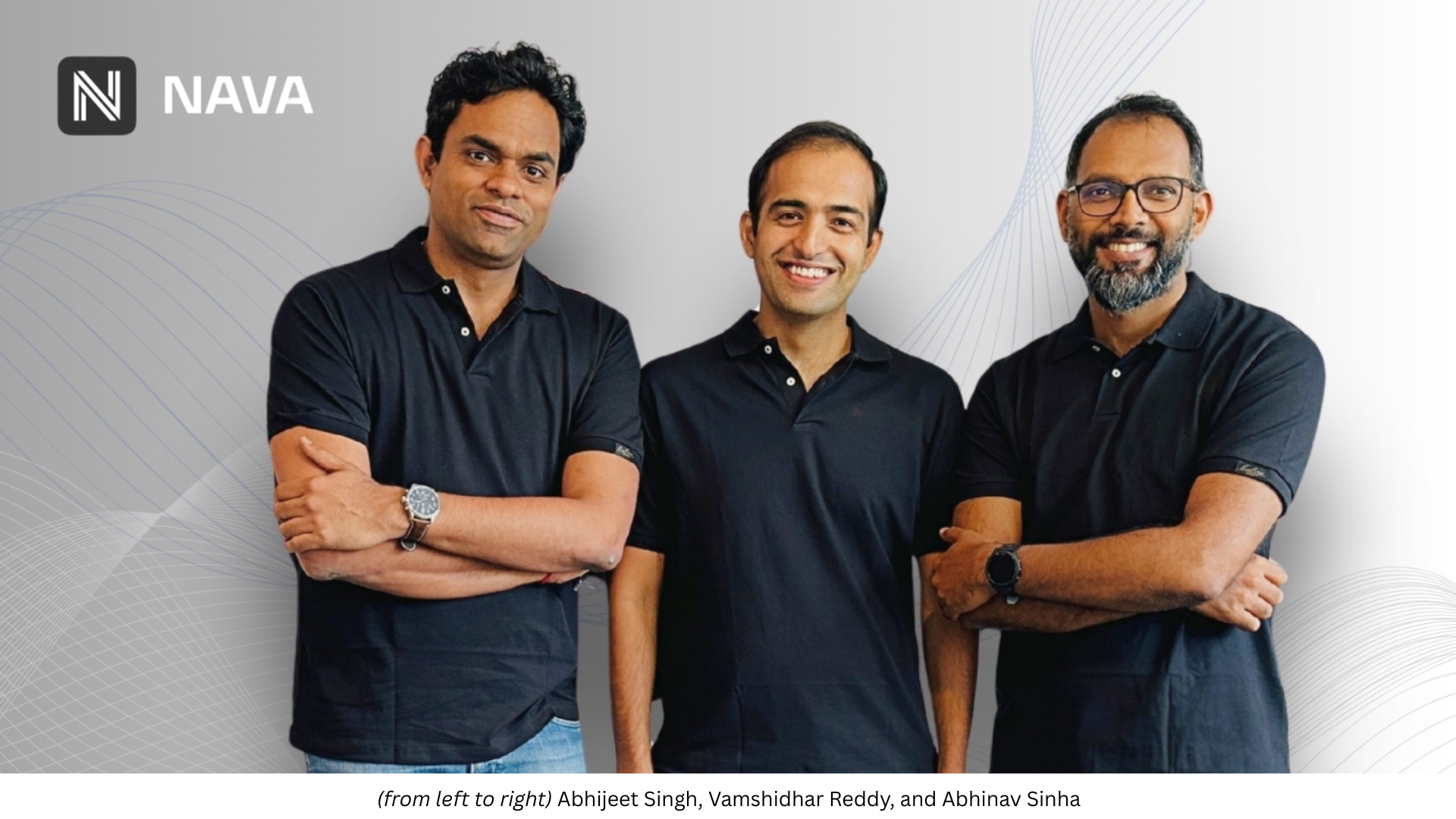
The company was founded in 2025 by a team with experience across cloud, consulting, and semiconductor industries:
- Abhinav Sinha, former Global COO & CPO at OYO
- Vamshidhar Reddy, former Partner at McKinsey and ex-AMD
- Abhijeet Singh, former VP of Cloud at Jio and ex-AT&T
This combination of operational, strategic, and technical expertise reflects the complexity of building infrastructure at the intersection of hardware and software.
Scaling across Asia-Pacific
Expanding compute and data center footprint
The newly raised capital will be used to expand Nava’s operations across Asia-Pacific, including building AI data centers and scaling GPU compute infrastructure.
Investing in talent and technology
The company also plans to hire across key areas such as AI data center design, GPU engineering, and go-to-market functions, indicating a focus on both technical depth and commercial execution.
Investor perspective: backing foundational infrastructure
For Greenoaks and other investors, the opportunity lies in building the infrastructure layer that underpins the next wave of AI adoption.
As enterprises increasingly rely on AI for core operations, access to efficient, scalable compute becomes a critical bottleneck — and a significant market opportunity.
A broader shift toward AI-native cloud platforms
Nava’s emergence reflects a larger transformation in the cloud ecosystem. The dominance of general-purpose cloud providers is being challenged by specialized platforms designed for specific workloads, particularly AI.
This shift is creating a new category of infrastructure companies that combine hardware, software, and services into integrated platforms.
What lies ahead
Nava’s next phase will focus on executing its vision of a full-stack AI cloud platform, scaling infrastructure while maintaining performance and cost efficiency.
Competition in this space is intensifying, with both startups and established players investing heavily in AI infrastructure.
Building the backbone of AI in Asia
Nava is positioning itself as a foundational player in Asia’s AI ecosystem. By addressing the infrastructure gap, it aims to enable enterprises to build and scale AI applications more effectively.
If successful, the company could play a key role in shaping how AI is deployed across the region — not just as a technology, but as a core layer of digital infrastructure.


