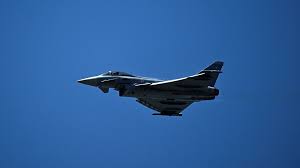
Typhoon Jets Scrambled Today After Northern Skies Alert

Share via:

In a show of speed and readiness, Typhoon jets scrambled today from RAF Lossiemouth after an alert was raised in the northern skies. Supported by an RAF Voyager tanker, the Eurofighter Typhoons raced over the North Sea to monitor an unidentified aircraft approaching the UK’s area of interest.

The incident, which ended without interception, highlighted the importance of the RAF Lossiemouth Typhoon scramble and the Quick Reaction Alert (QRA) system that keeps Britain’s skies secure around the clock.

Why Were Typhoon Jets Scrambled Today?

The RAF confirmed that the unidentified aircraft never entered UK sovereign airspace. Instead, it was detected approaching the UK Flight Information Region, prompting a precautionary response. The RAF Lossiemouth Typhoon scramble was ordered to identify the radar contact and ensure no threat to national security.

Quick Reaction Alert missions like this one are routine but vital. They serve as the frontline defense against potential intrusions, ranging from foreign military flights to unresponsive civilian planes. The fact that Typhoon jets scrambled today demonstrates the RAF’s constant vigilance.

RAF Lossiemouth Typhoon Scramble in Action

Operating out of Scotland, RAF Lossiemouth houses one of the UK’s key QRA bases. When Typhoon jets scrambled today, they were refueled mid-air by a Voyager tanker from RAF Brize Norton. This support enabled extended patrols near the Shetland Islands, ensuring the jets could remain on station for as long as required.

The RAF Lossiemouth Typhoon scramble also underscores how fast crews can react. QRA jets are on standby 24/7, ready to launch within minutes of an alert. It’s this rapid response capability that reassures the public and deters potential adversaries.

NATO’s Wider Role in Air Defence

The RAF’s response is not just about the UK. Typhoon jets scrambled today as part of a broader NATO defense network. When unidentified aircraft approach European airspace, allied forces coordinate to track and assess them.

The RAF Lossiemouth Typhoon scramble is a crucial piece of this puzzle. With its strategic location in northern Scotland, RAF Lossiemouth plays a central role in protecting NATO’s northern flank and monitoring the approaches from the Arctic and North Atlantic.

Public and Political Reactions

News that Typhoon jets scrambled today quickly spread across social media and defense circles. Flight trackers followed the Voyager tanker’s route, while media outlets highlighted the importance of routine scrambles in maintaining security.

Public reaction was largely one of reassurance. Many noted that the RAF Lossiemouth Typhoon scramble proves that Britain’s air defenses remain sharp and responsive. Experts also emphasized that while such scrambles may sound dramatic, they are a normal part of air policing operations.

How Often Do These Scrambles Happen?

Incidents like the one where Typhoon jets scrambled today occur regularly. The frequency varies depending on global tensions, but RAF Typhoons are launched dozens of times each year to check approaching aircraft.

Not every RAF Lossiemouth Typhoon scramble leads to an interception. Often, the jets return to base once identification is complete and no threat is confirmed. Still, each launch serves as a critical deterrent, reminding the world that the UK remains prepared.

What Happens After a Scramble?

After Typhoon jets scrambled today, and the situation was resolved, the aircraft returned to base. A post-mission review was conducted to assess the alert and refine procedures for future operations.

Such transparency helps reassure the public that the RAF takes both readiness and accountability seriously. It also ensures that the RAF Lossiemouth Typhoon scramble process remains sharp and adaptable to evolving threats.

Stay updated with the latest in defense, technology, and global business. Visit Startup News

Disclaimer

We strive to uphold the highest ethical standards in all of our reporting and coverage. We StartupNews.fyi want to be transparent with our readers about any potential conflicts of interest that may arise in our work. It’s possible that some of the investors we feature may have connections to other businesses, including competitors or companies we write about. However, we want to assure our readers that this will not have any impact on the integrity or impartiality of our reporting. We are committed to delivering accurate, unbiased news and information to our audience, and we will continue to uphold our ethics and principles in all of our work. Thank you for your trust and support.

Popular

More Like this

Typhoon Jets Scrambled Today After Northern Skies Alert

In a show of speed and readiness, Typhoon jets scrambled today from RAF Lossiemouth after an alert was raised in the northern skies. Supported by an RAF Voyager tanker, the Eurofighter Typhoons raced over the North Sea to monitor an unidentified aircraft approaching the UK’s area of interest.

The incident, which ended without interception, highlighted the importance of the RAF Lossiemouth Typhoon scramble and the Quick Reaction Alert (QRA) system that keeps Britain’s skies secure around the clock.

Why Were Typhoon Jets Scrambled Today?

The RAF confirmed that the unidentified aircraft never entered UK sovereign airspace. Instead, it was detected approaching the UK Flight Information Region, prompting a precautionary response. The RAF Lossiemouth Typhoon scramble was ordered to identify the radar contact and ensure no threat to national security.

Quick Reaction Alert missions like this one are routine but vital. They serve as the frontline defense against potential intrusions, ranging from foreign military flights to unresponsive civilian planes. The fact that Typhoon jets scrambled today demonstrates the RAF’s constant vigilance.

RAF Lossiemouth Typhoon Scramble in Action

Operating out of Scotland, RAF Lossiemouth houses one of the UK’s key QRA bases. When Typhoon jets scrambled today, they were refueled mid-air by a Voyager tanker from RAF Brize Norton. This support enabled extended patrols near the Shetland Islands, ensuring the jets could remain on station for as long as required.

The RAF Lossiemouth Typhoon scramble also underscores how fast crews can react. QRA jets are on standby 24/7, ready to launch within minutes of an alert. It’s this rapid response capability that reassures the public and deters potential adversaries.

NATO’s Wider Role in Air Defence

The RAF’s response is not just about the UK. Typhoon jets scrambled today as part of a broader NATO defense network. When unidentified aircraft approach European airspace, allied forces coordinate to track and assess them.

The RAF Lossiemouth Typhoon scramble is a crucial piece of this puzzle. With its strategic location in northern Scotland, RAF Lossiemouth plays a central role in protecting NATO’s northern flank and monitoring the approaches from the Arctic and North Atlantic.

Public and Political Reactions

News that Typhoon jets scrambled today quickly spread across social media and defense circles. Flight trackers followed the Voyager tanker’s route, while media outlets highlighted the importance of routine scrambles in maintaining security.

Public reaction was largely one of reassurance. Many noted that the RAF Lossiemouth Typhoon scramble proves that Britain’s air defenses remain sharp and responsive. Experts also emphasized that while such scrambles may sound dramatic, they are a normal part of air policing operations.

How Often Do These Scrambles Happen?

Incidents like the one where Typhoon jets scrambled today occur regularly. The frequency varies depending on global tensions, but RAF Typhoons are launched dozens of times each year to check approaching aircraft.

Not every RAF Lossiemouth Typhoon scramble leads to an interception. Often, the jets return to base once identification is complete and no threat is confirmed. Still, each launch serves as a critical deterrent, reminding the world that the UK remains prepared.

What Happens After a Scramble?

After Typhoon jets scrambled today, and the situation was resolved, the aircraft returned to base. A post-mission review was conducted to assess the alert and refine procedures for future operations.

Such transparency helps reassure the public that the RAF takes both readiness and accountability seriously. It also ensures that the RAF Lossiemouth Typhoon scramble process remains sharp and adaptable to evolving threats.

Stay updated with the latest in defense, technology, and global business. Visit Startup News

Disclaimer

We strive to uphold the highest ethical standards in all of our reporting and coverage. We StartupNews.fyi want to be transparent with our readers about any potential conflicts of interest that may arise in our work. It’s possible that some of the investors we feature may have connections to other businesses, including competitors or companies we write about. However, we want to assure our readers that this will not have any impact on the integrity or impartiality of our reporting. We are committed to delivering accurate, unbiased news and information to our audience, and we will continue to uphold our ethics and principles in all of our work. Thank you for your trust and support.

Website Upgradation is going on for any glitch kindly connect at office@startupnews.fyi

More like this

Profit Falls 28% YoY To INR 547 Cr

SUMMARY Groww’s Q3 profit grew 16% sequentially from INR...

Seattle Consulate hosts event on India’s expanding AI ecosystem...

The Consulate General of India in Seattle co-hosted...

Patch Tuesday January 2026: Critical Security Fixes Highlight Growing...

Microsoft’s Patch Tuesday for January 2026 has arrived with...

Popular

iptv iptv iptv iptv iptv iptv iptv iptv iptv iptv iptv iptv iptv iptv iptv iptv iptv iptv iptv iptv iptv iptv iptv iptv iptv iptv iptv iptv iptv iptv iptv iptv iptv iptv iptv iptv iptv iptv iptv iptv iptv iptv iptv iptv iptv iptv iptv iptv iptv iptv iptv iptv iptv iptv iptv iptv iptv iptv iptv iptv iptv iptv iptv iptv iptv iptv iptv iptv iptv iptv iptv iptv iptv iptv iptv iptv iptv iptv iptv iptv iptv iptv iptv iptv iptv iptv iptv iptv iptv iptv iptv iptv iptv iptv iptv iptv iptv iptv iptv iptv iptv iptv iptv iptv iptv iptv iptv iptv iptv iptv iptv iptv iptv iptv iptv iptv iptv iptv iptv iptv iptv iptv iptv iptv iptv iptv iptv iptv iptv iptv iptv iptv iptv iptv iptv iptv iptv iptv iptv iptv iptv iptv iptv iptv iptv iptv iptv iptv iptv iptv iptv iptv iptv iptv iptv iptv iptv iptv iptv iptv iptv iptv iptv iptv iptv iptv iptv iptv iptv iptv iptv iptv iptv iptv iptv iptv iptv iptv iptv iptv iptv iptv iptv iptv iptv iptv iptv iptv iptv iptv iptv iptv iptv iptv iptv iptv iptv iptv iptv iptv iptv iptv iptv iptv iptv iptv iptv iptv iptv iptv iptv iptv iptv iptv iptv iptv iptv iptv iptv iptv iptv iptv iptv iptv iptv iptv iptv iptv iptv iptv iptv iptv iptv iptv iptv iptv iptv iptv iptv iptv iptv iptv iptv iptv iptv iptv iptv iptv iptv iptv iptv iptv iptv iptv iptv iptv iptv iptv iptv iptv iptv iptv iptv iptv iptv iptv iptv iptv iptv iptv iptv iptv iptv iptv iptv iptv iptv iptv iptv iptv iptv iptv iptv iptv iptv iptv iptv iptv iptv iptv iptv iptv iptv iptv iptv iptv iptv iptv iptv iptv iptv iptv iptv iptv iptv iptv iptv iptv iptv iptv iptv iptv iptv iptv iptv iptv iptv iptv iptv iptv iptv iptv iptv iptv iptv iptv iptv iptv iptv iptv iptv iptv iptv iptv iptv iptv iptv iptv iptv iptv iptv iptv iptv iptv iptv iptv iptv iptv iptv iptv iptv iptv iptv iptv iptv iptv iptv iptv iptv iptv iptv iptv iptv iptv iptv iptv iptv iptv iptv iptv iptv iptv iptv iptv iptv iptv iptv iptv iptv iptv iptv iptv iptv iptv iptv iptv iptv iptv iptv iptv iptv iptv iptv iptv iptv iptv iptv iptv iptv iptv iptv iptv iptv iptv iptv iptv iptv iptv iptv iptv iptv iptv iptv iptv iptv iptv iptv iptv iptv iptv iptv iptv iptv iptv iptv iptv iptv iptv iptv iptv iptv iptv iptv iptv iptv iptv iptv iptv iptv iptv iptv iptv iptv iptv iptv iptv iptv iptv iptv iptv iptv iptv iptv iptv iptv iptv iptv iptv iptv iptv iptv iptv iptv iptv iptv iptv iptv iptv iptv iptv iptv iptv iptv iptv iptv iptv
