Interstellar Comet 3I/ATLAS Sparks Internet Frenzy, But NASA Confirms No Threat to Earth

Share via:

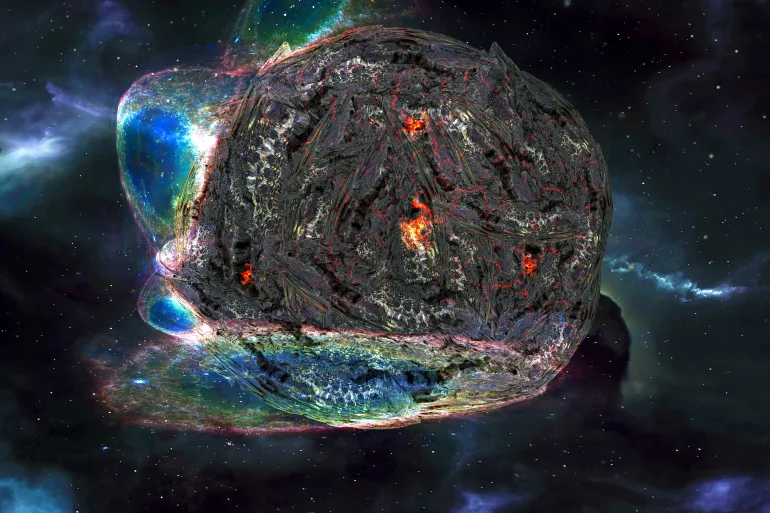
The internet is abuzz with alarming claims that a massive interstellar comet is hurtling toward Earth — but experts from NASA and the European Space Agency have confirmed there’s no cause for concern.

The comet, officially named 3I/ATLAS, has been traveling through our solar system since its detection in July 2025. Although social media has fueled fears of a catastrophic collision, space agencies have assured the public that the interstellar visitor poses absolutely no danger to our planet.

How the Interstellar Comet Rumors Started

The panic began when several social media posts claimed that an interstellar object was on a collision course with Earth, accompanied by false allegations of government and military cover-ups. One post suggested the comet could be “alien technology,” while others shared doctored videos of supposed “spacecraft sightings.”

The frenzy gained momentum after a New York Post headline described the comet as potentially larger than expected and “possibly alien in origin.” Viral reposts on X (formerly Twitter) quickly transformed a speculative statement into a full-blown conspiracy.

But according to Al Jazeera’s Sanad Verification Agency, these claims are baseless. Their fact-checking revealed that 3I/ATLAS — while interstellar in origin — is following a perfectly safe path through space.

What NASA and ESA Confirmed About 3I/ATLAS

NASA’s ATLAS telescope first detected the interstellar comet on July 1, 2025. Scientists later confirmed it to be only the third known interstellar object ever observed passing through our solar system — following the famous ‘Oumuamua (2017) and 2I/Borisov (2019).

NASA described 3I/ATLAS as an icy body wrapped in a glowing dust cloud, moving at a record-breaking 210,000 kilometers per hour (130,000 mph). Despite its speed and size — estimated between 440 meters and 5.6 kilometers across — it’s not heading anywhere near Earth.

The closest approach occurred on July 21, 2025, when the comet was approximately 270 million kilometers (167 million miles) away — more than twice the distance between Earth and the Sun.

The European Space Agency (ESA) also confirmed that the comet’s orbit is stable and entirely non-threatening. In fact, by October 30, 2025, 3I/ATLAS will make its closest pass to the Sun, skimming just inside the orbit of Mars before it exits the solar system once again.

Why Scientists Are Excited About the Interstellar Visitor

While social media has fixated on doomsday theories, astronomers are viewing 3I/ATLAS as a golden opportunity. Interstellar comets like this one come from beyond our solar system, offering rare insights into the composition and chemistry of other star systems.

The Hubble Space Telescope is currently tracking the comet to study its nucleus and dust tail. Researchers hope the data could reveal more about how interstellar bodies form and how often they enter our solar system.

“This is an incredible chance to study material that formed around another star billions of years ago,” said a NASA astrophysicist in a recent briefing. “Each interstellar visitor gives us clues about the diversity of planetary systems in our galaxy.”

The Misinformation Problem

The viral storm around 3I/ATLAS highlights a growing issue — how quickly misinformation spreads online, especially about space and interstellar phenomena.

Posts claiming that physicist Michio Kaku warned of an “alien reconnaissance probe” were found to be completely fabricated, using screenshots from unrelated interviews months before the comet’s discovery.

Experts emphasize that while curiosity about the universe is healthy, it’s essential to rely on verified scientific sources rather than sensationalized social media claims.

Looking Ahead

As 3I/ATLAS continues its journey through the solar system, astronomers are focusing on observation, not fear. The comet’s passage provides scientists with an opportunity to study the mysteries of interstellar travel, cosmic chemistry, and how distant materials behave near our Sun.

In short — no, an interstellar comet is not on a collision course with Earth. It’s simply paying a brief, fascinating visit before heading back into the cosmic deep.

Stay Updated on Science and Space Innovation

For more verified space and tech news — from interstellar discoveries to startup breakthroughs — visit Startup News for trustworthy updates that cut through the noise.


Disclaimer

We strive to uphold the highest ethical standards in all of our reporting and coverage. We StartupNews.fyi want to be transparent with our readers about any potential conflicts of interest that may arise in our work. It’s possible that some of the investors we feature may have connections to other businesses, including competitors or companies we write about. However, we want to assure our readers that this will not have any impact on the integrity or impartiality of our reporting. We are committed to delivering accurate, unbiased news and information to our audience, and we will continue to uphold our ethics and principles in all of our work. Thank you for your trust and support.

Popular

More Like this

Interstellar Comet 3I/ATLAS Sparks Internet Frenzy, But NASA Confirms No Threat to Earth

The internet is abuzz with alarming claims that a massive interstellar comet is hurtling toward Earth — but experts from NASA and the European Space Agency have confirmed there’s no cause for concern.

The comet, officially named 3I/ATLAS, has been traveling through our solar system since its detection in July 2025. Although social media has fueled fears of a catastrophic collision, space agencies have assured the public that the interstellar visitor poses absolutely no danger to our planet.

How the Interstellar Comet Rumors Started

The panic began when several social media posts claimed that an interstellar object was on a collision course with Earth, accompanied by false allegations of government and military cover-ups. One post suggested the comet could be “alien technology,” while others shared doctored videos of supposed “spacecraft sightings.”

The frenzy gained momentum after a New York Post headline described the comet as potentially larger than expected and “possibly alien in origin.” Viral reposts on X (formerly Twitter) quickly transformed a speculative statement into a full-blown conspiracy.

But according to Al Jazeera’s Sanad Verification Agency, these claims are baseless. Their fact-checking revealed that 3I/ATLAS — while interstellar in origin — is following a perfectly safe path through space.

What NASA and ESA Confirmed About 3I/ATLAS

NASA’s ATLAS telescope first detected the interstellar comet on July 1, 2025. Scientists later confirmed it to be only the third known interstellar object ever observed passing through our solar system — following the famous ‘Oumuamua (2017) and 2I/Borisov (2019).

NASA described 3I/ATLAS as an icy body wrapped in a glowing dust cloud, moving at a record-breaking 210,000 kilometers per hour (130,000 mph). Despite its speed and size — estimated between 440 meters and 5.6 kilometers across — it’s not heading anywhere near Earth.

The closest approach occurred on July 21, 2025, when the comet was approximately 270 million kilometers (167 million miles) away — more than twice the distance between Earth and the Sun.

The European Space Agency (ESA) also confirmed that the comet’s orbit is stable and entirely non-threatening. In fact, by October 30, 2025, 3I/ATLAS will make its closest pass to the Sun, skimming just inside the orbit of Mars before it exits the solar system once again.

Why Scientists Are Excited About the Interstellar Visitor

While social media has fixated on doomsday theories, astronomers are viewing 3I/ATLAS as a golden opportunity. Interstellar comets like this one come from beyond our solar system, offering rare insights into the composition and chemistry of other star systems.

The Hubble Space Telescope is currently tracking the comet to study its nucleus and dust tail. Researchers hope the data could reveal more about how interstellar bodies form and how often they enter our solar system.

“This is an incredible chance to study material that formed around another star billions of years ago,” said a NASA astrophysicist in a recent briefing. “Each interstellar visitor gives us clues about the diversity of planetary systems in our galaxy.”

The Misinformation Problem

The viral storm around 3I/ATLAS highlights a growing issue — how quickly misinformation spreads online, especially about space and interstellar phenomena.

Posts claiming that physicist Michio Kaku warned of an “alien reconnaissance probe” were found to be completely fabricated, using screenshots from unrelated interviews months before the comet’s discovery.

Experts emphasize that while curiosity about the universe is healthy, it’s essential to rely on verified scientific sources rather than sensationalized social media claims.

Looking Ahead

As 3I/ATLAS continues its journey through the solar system, astronomers are focusing on observation, not fear. The comet’s passage provides scientists with an opportunity to study the mysteries of interstellar travel, cosmic chemistry, and how distant materials behave near our Sun.

In short — no, an interstellar comet is not on a collision course with Earth. It’s simply paying a brief, fascinating visit before heading back into the cosmic deep.

Stay Updated on Science and Space Innovation

For more verified space and tech news — from interstellar discoveries to startup breakthroughs — visit Startup News for trustworthy updates that cut through the noise.

Disclaimer

We strive to uphold the highest ethical standards in all of our reporting and coverage. We StartupNews.fyi want to be transparent with our readers about any potential conflicts of interest that may arise in our work. It’s possible that some of the investors we feature may have connections to other businesses, including competitors or companies we write about. However, we want to assure our readers that this will not have any impact on the integrity or impartiality of our reporting. We are committed to delivering accurate, unbiased news and information to our audience, and we will continue to uphold our ethics and principles in all of our work. Thank you for your trust and support.

Website Upgradation is going on for any glitch kindly connect at office@startupnews.fyi

More like this

Amazon Christmas discounts on gadgets: Great festive deals you...

Christmas is the perfect time to upgrade gadgets...

WhatsApp beta for iOS 25.37.10.71: what’s new?

WhatsApp has released a new iOS update through...

Brain Gear Is the Hot New Wearable

Ten years ago, a Fitbit was about as sophisticated...

Popular