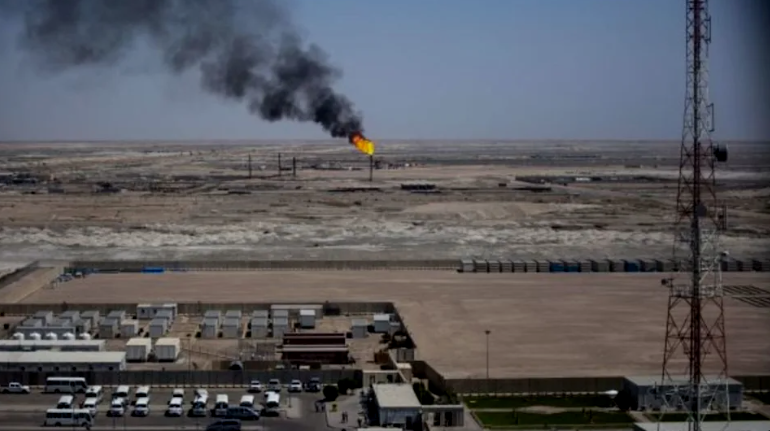
ExxonMobil’s Massive Bet in Iraq: Reviving the Majnoon Oil Field Amid Global Shake-Up

Share via:

ExxonMobil Expands Footprint in the Middle East

In a bold strategic move, ExxonMobil has announced a major new investment in Iraq (Irak), marking one of the company’s most ambitious energy projects in the Middle East in recent years. The U.S. oil giant has signed an agreement to develop the Majnoon oil field, a supergiant deposit in southern Iraq that holds an estimated 38 billion barrels of oil.

The deal comes amid a global restructuring effort at ExxonMobil, which includes cost-cutting measures and layoffs. Despite these internal changes, the company appears determined to strengthen its presence in the Middle East’s vast oil sector — signaling confidence in Iraq’s long-term production potential.

The Majnoon Oil Field: A Sleeping Giant

The Majnoon field, whose name translates to “crazy” or “insane” in Arabic, is one of the world’s largest untapped oil reserves. Located near Basra, it’s part of a select group of “supergiant” oil fields, a category that includes fewer than 40 of the 50,000 known oilfields globally.

Though massive in scale, Majnoon’s current output lags behind its potential. Production levels hover between 200,000 and 240,000 barrels per day (bpd) — a fraction of the capacity seen in giants like Saudi Arabia’s Ghawar field, which produces over 4 million bpd, or the Permian Basin in the U.S., which exceeds 6 million bpd.

With ExxonMobil stepping in, Iraq hopes to unlock much of Majnoon’s underdeveloped potential. Previous projections by Royal Dutch Shell, which exited the project in 2017, targeted 1.8 million bpd — a goal that proved overly ambitious due to political instability and profit-sharing challenges with the Iraqi government.

Iraq’s Energy Landscape and OPEC’s Role

Iraq — or Irak, as it’s known in several languages — remains one of the founding members of the Organization of the Petroleum Exporting Countries (OPEC). The country’s oil production strategy is heavily influenced by OPEC’s collective policies, which dictate output levels among member nations to manage global oil prices.

For years, OPEC limited production to stabilize prices, but recently it has shifted gears, increasing output to counter the growing dominance of U.S. shale producers. This shift opens a window of opportunity for Iraq and ExxonMobil, as higher production quotas could help the Majnoon project regain momentum.

Still, challenges persist. Iraq’s oil sector continues to face political volatility, infrastructure deficits, and disputes between the central government and regional authorities. ExxonMobil’s ability to navigate these hurdles will be critical to the project’s success.

ExxonMobil’s Strategy: Betting Big Amid Restructuring

Despite internal restructuring and ongoing cost-cutting efforts, ExxonMobil’s move into Iraq’s Majnoon field reflects a broader shift toward long-term strategic investments in resource-rich regions. The company is focusing on assets that promise high returns even amid fluctuating oil prices.

Industry analysts view this as a calculated bet. With energy demand expected to rise in Asia and the Middle East over the next decade, ExxonMobil’s partnership with Iraq positions the company to benefit from regional growth while diversifying its global energy portfolio.

Moreover, Iraq’s government has been eager to attract new foreign investors after years of stagnation in field development. By partnering with ExxonMobil, Iraq gains not only capital but also access to advanced technology and project management expertise that could enhance extraction efficiency.

A Long Road Ahead for Iraq’s Oil Ambitions

While the Majnoon project promises immense economic potential, its success depends on regional stability and sustained cooperation between ExxonMobil and the Iraqi government. Past efforts to develop the field have been derailed by disputes over revenue sharing, contract terms, and infrastructure delays.

If successfully executed, the project could make Iraq one of the top five global oil producers by 2030, solidifying its position as a key player in the world energy market. For ExxonMobil, it’s an opportunity to reaffirm its dominance in the Middle East amid growing competition from Gulf producers and Asian investors.

Conclusion

ExxonMobil’s investment in Iraq (Irak) is both a high-stakes gamble and a visionary move. By reviving the Majnoon oil field, the company aims to unlock billions of barrels of crude from one of the planet’s richest reserves — potentially reshaping the region’s energy dynamics.

For Iraq, this partnership represents more than just a business deal; it’s a chance to strengthen economic resilience, attract foreign investment, and restore its legacy as a powerhouse in global oil production.

If successful, the ExxonMobil–Iraq collaboration could mark a defining chapter in the future of Middle Eastern energy — one that balances ambition with adaptability in a rapidly changing global market.

For more updates on global business, energy, and startup developments, visit StartupNews.fyi for real-time insights.


Disclaimer

We strive to uphold the highest ethical standards in all of our reporting and coverage. We StartupNews.fyi want to be transparent with our readers about any potential conflicts of interest that may arise in our work. It’s possible that some of the investors we feature may have connections to other businesses, including competitors or companies we write about. However, we want to assure our readers that this will not have any impact on the integrity or impartiality of our reporting. We are committed to delivering accurate, unbiased news and information to our audience, and we will continue to uphold our ethics and principles in all of our work. Thank you for your trust and support.

Popular

More Like this

ExxonMobil’s Massive Bet in Iraq: Reviving the Majnoon Oil Field Amid Global Shake-Up

ExxonMobil Expands Footprint in the Middle East

In a bold strategic move, ExxonMobil has announced a major new investment in Iraq (Irak), marking one of the company’s most ambitious energy projects in the Middle East in recent years. The U.S. oil giant has signed an agreement to develop the Majnoon oil field, a supergiant deposit in southern Iraq that holds an estimated 38 billion barrels of oil.

The deal comes amid a global restructuring effort at ExxonMobil, which includes cost-cutting measures and layoffs. Despite these internal changes, the company appears determined to strengthen its presence in the Middle East’s vast oil sector — signaling confidence in Iraq’s long-term production potential.

The Majnoon Oil Field: A Sleeping Giant

The Majnoon field, whose name translates to “crazy” or “insane” in Arabic, is one of the world’s largest untapped oil reserves. Located near Basra, it’s part of a select group of “supergiant” oil fields, a category that includes fewer than 40 of the 50,000 known oilfields globally.

Though massive in scale, Majnoon’s current output lags behind its potential. Production levels hover between 200,000 and 240,000 barrels per day (bpd) — a fraction of the capacity seen in giants like Saudi Arabia’s Ghawar field, which produces over 4 million bpd, or the Permian Basin in the U.S., which exceeds 6 million bpd.

With ExxonMobil stepping in, Iraq hopes to unlock much of Majnoon’s underdeveloped potential. Previous projections by Royal Dutch Shell, which exited the project in 2017, targeted 1.8 million bpd — a goal that proved overly ambitious due to political instability and profit-sharing challenges with the Iraqi government.

Iraq’s Energy Landscape and OPEC’s Role

Iraq — or Irak, as it’s known in several languages — remains one of the founding members of the Organization of the Petroleum Exporting Countries (OPEC). The country’s oil production strategy is heavily influenced by OPEC’s collective policies, which dictate output levels among member nations to manage global oil prices.

For years, OPEC limited production to stabilize prices, but recently it has shifted gears, increasing output to counter the growing dominance of U.S. shale producers. This shift opens a window of opportunity for Iraq and ExxonMobil, as higher production quotas could help the Majnoon project regain momentum.

Still, challenges persist. Iraq’s oil sector continues to face political volatility, infrastructure deficits, and disputes between the central government and regional authorities. ExxonMobil’s ability to navigate these hurdles will be critical to the project’s success.

ExxonMobil’s Strategy: Betting Big Amid Restructuring

Despite internal restructuring and ongoing cost-cutting efforts, ExxonMobil’s move into Iraq’s Majnoon field reflects a broader shift toward long-term strategic investments in resource-rich regions. The company is focusing on assets that promise high returns even amid fluctuating oil prices.

Industry analysts view this as a calculated bet. With energy demand expected to rise in Asia and the Middle East over the next decade, ExxonMobil’s partnership with Iraq positions the company to benefit from regional growth while diversifying its global energy portfolio.

Moreover, Iraq’s government has been eager to attract new foreign investors after years of stagnation in field development. By partnering with ExxonMobil, Iraq gains not only capital but also access to advanced technology and project management expertise that could enhance extraction efficiency.

A Long Road Ahead for Iraq’s Oil Ambitions

While the Majnoon project promises immense economic potential, its success depends on regional stability and sustained cooperation between ExxonMobil and the Iraqi government. Past efforts to develop the field have been derailed by disputes over revenue sharing, contract terms, and infrastructure delays.

If successfully executed, the project could make Iraq one of the top five global oil producers by 2030, solidifying its position as a key player in the world energy market. For ExxonMobil, it’s an opportunity to reaffirm its dominance in the Middle East amid growing competition from Gulf producers and Asian investors.

Conclusion

ExxonMobil’s investment in Iraq (Irak) is both a high-stakes gamble and a visionary move. By reviving the Majnoon oil field, the company aims to unlock billions of barrels of crude from one of the planet’s richest reserves — potentially reshaping the region’s energy dynamics.

For Iraq, this partnership represents more than just a business deal; it’s a chance to strengthen economic resilience, attract foreign investment, and restore its legacy as a powerhouse in global oil production.

If successful, the ExxonMobil–Iraq collaboration could mark a defining chapter in the future of Middle Eastern energy — one that balances ambition with adaptability in a rapidly changing global market.

For more updates on global business, energy, and startup developments, visit StartupNews.fyi for real-time insights.

Disclaimer

We strive to uphold the highest ethical standards in all of our reporting and coverage. We StartupNews.fyi want to be transparent with our readers about any potential conflicts of interest that may arise in our work. It’s possible that some of the investors we feature may have connections to other businesses, including competitors or companies we write about. However, we want to assure our readers that this will not have any impact on the integrity or impartiality of our reporting. We are committed to delivering accurate, unbiased news and information to our audience, and we will continue to uphold our ethics and principles in all of our work. Thank you for your trust and support.

Website Upgradation is going on for any glitch kindly connect at office@startupnews.fyi

More like this

Scaler revenue declines to Rs 363 Cr in FY25;...

Upskilling platform Scaler failed to scale up in...

Today’s NYT Connections: Sports Edition Hints, Answers for Dec....

Looking for the most recent regular Connections answers? Click here...

Popular