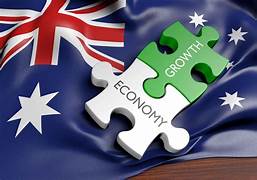
Australian Economy Faces Mixed Outlook as IMF Warns of Global Trade Tensions

Share via:

Growth Forecast Remains Resilient Amid US-China Tariff Uncertainty

The Australian economy is navigating a period of cautious optimism after the International Monetary Fund (IMF) revised its global growth outlook upward for 2025, while warning that renewed US-China trade tensions could destabilize markets. According to the IMF’s latest World Economic Outlook report, published on October 14, 2025, Australia’s near-term prospects remain steady but exposed to rising geopolitical and trade-related risks.

IMF Lifts Global Growth Outlook — But Cautions on Trade

The IMF now expects global GDP growth to reach 3.2% in 2025, slightly higher than its July forecast of 3.0%, citing resilient consumer demand and improved supply chain stability. However, the report warned that escalating tariffs between Washington and Beijing could undermine trade flows and commodity markets — a development with direct consequences for export-oriented economies like Australia.

Australia’s economy, heavily tied to mineral exports and agricultural trade with China, could experience short-term volatility if the world’s two largest economies intensify their tariff disputes.

“While the global economy has shown surprising resilience, renewed trade frictions could limit export momentum for countries dependent on cross-border flows,” said IMF chief economist Pierre-Olivier Gourinchas.

The Australian Economy: Resilient but Vulnerable

The IMF projects that the Australian economy will grow by 2.1% in 2025, a modest improvement from earlier estimates, supported by robust domestic demand, higher services exports, and a stabilizing housing market.

However, analysts warn that any disruption in Chinese demand for iron ore, coal, and liquefied natural gas (LNG) could weaken Australia’s export income and impact the Australian dollar. The currency has already shown mild depreciation since mid-September amid uncertainty over global trade policy.

Economists note that Australia’s economic resilience depends on balancing its export dependency on China with diversification toward India, Southeast Asia, and North America.

“Australia’s strong fundamentals remain intact, but trade disruptions and commodity price fluctuations are key downside risks,” said Sarah Liu, a senior economist at Westpac.

Inflation and Interest Rates in Focus

Domestically, the Reserve Bank of Australia (RBA) faces the challenge of balancing stubborn inflation with the need to maintain economic momentum. The IMF expects Australia’s inflation rate to average 3.1% in 2025, just above the RBA’s target range.

The central bank is expected to hold interest rates steady in the near term to avoid stifling household consumption and business investment. However, high borrowing costs continue to weigh on the housing and retail sectors.

“We are seeing early signs of inflation cooling, but monetary policy will need to remain cautious,” the IMF noted in its regional assessment.

The China Factor and Commodity Exports

China remains Australia’s largest trading partner, accounting for roughly 30% of exports. Any escalation in the US-China trade war could suppress global demand for Australian resources, particularly iron ore and lithium — commodities critical to China’s infrastructure and electric vehicle industries.

At the same time, the IMF highlighted Australia’s emerging opportunities in renewable energy, green hydrogen, and rare earth minerals — sectors that could help reduce dependency on traditional resource exports.

Outlook: Resilient Growth, Global Headwinds

While the IMF’s forecast signals steady progress for the Australian economy, global uncertainties remain significant. Analysts expect modest GDP growth through early 2026, supported by steady consumer spending, infrastructure projects, and service exports such as education and tourism.

However, the country’s outlook will largely depend on how global trade relationships evolve in the coming months. A sustained escalation in tariff measures between the US and China could weigh heavily on regional economies, including Australia.

Conclusion

In summary, the Australian economy continues to display resilience amid global headwinds, benefiting from sound policy frameworks and a diversified trade base. Yet, with global trade tensions resurfacing, policymakers face a delicate balancing act — maintaining growth while navigating external shocks.

The IMF’s latest report serves as both a vote of confidence and a cautionary note: while the world economy is healing, the path forward for Australia will require vigilance, adaptability, and continued focus on long-term diversification.

Stay Updated

For the latest news on global markets, the Australian economy, and financial trends, visit Startup News — your go-to destination for expert analysis and business insights.


Disclaimer

We strive to uphold the highest ethical standards in all of our reporting and coverage. We StartupNews.fyi want to be transparent with our readers about any potential conflicts of interest that may arise in our work. It’s possible that some of the investors we feature may have connections to other businesses, including competitors or companies we write about. However, we want to assure our readers that this will not have any impact on the integrity or impartiality of our reporting. We are committed to delivering accurate, unbiased news and information to our audience, and we will continue to uphold our ethics and principles in all of our work. Thank you for your trust and support.

Popular

More Like this

Australian Economy Faces Mixed Outlook as IMF Warns of Global Trade Tensions

Growth Forecast Remains Resilient Amid US-China Tariff Uncertainty

The Australian economy is navigating a period of cautious optimism after the International Monetary Fund (IMF) revised its global growth outlook upward for 2025, while warning that renewed US-China trade tensions could destabilize markets. According to the IMF’s latest World Economic Outlook report, published on October 14, 2025, Australia’s near-term prospects remain steady but exposed to rising geopolitical and trade-related risks.

IMF Lifts Global Growth Outlook — But Cautions on Trade

The IMF now expects global GDP growth to reach 3.2% in 2025, slightly higher than its July forecast of 3.0%, citing resilient consumer demand and improved supply chain stability. However, the report warned that escalating tariffs between Washington and Beijing could undermine trade flows and commodity markets — a development with direct consequences for export-oriented economies like Australia.

Australia’s economy, heavily tied to mineral exports and agricultural trade with China, could experience short-term volatility if the world’s two largest economies intensify their tariff disputes.

“While the global economy has shown surprising resilience, renewed trade frictions could limit export momentum for countries dependent on cross-border flows,” said IMF chief economist Pierre-Olivier Gourinchas.

The Australian Economy: Resilient but Vulnerable

The IMF projects that the Australian economy will grow by 2.1% in 2025, a modest improvement from earlier estimates, supported by robust domestic demand, higher services exports, and a stabilizing housing market.

However, analysts warn that any disruption in Chinese demand for iron ore, coal, and liquefied natural gas (LNG) could weaken Australia’s export income and impact the Australian dollar. The currency has already shown mild depreciation since mid-September amid uncertainty over global trade policy.

Economists note that Australia’s economic resilience depends on balancing its export dependency on China with diversification toward India, Southeast Asia, and North America.

“Australia’s strong fundamentals remain intact, but trade disruptions and commodity price fluctuations are key downside risks,” said Sarah Liu, a senior economist at Westpac.

Inflation and Interest Rates in Focus

Domestically, the Reserve Bank of Australia (RBA) faces the challenge of balancing stubborn inflation with the need to maintain economic momentum. The IMF expects Australia’s inflation rate to average 3.1% in 2025, just above the RBA’s target range.

The central bank is expected to hold interest rates steady in the near term to avoid stifling household consumption and business investment. However, high borrowing costs continue to weigh on the housing and retail sectors.

“We are seeing early signs of inflation cooling, but monetary policy will need to remain cautious,” the IMF noted in its regional assessment.

The China Factor and Commodity Exports

China remains Australia’s largest trading partner, accounting for roughly 30% of exports. Any escalation in the US-China trade war could suppress global demand for Australian resources, particularly iron ore and lithium — commodities critical to China’s infrastructure and electric vehicle industries.

At the same time, the IMF highlighted Australia’s emerging opportunities in renewable energy, green hydrogen, and rare earth minerals — sectors that could help reduce dependency on traditional resource exports.

Outlook: Resilient Growth, Global Headwinds

While the IMF’s forecast signals steady progress for the Australian economy, global uncertainties remain significant. Analysts expect modest GDP growth through early 2026, supported by steady consumer spending, infrastructure projects, and service exports such as education and tourism.

However, the country’s outlook will largely depend on how global trade relationships evolve in the coming months. A sustained escalation in tariff measures between the US and China could weigh heavily on regional economies, including Australia.

Conclusion

In summary, the Australian economy continues to display resilience amid global headwinds, benefiting from sound policy frameworks and a diversified trade base. Yet, with global trade tensions resurfacing, policymakers face a delicate balancing act — maintaining growth while navigating external shocks.

The IMF’s latest report serves as both a vote of confidence and a cautionary note: while the world economy is healing, the path forward for Australia will require vigilance, adaptability, and continued focus on long-term diversification.

Stay Updated

For the latest news on global markets, the Australian economy, and financial trends, visit Startup News — your go-to destination for expert analysis and business insights.

Disclaimer

We strive to uphold the highest ethical standards in all of our reporting and coverage. We StartupNews.fyi want to be transparent with our readers about any potential conflicts of interest that may arise in our work. It’s possible that some of the investors we feature may have connections to other businesses, including competitors or companies we write about. However, we want to assure our readers that this will not have any impact on the integrity or impartiality of our reporting. We are committed to delivering accurate, unbiased news and information to our audience, and we will continue to uphold our ethics and principles in all of our work. Thank you for your trust and support.

Website Upgradation is going on for any glitch kindly connect at office@startupnews.fyi

More like this

Microsoft’s ‘unhackable’ Xbox One has been hacked by ‘Bliss’...

A groundbreaking hack for Microsoft’s ‘unhackable’ Xbox One was...

Google Messages is rolling out a fix for its...

Joe Maring / Android AuthorityTL;DR Google Messages beta (v20260306) is...

iOS 27 Will Reportedly Be Like Mac OS X...

In his Power On newsletter today, Bloomberg's Mark Gurman...

Popular

iptv iptv iptv iptv iptv iptv iptv iptv iptv iptv iptv iptv iptv iptv iptv iptv iptv iptv iptv iptv iptv iptv iptv iptv melhor iptv portugal lista melhor iptv portugal lista melhor iptv portugal lista melhor iptv portugal lista melhor iptv portugal lista melhor iptv portugal lista melhor iptv portugal lista melhor iptv portugal lista melhor iptv portugal lista melhor iptv portugal lista melhor iptv portugal lista melhor iptv portugal lista melhor iptv portugal lista melhor iptv portugal lista melhor iptv portugal lista melhor iptv portugal lista melhor iptv portugal lista melhor iptv portugal lista melhor iptv portugal lista melhor iptv portugal lista melhor iptv portugal lista melhor iptv portugal lista melhor iptv portugal lista melhor iptv portugal lista melhor iptv portugal lista melhor iptv portugal lista melhor iptv portugal lista melhor iptv portugal lista melhor iptv portugal lista melhor iptv portugal lista melhor iptv portugal lista melhor iptv portugal lista melhor iptv portugal lista melhor iptv portugal lista melhor iptv portugal lista melhor iptv portugal lista melhor iptv portugal lista melhor iptv portugal lista melhor iptv portugal lista melhor iptv portugal lista melhor iptv portugal lista melhor iptv portugal lista melhor iptv portugal lista melhor iptv portugal lista melhor iptv portugal lista melhor iptv portugal lista melhor iptv portugal lista melhor iptv portugal lista melhor iptv portugal lista melhor iptv portugal lista melhor iptv portugal lista melhor iptv portugal lista melhor iptv portugal lista melhor iptv portugal lista melhor iptv portugal lista melhor iptv portugal lista melhor iptv portugal lista melhor iptv portugal lista melhor iptv portugal lista melhor iptv portugal lista melhor iptv portugal lista melhor iptv portugal lista melhor iptv portugal lista melhor iptv portugal lista melhor iptv portugal lista melhor iptv portugal lista best iptv best iptv best iptv best iptv best iptv best iptv best iptv best iptv best iptv best iptv best iptv best iptv best iptv best iptv best iptv best iptv best iptv best iptv best iptv best iptv best iptv best iptv best iptv best iptv best iptv best iptv best iptv best iptv best iptv best iptv best iptv best iptv best iptv best iptv best iptv best iptv best iptv best iptv best iptv best iptv best iptv best iptv best iptv best iptv best iptv best iptv best iptv best iptv best iptv best iptv best iptv best iptv best iptv best iptv best iptv best iptv best iptv best iptv best iptv best iptv best iptv best iptv best iptv best iptv best iptv best iptv best iptv best iptv best iptv best iptv best iptv best iptv best iptv best iptv best iptv best iptv best iptv best iptv best iptv best iptv best iptv best iptv best iptv best iptv best iptv best iptv best iptv best iptv best iptv best iptv best iptv best iptv best iptv best iptv best iptv best iptv best iptv best iptv best iptv best iptv best iptv best iptv best iptv best iptv best iptv best iptv best iptv best iptv best iptv best iptv best iptv best iptv best iptv best iptv best iptv best iptv best iptv best iptv best iptv best iptv best iptv best iptv best iptv best iptv best iptv best iptv best iptv best iptv best iptv best iptv best iptv best iptv best iptv best iptv best iptv best iptv best iptv best iptv best iptv best iptv best iptv best iptv best iptv best iptv best iptv best iptv best iptv best iptv best iptv best iptv best iptv best iptv best iptv best iptv best iptv best iptv best iptv best iptv best iptv best iptv best iptv best iptv best iptv best iptv best iptv best iptv best iptv best iptv best iptv best iptv best iptv best iptv best iptv best iptv best iptv best iptv best iptv best iptv best iptv best iptv best iptv best iptv best iptv best iptv best iptv best iptv best iptv best iptv best iptv best iptv best iptv best iptv best iptv best iptv best iptv best iptv best iptv best iptv best iptv iptv iptv iptv iptv iptv iptv iptv iptv iptv iptv iptv iptv iptv portugal iptv portugal iptv portugal iptv portugal iptv portugal iptv portugal iptv portugal iptv portugal iptv portugal iptv portugal iptv portugal iptv portugal iptv iptv iptv iptv iptv iptv iptv iptv iptv iptv iptv iptv