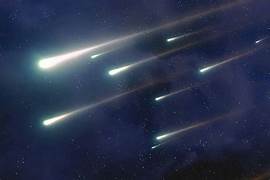
What Time Is the Meteor Shower Tonight? Orionids Peak With Stunning Shooting Stars

Share via:

Stargazers Prepare for the Orionid Meteor Shower Peak Tonight

Skywatchers across the globe are in for a dazzling celestial show tonight as the Orionid meteor shower reaches its annual peak. If you’ve been wondering what time is the meteor shower tonight, the best viewing begins around 8 p.m. ET on Monday, October 20, and continues through the early hours of Tuesday morning.

According to EarthSky and NASA, the Orionids will produce 10 to 20 shooting stars per hour under clear skies. The event coincides with a new moon, which means there will be minimal moonlight interference — perfect conditions to spot bright, fast-moving streaks of light blazing across the night sky.

When and Where to Watch the Orionid Meteor Shower Tonight

So, is there a meteor shower tonight? Absolutely. The Orionids are one of the most reliable meteor displays of the year, and they’ll be visible across both hemispheres.

For the best view, experts recommend heading outside around 10 p.m. local time, away from city lights, and allowing your eyes about 20 minutes to adjust to the darkness. You can also catch more activity in the early morning hours between 4 and 5 a.m., when the radiant point in the Orion constellation is higher in the sky.

“Don’t worry if you miss the exact peak,” said Robert Lunsford, fireball report coordinator for the American Meteor Society. “The Orionids don’t have a sharp cutoff, so you’ll still see almost the same level of activity for a couple of nights afterward.”

Shooting Stars Tonight: What to Expect

Unlike slower meteor showers, the Orionids are fast and bright, often leaving glowing trails — or “persistent trains” — that last a few seconds after the meteor disappears. Some observers even catch occasional fireballs, the term for meteors that explode into brilliant flashes.

The meteor shower originates from debris shed by Halley’s Comet, which passes through Earth’s orbit twice each century. As Earth moves through the comet’s trail every October, tiny particles enter our atmosphere at speeds over 40 miles per second, burning up in spectacular bursts of light.

If you spot a meteor that seems to zip across the sky from the east near Orion’s “belt,” that’s an Orionid shooting star. Meanwhile, a few slower meteors may appear from the west — those belong to the Southern Taurids, another active shower that will peak in early November.

The Science Behind the Orionids

The Orionid meteor shower occurs when Earth passes through remnants of Comet 1P/Halley, which last appeared in 1986 and is expected to return in 2061. Despite the comet being far away, its debris continues to light up the sky every October, offering a cosmic reminder of our solar system’s dynamic nature.

NASA scientists explain that the Orionids’ speed makes them particularly striking. “These meteors travel at about 41 miles per second, and their brilliance can rival the brightest stars in the sky,” one NASA astronomer said.

Because the shower peaks during a new moon, 2025’s Orionids are expected to be among the best in recent years — a treat for anyone hoping to spot shooting stars tonight.

How to Capture the Best Meteor Moments

To maximize your chances, stargazing experts suggest:

  • Find a dark, open area with a wide view of the sky
  • Avoid looking at your phone or using flashlights
  • Bring a blanket or reclining chair so you can comfortably gaze upward
  • Use a camera with a long exposure if you want to photograph the meteors

While telescopes or binoculars aren’t necessary, patience is key. The more time you spend outside, the more likely you’ll catch multiple bursts of activity.

More Meteor Showers to Watch This Year

If clouds block your view tonight, don’t worry — more meteor action is coming. The Southern Taurids will peak on November 4–5, followed by the Leonids (November 16–17) and the spectacular Geminids (December 13–14).

But for now, the Orionids are taking center stage — making tonight the perfect opportunity to enjoy nature’s own fireworks show.

Stay Ahead with Startup News

For updates on how technology, startups, and innovation are transforming industries like aviation, visit Startup News — your trusted source for breaking news and smart business insights.


Disclaimer

We strive to uphold the highest ethical standards in all of our reporting and coverage. We StartupNews.fyi want to be transparent with our readers about any potential conflicts of interest that may arise in our work. It’s possible that some of the investors we feature may have connections to other businesses, including competitors or companies we write about. However, we want to assure our readers that this will not have any impact on the integrity or impartiality of our reporting. We are committed to delivering accurate, unbiased news and information to our audience, and we will continue to uphold our ethics and principles in all of our work. Thank you for your trust and support.

Popular

More Like this

What Time Is the Meteor Shower Tonight? Orionids Peak With Stunning Shooting Stars

Stargazers Prepare for the Orionid Meteor Shower Peak Tonight

Skywatchers across the globe are in for a dazzling celestial show tonight as the Orionid meteor shower reaches its annual peak. If you’ve been wondering what time is the meteor shower tonight, the best viewing begins around 8 p.m. ET on Monday, October 20, and continues through the early hours of Tuesday morning.

According to EarthSky and NASA, the Orionids will produce 10 to 20 shooting stars per hour under clear skies. The event coincides with a new moon, which means there will be minimal moonlight interference — perfect conditions to spot bright, fast-moving streaks of light blazing across the night sky.

When and Where to Watch the Orionid Meteor Shower Tonight

So, is there a meteor shower tonight? Absolutely. The Orionids are one of the most reliable meteor displays of the year, and they’ll be visible across both hemispheres.

For the best view, experts recommend heading outside around 10 p.m. local time, away from city lights, and allowing your eyes about 20 minutes to adjust to the darkness. You can also catch more activity in the early morning hours between 4 and 5 a.m., when the radiant point in the Orion constellation is higher in the sky.

“Don’t worry if you miss the exact peak,” said Robert Lunsford, fireball report coordinator for the American Meteor Society. “The Orionids don’t have a sharp cutoff, so you’ll still see almost the same level of activity for a couple of nights afterward.”

Shooting Stars Tonight: What to Expect

Unlike slower meteor showers, the Orionids are fast and bright, often leaving glowing trails — or “persistent trains” — that last a few seconds after the meteor disappears. Some observers even catch occasional fireballs, the term for meteors that explode into brilliant flashes.

The meteor shower originates from debris shed by Halley’s Comet, which passes through Earth’s orbit twice each century. As Earth moves through the comet’s trail every October, tiny particles enter our atmosphere at speeds over 40 miles per second, burning up in spectacular bursts of light.

If you spot a meteor that seems to zip across the sky from the east near Orion’s “belt,” that’s an Orionid shooting star. Meanwhile, a few slower meteors may appear from the west — those belong to the Southern Taurids, another active shower that will peak in early November.

The Science Behind the Orionids

The Orionid meteor shower occurs when Earth passes through remnants of Comet 1P/Halley, which last appeared in 1986 and is expected to return in 2061. Despite the comet being far away, its debris continues to light up the sky every October, offering a cosmic reminder of our solar system’s dynamic nature.

NASA scientists explain that the Orionids’ speed makes them particularly striking. “These meteors travel at about 41 miles per second, and their brilliance can rival the brightest stars in the sky,” one NASA astronomer said.

Because the shower peaks during a new moon, 2025’s Orionids are expected to be among the best in recent years — a treat for anyone hoping to spot shooting stars tonight.

How to Capture the Best Meteor Moments

To maximize your chances, stargazing experts suggest:

  • Find a dark, open area with a wide view of the sky
  • Avoid looking at your phone or using flashlights
  • Bring a blanket or reclining chair so you can comfortably gaze upward
  • Use a camera with a long exposure if you want to photograph the meteors

While telescopes or binoculars aren’t necessary, patience is key. The more time you spend outside, the more likely you’ll catch multiple bursts of activity.

More Meteor Showers to Watch This Year

If clouds block your view tonight, don’t worry — more meteor action is coming. The Southern Taurids will peak on November 4–5, followed by the Leonids (November 16–17) and the spectacular Geminids (December 13–14).

But for now, the Orionids are taking center stage — making tonight the perfect opportunity to enjoy nature’s own fireworks show.

Stay Ahead with Startup News

For updates on how technology, startups, and innovation are transforming industries like aviation, visit Startup News — your trusted source for breaking news and smart business insights.

Disclaimer

We strive to uphold the highest ethical standards in all of our reporting and coverage. We StartupNews.fyi want to be transparent with our readers about any potential conflicts of interest that may arise in our work. It’s possible that some of the investors we feature may have connections to other businesses, including competitors or companies we write about. However, we want to assure our readers that this will not have any impact on the integrity or impartiality of our reporting. We are committed to delivering accurate, unbiased news and information to our audience, and we will continue to uphold our ethics and principles in all of our work. Thank you for your trust and support.

Website Upgradation is going on for any glitch kindly connect at office@startupnews.fyi

More like this

Zepto claims Hyderabad accident victim was not its delivery...

Quick commerce platform Zepto clarified in a post...

MeitY says no plan to seek smartphone source code...

The Ministry of Electronics and Information Technology (MeitY)...

The Verge Awards at CES 2026: The Best New...

The Verge Awards at CES 2026 highlighted the most...

Popular

iptv iptv iptv