
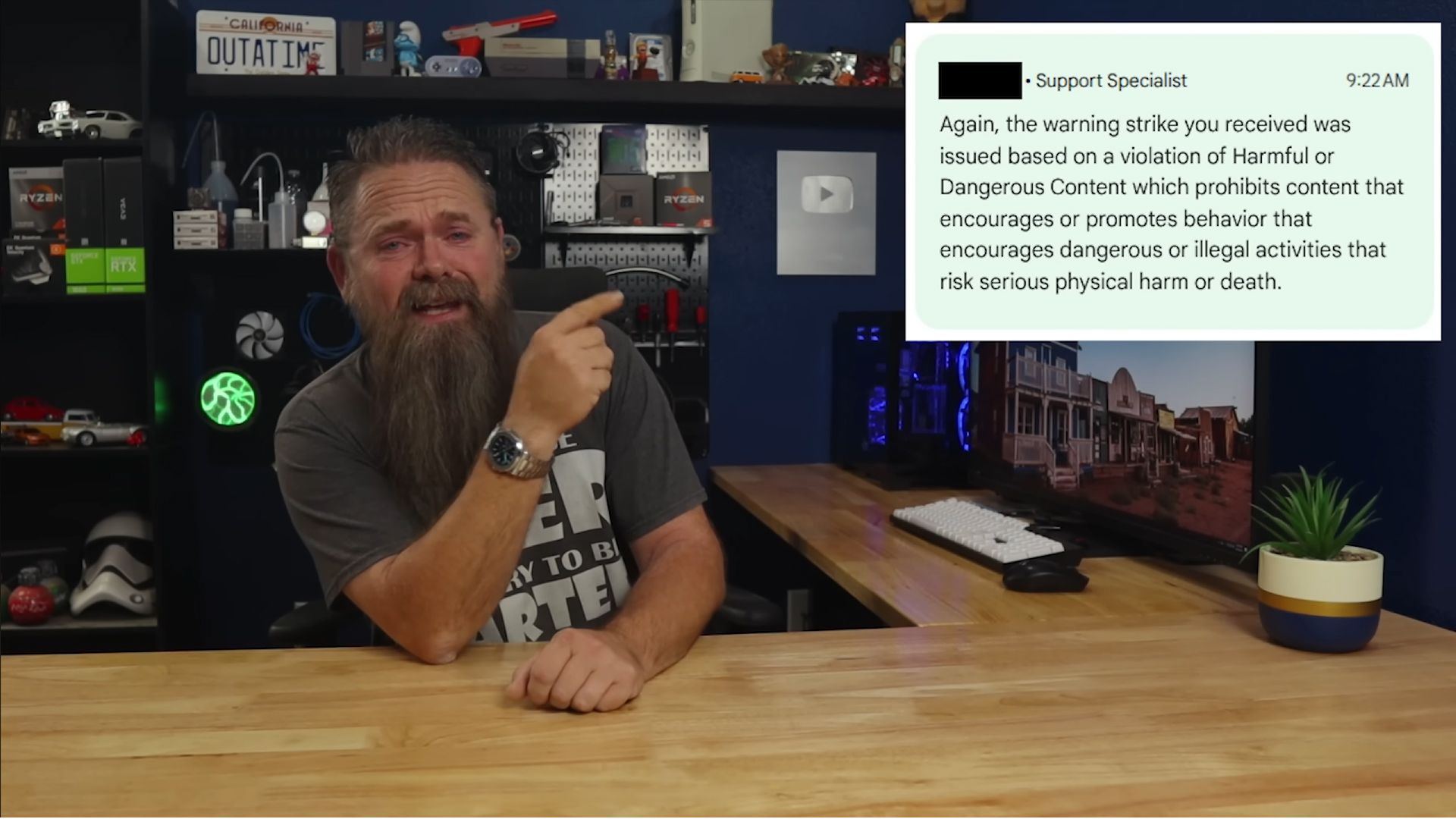
A YouTube creator’s videos, posted just days apart and demonstrating how to bypass data-analytics-id=”inline-link” href=”https://www.tomshardware.com/tag/microsoft” data-auto-tag-linker=”true” data-before-rewrite-localise=”https://www.tomshardware.com/tag/microsoft”>Microsoft’s data-analytics-id=”inline-link” href=”https://www.tomshardware.com/tag/windows-11″ data-auto-tag-linker=”true” data-before-rewrite-localise=”https://www.tomshardware.com/tag/windows-11″>Windows 11 limitations, were removed for allegedly violating the platform’s community guidelines. Rich, the creator behind the channel data-analytics-id=”inline-link” href=”https://www.youtube.com/watch?v=l6p6g0-JUNA” target=”_blank” data-url=”https://www.youtube.com/watch?v=l6p6g0-JUNA” referrerpolicy=”no-referrer-when-downgrade” data-hl-processed=”none”>CyberCPU Tech, suspected that the takedown of the first YouTube video, a guide on data-analytics-id=”inline-link” href=”https://www.tomshardware.com/how-to/install-windows-11-without-microsoft-account” target=”_blank” data-before-rewrite-localise=”https://www.tomshardware.com/how-to/install-windows-11-without-microsoft-account”>how to log in to Windows 11 using only a local account, was due to YouTube’s AI algorithm flagging it as a false positive. However, he also said that he hoped his next video, which showed…


