Startup Leaders Debate AI’s ‘Compulsion’ and the Future of Indian Brands

Share via:

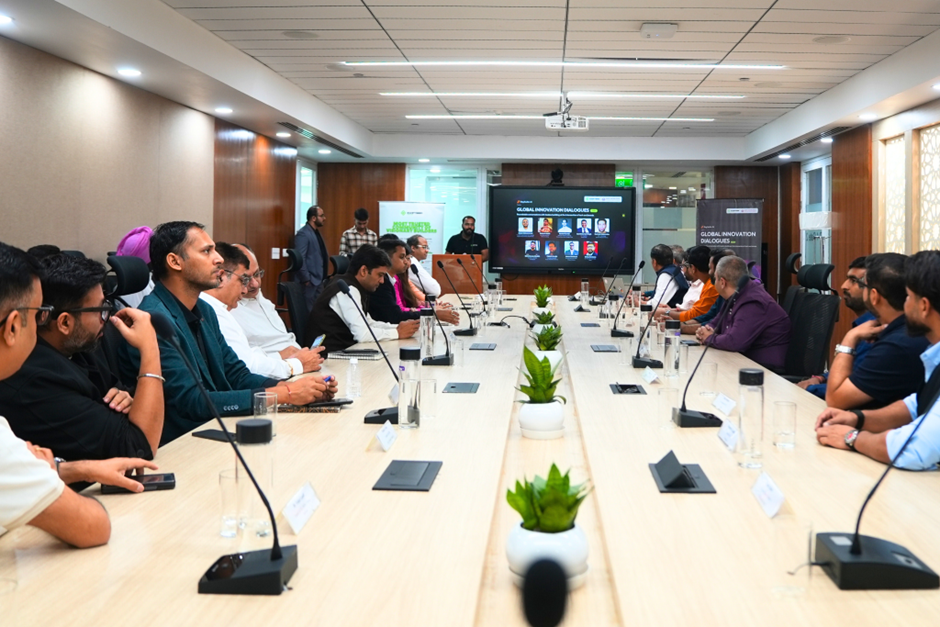
India’s rapidly evolving AI landscape took center stage at the Global Innovation Dialogues – Vol. 02, hosted at IIT Delhi under the theme “Where Intelligence Meets Impact, and Brands Shape the Future.”

The closed-door roundtable brought together over 30 founders, investors, corporate leaders, and academics to discuss how Artificial Intelligence (AI) is transforming brands, reshaping consumer behavior, and redefining work itself.

The discussion was hosted by Amar Dixit of SwiftSeed Ventures and Amit Singal, Founder of Easy Knowledge Club. With RaySuite AI as the presenting partner and StayCircle as the Travel Partner, the Event Took Place.

The roundtable brought together a carefully curated mix of participants, representing a dynamic blend of founders, investors, academics, finance leaders, and corporate strategists. The audience comprised 8 founders and tech builders, 7 investors and venture capital professionals, 3 finance and compliance experts, 3 academics and educators, 4 corporate and ecosystem strategists, along with the organising partners.


AI as a ‘Compulsion,’ Not an Option

Opening the discussion, Atyab Mohd, Founder of RaySuite AI, quoted Nvidia’s CEO to set the tone: “If you’re not using AI, you’re going to lose your job.” He clarified, however, that the shift is not about AI replacing people, but about “people who use AI replacing those who don’t.”
RaySuite demonstrated a tool that generates short-form, user-generated content in just 15 seconds—symbolic of the new attention economy where speed and adaptability define brand survival.
Participants noted a sharp decline in traditional search behavior, with users moving from Google to AI tools, Instagram, and TikTok. The consensus: businesses must adapt to Generative Engine Optimization (GEO) rather than legacy SEO strategies.

The Intelligence That Isn’t

Dr. Pankaj Dikshit (Cygnet.One, former CTO, GeM) agreed that despite AI’s promise, implementation remains constrained by skill shortages. “Even if you have an idea for conversational intelligence, finding people who can execute it is a global challenge,” he said.

Dr. Ashish Dubey (Faculty In-Charge, IIM Lucknow EIC) proposed marketing automation but warned of the unintended societal consequence of excess free time: “Governments will have to rethink how to keep citizens meaningfully engaged.”

Prof. Gourav Dwivedi (Professor at IIT Delhi) questioned inclusivity, asking how AI can uplift less-digitally active populations.

Automation Wishlist

When asked what they would automate entirely, leaders gave striking answers:

  • Ankit Prasad suggested automating the CEO role, calling it the “most costly affair”
  • Shrey and Sanjeev (Grest): “Operations and customer journey, areas of highest friction.”

Bridging the Divide: Purpose Over Hype

Across the table, a shared skepticism toward AI hype was evident. Dr. Anand Banka noted that investors increasingly differentiate between startups “actually using AI” and those merely claiming to.

Saksham Kotiya and Mukesh Malik emphasized that sustainable adoption depends on clean, well-defined data rather than marketing narratives. Mukesh Batra added that education and talent alignment must evolve alongside the technology.

Dr. Gandhi revealed that his firm reviews 30 healthcare deals a week and is developing an LLM for healthcare, prioritizing Return on Society (ROS).

The gathering reflected India’s broader AI crossroads: while the potential for inclusion and scale is immense, the gaps in skills, ethics, and data governance remain critical bottlenecks.

Data Sovereignty and India’s Edge

Ravish Kumar from Google India noted that India’s diversity of languages and data scale give it a “unique advantage in the AI application layer.”

Chahat Aggarwal concluded with a call for “purpose-driven AI”: “Build AI that matters, in defence, healthcare, and security, boundaries are essential.”

The roundtable brought together a carefully curated mix of 29 participants, representing a dynamic blend of founders, investors, academics, finance leaders, and corporate strategists. The audience comprised 8 founders and tech builders, 7 investors and venture capital professionals, 3 finance and compliance experts, 3 academics and educators, 4 corporate and ecosystem strategists, along with the organising partners. Among the participants were Ravish Kumar (Google India), Dr. Pankaj Dikshit (Cygnet.One), Vishal Gandhi (BioRx Venture Lab), Saksham Kotiya (Masters’ Union Ventures), Amit Singal (EasyKnowledge), Atyab Mohd and Jafar Khan (RaySuite AI), Shrey Sardana and Sanjeev Agarwal (Grest), Ankit Prasad (Bobble AI), Saurabh Gupta (Varysmart.ai), Mukesh Malik (GKConsulting), Vikas Garg (Startup Buddy), Amar Dixit (SwiftSeed Ventures), Dr. Anand Banka (BDO, Angel Investor), Chahat Aggarwal (A Square Capital), Sunny Kalra (DDB), Puneet Gupta (Unbundl), Imran Shaikh (TrustSignal), Bharat Sharma (Bankys), Santosh Jain (ASR Business Advisors), Rajesh Choudhary and Ankur Barthwal (Stay Circle), Prince Harjai (Parv & Co), Mukesh Batra (Marketscope), Prashant Dwivedi (Native Bytes), Sanjay Gupta (Connecting Universe), Dr. Ashish Dubey (IIM Lucknow), and Prof. Gourav Dwivedi (IIT Delhi).

Collectively, this mix of technology builders, investors, educators, and ecosystem enablers fostered a uniquely multidimensional discussion on innovation, governance, and the evolving role of intelligence in shaping the future of business.

A Step Toward Responsible Innovation

As the session concluded, what emerged was not blind optimism but a call for responsible intelligence. AI, participants agreed, is now a compulsion, but one that demands clarity of purpose, ethics, and inclusion. The next frontier, as several noted, will not be defined by algorithms alone but by the intent and integrity of those building them.

Conclusion: Building AI with Purpose

The discussion closed on a clear note: India’s AI future will be shaped not by those chasing hype but by those building responsibly.

“AI is inevitable, but the choices we make today will decide whether it becomes a tool for empowerment or exclusion.”


Disclaimer

We strive to uphold the highest ethical standards in all of our reporting and coverage. We StartupNews.fyi want to be transparent with our readers about any potential conflicts of interest that may arise in our work. It’s possible that some of the investors we feature may have connections to other businesses, including competitors or companies we write about. However, we want to assure our readers that this will not have any impact on the integrity or impartiality of our reporting. We are committed to delivering accurate, unbiased news and information to our audience, and we will continue to uphold our ethics and principles in all of our work. Thank you for your trust and support.

Popular

More Like this

Startup Leaders Debate AI’s ‘Compulsion’ and the Future of Indian Brands

India’s rapidly evolving AI landscape took center stage at the Global Innovation Dialogues – Vol. 02, hosted at IIT Delhi under the theme “Where Intelligence Meets Impact, and Brands Shape the Future.”

The closed-door roundtable brought together over 30 founders, investors, corporate leaders, and academics to discuss how Artificial Intelligence (AI) is transforming brands, reshaping consumer behavior, and redefining work itself.

The discussion was hosted by Amar Dixit of SwiftSeed Ventures and Amit Singal, Founder of Easy Knowledge Club. With RaySuite AI as the presenting partner and StayCircle as the Travel Partner, the Event Took Place.

The roundtable brought together a carefully curated mix of participants, representing a dynamic blend of founders, investors, academics, finance leaders, and corporate strategists. The audience comprised 8 founders and tech builders, 7 investors and venture capital professionals, 3 finance and compliance experts, 3 academics and educators, 4 corporate and ecosystem strategists, along with the organising partners.


AI as a ‘Compulsion,’ Not an Option

Opening the discussion, Atyab Mohd, Founder of RaySuite AI, quoted Nvidia’s CEO to set the tone: “If you’re not using AI, you’re going to lose your job.” He clarified, however, that the shift is not about AI replacing people, but about “people who use AI replacing those who don’t.”
RaySuite demonstrated a tool that generates short-form, user-generated content in just 15 seconds—symbolic of the new attention economy where speed and adaptability define brand survival.
Participants noted a sharp decline in traditional search behavior, with users moving from Google to AI tools, Instagram, and TikTok. The consensus: businesses must adapt to Generative Engine Optimization (GEO) rather than legacy SEO strategies.

The Intelligence That Isn’t

Dr. Pankaj Dikshit (Cygnet.One, former CTO, GeM) agreed that despite AI’s promise, implementation remains constrained by skill shortages. “Even if you have an idea for conversational intelligence, finding people who can execute it is a global challenge,” he said.

Dr. Ashish Dubey (Faculty In-Charge, IIM Lucknow EIC) proposed marketing automation but warned of the unintended societal consequence of excess free time: “Governments will have to rethink how to keep citizens meaningfully engaged.”

Prof. Gourav Dwivedi (Professor at IIT Delhi) questioned inclusivity, asking how AI can uplift less-digitally active populations.

Automation Wishlist

When asked what they would automate entirely, leaders gave striking answers:

  • Ankit Prasad suggested automating the CEO role, calling it the “most costly affair”
  • Shrey and Sanjeev (Grest): “Operations and customer journey, areas of highest friction.”

Bridging the Divide: Purpose Over Hype

Across the table, a shared skepticism toward AI hype was evident. Dr. Anand Banka noted that investors increasingly differentiate between startups “actually using AI” and those merely claiming to.

Saksham Kotiya and Mukesh Malik emphasized that sustainable adoption depends on clean, well-defined data rather than marketing narratives. Mukesh Batra added that education and talent alignment must evolve alongside the technology.

Dr. Gandhi revealed that his firm reviews 30 healthcare deals a week and is developing an LLM for healthcare, prioritizing Return on Society (ROS).

The gathering reflected India’s broader AI crossroads: while the potential for inclusion and scale is immense, the gaps in skills, ethics, and data governance remain critical bottlenecks.

Data Sovereignty and India’s Edge

Ravish Kumar from Google India noted that India’s diversity of languages and data scale give it a “unique advantage in the AI application layer.”

Chahat Aggarwal concluded with a call for “purpose-driven AI”: “Build AI that matters, in defence, healthcare, and security, boundaries are essential.”

The roundtable brought together a carefully curated mix of 29 participants, representing a dynamic blend of founders, investors, academics, finance leaders, and corporate strategists. The audience comprised 8 founders and tech builders, 7 investors and venture capital professionals, 3 finance and compliance experts, 3 academics and educators, 4 corporate and ecosystem strategists, along with the organising partners. Among the participants were Ravish Kumar (Google India), Dr. Pankaj Dikshit (Cygnet.One), Vishal Gandhi (BioRx Venture Lab), Saksham Kotiya (Masters’ Union Ventures), Amit Singal (EasyKnowledge), Atyab Mohd and Jafar Khan (RaySuite AI), Shrey Sardana and Sanjeev Agarwal (Grest), Ankit Prasad (Bobble AI), Saurabh Gupta (Varysmart.ai), Mukesh Malik (GKConsulting), Vikas Garg (Startup Buddy), Amar Dixit (SwiftSeed Ventures), Dr. Anand Banka (BDO, Angel Investor), Chahat Aggarwal (A Square Capital), Sunny Kalra (DDB), Puneet Gupta (Unbundl), Imran Shaikh (TrustSignal), Bharat Sharma (Bankys), Santosh Jain (ASR Business Advisors), Rajesh Choudhary and Ankur Barthwal (Stay Circle), Prince Harjai (Parv & Co), Mukesh Batra (Marketscope), Prashant Dwivedi (Native Bytes), Sanjay Gupta (Connecting Universe), Dr. Ashish Dubey (IIM Lucknow), and Prof. Gourav Dwivedi (IIT Delhi).

Collectively, this mix of technology builders, investors, educators, and ecosystem enablers fostered a uniquely multidimensional discussion on innovation, governance, and the evolving role of intelligence in shaping the future of business.

A Step Toward Responsible Innovation

As the session concluded, what emerged was not blind optimism but a call for responsible intelligence. AI, participants agreed, is now a compulsion, but one that demands clarity of purpose, ethics, and inclusion. The next frontier, as several noted, will not be defined by algorithms alone but by the intent and integrity of those building them.

Conclusion: Building AI with Purpose

The discussion closed on a clear note: India’s AI future will be shaped not by those chasing hype but by those building responsibly.

“AI is inevitable, but the choices we make today will decide whether it becomes a tool for empowerment or exclusion.”

Disclaimer

We strive to uphold the highest ethical standards in all of our reporting and coverage. We StartupNews.fyi want to be transparent with our readers about any potential conflicts of interest that may arise in our work. It’s possible that some of the investors we feature may have connections to other businesses, including competitors or companies we write about. However, we want to assure our readers that this will not have any impact on the integrity or impartiality of our reporting. We are committed to delivering accurate, unbiased news and information to our audience, and we will continue to uphold our ethics and principles in all of our work. Thank you for your trust and support.

Website Upgradation is going on for any glitch kindly connect at office@startupnews.fyi

More like this

Amazon urges staff to stay in US amid visa...

Tech giants like Google, Amazon, and Apple have...

iOS 26.3 public beta now available, here’s what’s new

iOS 26.3 is now available in public beta,...

Sam Altman teases ChatGPT Christmas Easter egg that turns...

OpenAI chief executive Sam Altman has given ChatGPT...

Popular