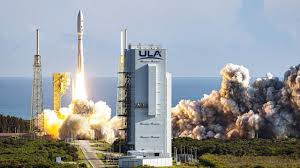
ULA Launches Viasat-3 Communications Satellite on Atlas V Rocket from Cape Canaveral

Share via:

In a major milestone for commercial satellite communications, United Launch Alliance (ULA) successfully carried out its highly anticipated ULA launch from Cape Canaveral on Wednesday, deploying the Viasat-3 communications satellite aboard an Atlas V rocket. The liftoff marks another successful chapter in ULA’s legacy of reliable launches, reinforcing its standing as a major player in the aerospace sector amid increasing competition from SpaceX and other private launch providers.

Details of the ULA Launch

The ULA launch took place from Space Launch Complex 41 at Cape Canaveral Space Force Station in Florida. The Atlas V rocket, one of the most trusted vehicles in ULA’s fleet, lifted off carrying the Viasat-3 Americas satellite, designed to deliver next-generation broadband internet coverage across the Western Hemisphere.

The satellite, built by Boeing for Viasat Inc., represents one of the most powerful communications satellites ever launched, featuring advanced Ka-band payload technology capable of supporting up to 1 terabit per second (Tbps) of network capacity. Once fully operational, it will provide faster, more reliable connectivity for users across North and South America, including underserved regions.

ULA confirmed that the payload separation occurred successfully, placing the satellite into its designated geostationary transfer orbit approximately 35 minutes after launch.

A Smooth Mission After Weather Delays

The ULA launch had faced minor schedule adjustments due to unfavorable weather conditions and last-minute system checks. However, mission controllers gave the final “go” for launch after ensuring optimal conditions for both rocket and satellite deployment.

Mark Peller, ULA’s Vice President of Major Development, remarked after the launch, “Atlas V has once again delivered. The precision and dependability of our launch systems remain unmatched in the industry.”

This mission also stands out as one of the last Atlas V launches before ULA transitions fully to its next-generation Vulcan Centaur rocket, which will replace both the Atlas V and Delta IV families in the coming years.

Competition Heats Up with SpaceX

The successful ULA launch comes amid a particularly busy week in the aerospace sector, with a SpaceX launch today also drawing attention. SpaceX is preparing for multiple missions in November, including Starlink satellite deployments and crewed missions to the International Space Station.

While SpaceX launches have dominated headlines with rapid reusability and lower costs, ULA continues to distinguish itself with its impeccable success record, precision engineering, and focus on national security and commercial satellite missions.

This latest mission highlights ULA’s ongoing relevance in a market that’s becoming increasingly competitive, particularly as both companies pursue lucrative contracts from NASA, the U.S. Space Force, and private telecommunications firms.

Importance of the Viasat-3 Mission

The Viasat-3 constellation, a series of three high-capacity satellites, is intended to provide global broadband coverage. The first satellite covers the Americas, the second will focus on Europe, the Middle East, and Africa, and the third will serve the Asia-Pacific region.

The system is expected to enhance connectivity for airlines, maritime vessels, military users, and remote consumers, while also supporting emergency response and government operations.

With this ULA launch, the Viasat-3 program takes a significant step forward, bringing the company closer to achieving global coverage by the end of the decade.

ULA’s Strategic Outlook and Future Launches

As ULA shifts focus toward its Vulcan Centaur program, this mission reinforces its reputation for reliability as it prepares to compete head-to-head with SpaceX’s Falcon 9 and Starship systems.

ULA currently has a robust manifest that includes national security payloads, NASA missions, and commercial partnerships. The upcoming Vulcan launches are expected to deliver higher performance, improved cost efficiency, and increased payload capacity—vital factors for the evolving aerospace market.

CEO Tory Bruno has emphasized that ULA’s future strategy centers around innovation, safety, and sustainability, ensuring that every ULA launch continues to meet the stringent demands of government and commercial customers alike.

The Broader Space Launch Landscape

The rocket launch industry is experiencing unprecedented growth, with multiple players—SpaceX, ULA, Blue Origin, and Rocket Lab—competing for contracts and technological supremacy. The collaboration between traditional aerospace firms and emerging startups has also accelerated advancements in rocket reusability, propulsion systems, and satellite technologies.

With governments and corporations increasingly reliant on space-based systems for communications, defense, and Earth observation, launches like this one play a critical role in maintaining global infrastructure and connectivity.

Conclusion

The successful ULA launch of the Viasat-3 satellite marks another victory for the company’s legacy of reliability and precision. As the aerospace race intensifies—with SpaceX launches setting new records and emerging competitors entering the field—ULA remains a cornerstone of American space operations.

This mission not only enhances global broadband capabilities but also showcases the continued importance of collaboration between aerospace manufacturers, satellite providers, and launch service operators in advancing global connectivity.


Stay updated with the latest in aerospace, startups, and technology — visit StartupNews.fyi for exclusive news and insights shaping tomorrow’s innovation.

Disclaimer

We strive to uphold the highest ethical standards in all of our reporting and coverage. We StartupNews.fyi want to be transparent with our readers about any potential conflicts of interest that may arise in our work. It’s possible that some of the investors we feature may have connections to other businesses, including competitors or companies we write about. However, we want to assure our readers that this will not have any impact on the integrity or impartiality of our reporting. We are committed to delivering accurate, unbiased news and information to our audience, and we will continue to uphold our ethics and principles in all of our work. Thank you for your trust and support.

Popular

More Like this

ULA Launches Viasat-3 Communications Satellite on Atlas V Rocket from Cape Canaveral

In a major milestone for commercial satellite communications, United Launch Alliance (ULA) successfully carried out its highly anticipated ULA launch from Cape Canaveral on Wednesday, deploying the Viasat-3 communications satellite aboard an Atlas V rocket. The liftoff marks another successful chapter in ULA’s legacy of reliable launches, reinforcing its standing as a major player in the aerospace sector amid increasing competition from SpaceX and other private launch providers.

Details of the ULA Launch

The ULA launch took place from Space Launch Complex 41 at Cape Canaveral Space Force Station in Florida. The Atlas V rocket, one of the most trusted vehicles in ULA’s fleet, lifted off carrying the Viasat-3 Americas satellite, designed to deliver next-generation broadband internet coverage across the Western Hemisphere.

The satellite, built by Boeing for Viasat Inc., represents one of the most powerful communications satellites ever launched, featuring advanced Ka-band payload technology capable of supporting up to 1 terabit per second (Tbps) of network capacity. Once fully operational, it will provide faster, more reliable connectivity for users across North and South America, including underserved regions.

ULA confirmed that the payload separation occurred successfully, placing the satellite into its designated geostationary transfer orbit approximately 35 minutes after launch.

A Smooth Mission After Weather Delays

The ULA launch had faced minor schedule adjustments due to unfavorable weather conditions and last-minute system checks. However, mission controllers gave the final “go” for launch after ensuring optimal conditions for both rocket and satellite deployment.

Mark Peller, ULA’s Vice President of Major Development, remarked after the launch, “Atlas V has once again delivered. The precision and dependability of our launch systems remain unmatched in the industry.”

This mission also stands out as one of the last Atlas V launches before ULA transitions fully to its next-generation Vulcan Centaur rocket, which will replace both the Atlas V and Delta IV families in the coming years.

Competition Heats Up with SpaceX

The successful ULA launch comes amid a particularly busy week in the aerospace sector, with a SpaceX launch today also drawing attention. SpaceX is preparing for multiple missions in November, including Starlink satellite deployments and crewed missions to the International Space Station.

While SpaceX launches have dominated headlines with rapid reusability and lower costs, ULA continues to distinguish itself with its impeccable success record, precision engineering, and focus on national security and commercial satellite missions.

This latest mission highlights ULA’s ongoing relevance in a market that’s becoming increasingly competitive, particularly as both companies pursue lucrative contracts from NASA, the U.S. Space Force, and private telecommunications firms.

Importance of the Viasat-3 Mission

The Viasat-3 constellation, a series of three high-capacity satellites, is intended to provide global broadband coverage. The first satellite covers the Americas, the second will focus on Europe, the Middle East, and Africa, and the third will serve the Asia-Pacific region.

The system is expected to enhance connectivity for airlines, maritime vessels, military users, and remote consumers, while also supporting emergency response and government operations.

With this ULA launch, the Viasat-3 program takes a significant step forward, bringing the company closer to achieving global coverage by the end of the decade.

ULA’s Strategic Outlook and Future Launches

As ULA shifts focus toward its Vulcan Centaur program, this mission reinforces its reputation for reliability as it prepares to compete head-to-head with SpaceX’s Falcon 9 and Starship systems.

ULA currently has a robust manifest that includes national security payloads, NASA missions, and commercial partnerships. The upcoming Vulcan launches are expected to deliver higher performance, improved cost efficiency, and increased payload capacity—vital factors for the evolving aerospace market.

CEO Tory Bruno has emphasized that ULA’s future strategy centers around innovation, safety, and sustainability, ensuring that every ULA launch continues to meet the stringent demands of government and commercial customers alike.

The Broader Space Launch Landscape

The rocket launch industry is experiencing unprecedented growth, with multiple players—SpaceX, ULA, Blue Origin, and Rocket Lab—competing for contracts and technological supremacy. The collaboration between traditional aerospace firms and emerging startups has also accelerated advancements in rocket reusability, propulsion systems, and satellite technologies.

With governments and corporations increasingly reliant on space-based systems for communications, defense, and Earth observation, launches like this one play a critical role in maintaining global infrastructure and connectivity.

Conclusion

The successful ULA launch of the Viasat-3 satellite marks another victory for the company’s legacy of reliability and precision. As the aerospace race intensifies—with SpaceX launches setting new records and emerging competitors entering the field—ULA remains a cornerstone of American space operations.

This mission not only enhances global broadband capabilities but also showcases the continued importance of collaboration between aerospace manufacturers, satellite providers, and launch service operators in advancing global connectivity.


Stay updated with the latest in aerospace, startups, and technology — visit StartupNews.fyi for exclusive news and insights shaping tomorrow’s innovation.

Disclaimer

We strive to uphold the highest ethical standards in all of our reporting and coverage. We StartupNews.fyi want to be transparent with our readers about any potential conflicts of interest that may arise in our work. It’s possible that some of the investors we feature may have connections to other businesses, including competitors or companies we write about. However, we want to assure our readers that this will not have any impact on the integrity or impartiality of our reporting. We are committed to delivering accurate, unbiased news and information to our audience, and we will continue to uphold our ethics and principles in all of our work. Thank you for your trust and support.

Website Upgradation is going on for any glitch kindly connect at office@startupnews.fyi

More like this

Oura Ring 3 vs Oura Ring 4: I’ve tested...

Considering buying an Oura Ring to...

AI’s Hunger For Memory Chips Could Shrink Smartphone and...

The global smartphone and PC markets face potential...

10 Good Lock settings I always change (and you...

Andy Walker / Android AuthoritySamsung may be resistant to...

Popular
