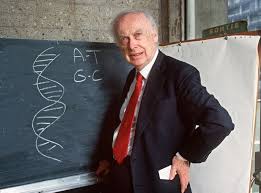
DNA Pioneer James Watson, Co-Discoverer of the Double Helix, Dies at 97

Share via:

James Watson, the groundbreaking American biologist who co-discovered the structure of DNA, has died at the age of 97, according to NPR. Watson, best known for his collaboration with Francis Crick in identifying the double-helix structure of DNA, leaves behind a legacy that transformed modern biology and genetics.

A Giant in Molecular Biology

James Watson’s scientific journey reshaped how humanity understands the code of life. In 1953, alongside Francis Crick, he unveiled the double-helix model of DNA at the University of Cambridge’s Cavendish Laboratory. Their work revealed how genetic information is stored and replicated — a discovery that earned the pair, along with Maurice Wilkins, the 1962 Nobel Prize in Physiology or Medicine.

The Watson and Crick model not only revolutionized genetics but also laid the foundation for advances in genetic engineering, DNA sequencing, and biotechnology. This discovery paved the way for life-saving innovations, including gene therapy, forensic DNA testing, and the Human Genome Project.

Watson later chronicled this monumental scientific journey in his book The Double Helix, published in 1968. The memoir offered readers a candid and sometimes controversial look into the race to uncover DNA’s structure, portraying the ambition, competition, and collaboration that fueled mid-20th-century science.

From Harvard to the Human Genome Project

Born in Chicago in 1928, James Watson studied zoology at the University of Chicago and earned his Ph.D. from Indiana University under the mentorship of Salvador Luria, a pioneer in bacterial genetics. After his discovery with Crick, Watson spent over two decades as a professor at Harvard University, influencing a new generation of scientists.

In 1968, he became the director of the Cold Spring Harbor Laboratory in New York, transforming it into a leading center for molecular biology research. Later, he served as the first head of the Human Genome Project, a massive international effort to map every gene in human DNA — one of the greatest scientific undertakings of the 20th century.

Controversies and Complex Legacy

Despite his scientific brilliance, James Watson’s later years were marked by controversy. His public comments on race, intelligence, and genetics drew widespread criticism and led to his removal from several honorary positions. In 2007, he was suspended from Cold Spring Harbor Laboratory after making remarks deemed racially insensitive.

These incidents complicated his legacy, sparking debate over how to reconcile extraordinary scientific contributions with deeply problematic personal beliefs. Yet, few dispute that Watson’s work with Francis Crick remains one of the most important discoveries in modern science.

The End of an Era in Genetics

Watson’s death marks the passing of the last surviving member of the trio who decoded the structure of DNA. The double helix remains one of the most recognized symbols in science — a universal icon of life and discovery.

Today, the fields of genomics, biotechnology, and personalized medicine owe much to the foundation laid by Watson and Crick. Their model fundamentally changed how scientists study heredity, disease, and evolution.

Current genetic research — from CRISPR gene editing to mRNA vaccine development — continues to build upon the principles first identified by the duo more than 70 years ago.

Tributes from the Scientific Community

Following the announcement of his death, tributes have poured in from leading scientific institutions around the world. The Royal Society, Cold Spring Harbor Laboratory, and several Nobel laureates praised Watson’s contribution to molecular biology while acknowledging the complexities of his later public life.

“Without the discovery made by Watson and Crick, we would not have the foundation for today’s genetic medicine,” said one researcher at the National Institutes of Health. “He changed not just science, but humanity’s understanding of itself.”

Remembering a Complex Visionary

James Watson’s story encapsulates both the triumph and tension of scientific discovery. His work illuminated the very building blocks of life, while his personal views generated ethical discussions that continue to this day.

As the scientific community reflects on his passing, Watson’s enduring legacy lies in the DNA molecule itself — a structure that continues to inspire curiosity, innovation, and the quest for knowledge about what makes us human.


Stay informed with the latest updates in science, technology, and innovation.
Visit StartupNews.fyi for daily coverage of breakthroughs shaping the future of research and discovery.


Disclaimer

We strive to uphold the highest ethical standards in all of our reporting and coverage. We StartupNews.fyi want to be transparent with our readers about any potential conflicts of interest that may arise in our work. It’s possible that some of the investors we feature may have connections to other businesses, including competitors or companies we write about. However, we want to assure our readers that this will not have any impact on the integrity or impartiality of our reporting. We are committed to delivering accurate, unbiased news and information to our audience, and we will continue to uphold our ethics and principles in all of our work. Thank you for your trust and support.

Popular

More Like this

Access Denied

DNA Pioneer James Watson, Co-Discoverer of the Double Helix, Dies at 97

James Watson, the groundbreaking American biologist who co-discovered the structure of DNA, has died at the age of 97, according to NPR. Watson, best known for his collaboration with Francis Crick in identifying the double-helix structure of DNA, leaves behind a legacy that transformed modern biology and genetics.

A Giant in Molecular Biology

James Watson’s scientific journey reshaped how humanity understands the code of life. In 1953, alongside Francis Crick, he unveiled the double-helix model of DNA at the University of Cambridge’s Cavendish Laboratory. Their work revealed how genetic information is stored and replicated — a discovery that earned the pair, along with Maurice Wilkins, the 1962 Nobel Prize in Physiology or Medicine.

The Watson and Crick model not only revolutionized genetics but also laid the foundation for advances in genetic engineering, DNA sequencing, and biotechnology. This discovery paved the way for life-saving innovations, including gene therapy, forensic DNA testing, and the Human Genome Project.

Watson later chronicled this monumental scientific journey in his book The Double Helix, published in 1968. The memoir offered readers a candid and sometimes controversial look into the race to uncover DNA’s structure, portraying the ambition, competition, and collaboration that fueled mid-20th-century science.

From Harvard to the Human Genome Project

Born in Chicago in 1928, James Watson studied zoology at the University of Chicago and earned his Ph.D. from Indiana University under the mentorship of Salvador Luria, a pioneer in bacterial genetics. After his discovery with Crick, Watson spent over two decades as a professor at Harvard University, influencing a new generation of scientists.

In 1968, he became the director of the Cold Spring Harbor Laboratory in New York, transforming it into a leading center for molecular biology research. Later, he served as the first head of the Human Genome Project, a massive international effort to map every gene in human DNA — one of the greatest scientific undertakings of the 20th century.

Controversies and Complex Legacy

Despite his scientific brilliance, James Watson’s later years were marked by controversy. His public comments on race, intelligence, and genetics drew widespread criticism and led to his removal from several honorary positions. In 2007, he was suspended from Cold Spring Harbor Laboratory after making remarks deemed racially insensitive.

These incidents complicated his legacy, sparking debate over how to reconcile extraordinary scientific contributions with deeply problematic personal beliefs. Yet, few dispute that Watson’s work with Francis Crick remains one of the most important discoveries in modern science.

The End of an Era in Genetics

Watson’s death marks the passing of the last surviving member of the trio who decoded the structure of DNA. The double helix remains one of the most recognized symbols in science — a universal icon of life and discovery.

Today, the fields of genomics, biotechnology, and personalized medicine owe much to the foundation laid by Watson and Crick. Their model fundamentally changed how scientists study heredity, disease, and evolution.

Current genetic research — from CRISPR gene editing to mRNA vaccine development — continues to build upon the principles first identified by the duo more than 70 years ago.

Tributes from the Scientific Community

Following the announcement of his death, tributes have poured in from leading scientific institutions around the world. The Royal Society, Cold Spring Harbor Laboratory, and several Nobel laureates praised Watson’s contribution to molecular biology while acknowledging the complexities of his later public life.

“Without the discovery made by Watson and Crick, we would not have the foundation for today’s genetic medicine,” said one researcher at the National Institutes of Health. “He changed not just science, but humanity’s understanding of itself.”

Remembering a Complex Visionary

James Watson’s story encapsulates both the triumph and tension of scientific discovery. His work illuminated the very building blocks of life, while his personal views generated ethical discussions that continue to this day.

As the scientific community reflects on his passing, Watson’s enduring legacy lies in the DNA molecule itself — a structure that continues to inspire curiosity, innovation, and the quest for knowledge about what makes us human.


Stay informed with the latest updates in science, technology, and innovation.
Visit StartupNews.fyi for daily coverage of breakthroughs shaping the future of research and discovery.

Disclaimer

We strive to uphold the highest ethical standards in all of our reporting and coverage. We StartupNews.fyi want to be transparent with our readers about any potential conflicts of interest that may arise in our work. It’s possible that some of the investors we feature may have connections to other businesses, including competitors or companies we write about. However, we want to assure our readers that this will not have any impact on the integrity or impartiality of our reporting. We are committed to delivering accurate, unbiased news and information to our audience, and we will continue to uphold our ethics and principles in all of our work. Thank you for your trust and support.

Website Upgradation is going on for any glitch kindly connect at office@startupnews.fyi

More like this

Access Denied

Access Denied You don't have permission to access...

AI can revolutionise governance if aligned with democratic values:...

Kerala Chief Minister Pinarayi Vijayan said artificial intelligence...

AI scheduling startup Blockit AI raises $5 million in...

Blockit AI, a startup founded by Kais Khimji,...

Popular

iptv best provider iptv best provider iptv best provider iptv best provider iptv best provider iptv best provider iptv best provider iptv best provider iptv best provider iptv best provider iptv best provider iptv best provider iptv best provider iptv best provider iptv best provider iptv best provider iptv best provider iptv best provider iptv best provider iptv best provider iptv best provider iptv best provider iptv best provider iptv best provider iptv best provider iptv best provider iptv best provider iptv best provider iptv best provider iptv best provider iptv best provider iptv best provider iptv best provider iptv best provider iptv best provider iptv best provider iptv best provider iptv best provider iptv best provider iptv best provider iptv best provider iptv best provider iptv best provider iptv best provider iptv best provider iptv best provider iptv best provider iptv best provider iptv best provider iptv best provider iptv best provider iptv best provider iptv best provider iptv best provider iptv best provider iptv best provider iptv best provider iptv best provider iptv best provider iptv best provider iptv best provider iptv best provider iptv best provider iptv best provider iptv best provider iptv best provider iptv best provider iptv best provider iptv best provider iptv best provider iptv best provider iptv best provider iptv best provider iptv best provider iptv best provider iptv best provider iptv best provider iptv best provider iptv best provider iptv best provider iptv best provider iptv best provider iptv best provider iptv best provider iptv best provider iptv best provider iptv best provider iptv best provider iptv best provider iptv best provider iptv best provider iptv best provider iptv best provider iptv best provider iptv best provider iptv best provider iptv best provider iptv best provider iptv best provider iptv best provider iptv best provider iptv best provider iptv best provider iptv best provider iptv best provider iptv best provider iptv best provider iptv best provider iptv best provider iptv best provider iptv best provider iptv best provider iptv best provider iptv best provider iptv best provider iptv best provider iptv best provider iptv best provider iptv best provider iptv best provider iptv best provider iptv best provider iptv best provider iptv best provider iptv best provider iptv best provider iptv best provider iptv best provider iptv best provider iptv best provider iptv best provider iptv best provider iptv best provider iptv best provider iptv best provider iptv best provider iptv best provider iptv best provider iptv best provider iptv best provider iptv best provider iptv best provider iptv best provider iptv best provider iptv best provider iptv best provider iptv best provider iptv best provider iptv best provider iptv best provider iptv best provider iptv best provider iptv best provider iptv best provider iptv best provider iptv best provider iptv best provider iptv best provider iptv best provider iptv best provider iptv best provider iptv best provider iptv best provider iptv best provider iptv best provider iptv best provider iptv best provider iptv best provider iptv best provider iptv best provider iptv best provider iptv best provider iptv best provider iptv best provider iptv best provider iptv best provider iptv best provider iptv best provider iptv best provider iptv best provider iptv best provider iptv best provider iptv best provider iptv best provider iptv best provider iptv best provider iptv best provider iptv best provider iptv best provider iptv best provider iptv best provider iptv best provider iptv best provider iptv best provider iptv best provider iptv best provider iptv best provider iptv best provider iptv best provider iptv poland iptv poland iptv poland iptv poland iptv poland iptv poland iptv poland iptv poland iptv portugal iptv portugal iptv portugal iptv portugal iptv portugal iptv portugal iptv portugal iptv portugal iptv portugal iptv portugal iptv portugal iptv portugal