Ethiopia Volcano Eruption Hayli Gubbi Disrupts Air Travel Between India and UAE

Share via:

Ethiopia’s Hayli Gubbi volcano eruption triggers widespread travel delays

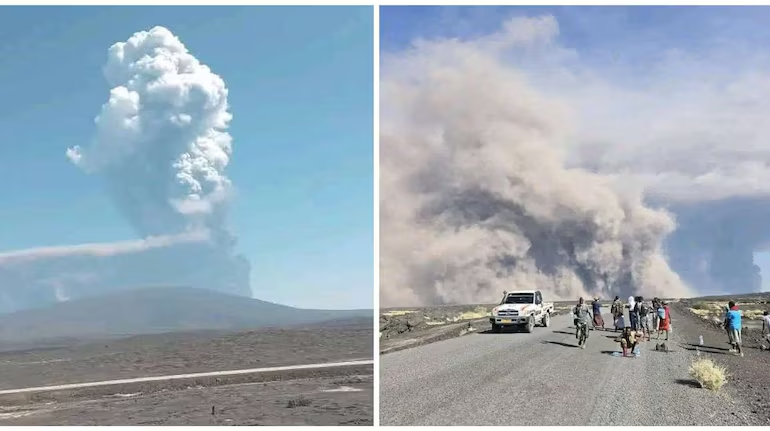
The Ethiopia volcano eruption Hayli Gubbi has caused significant disruptions in air travel across East Africa and the Middle East, leading to flight cancellations and delays on major routes connecting India and the UAE. According to Gulf News, the eruption sent massive plumes of ash into the sky, creating hazardous conditions for air traffic and prompting airlines to suspend several services as a precautionary measure.

The volcano eruption in Ethiopia began late Sunday night, spewing ash and smoke thousands of meters into the atmosphere. Authorities confirmed that volcanic activity at Hayli Gubbi, located in Ethiopia’s Afar region, intensified rapidly, forcing nearby communities to evacuate. Although there have been no immediate reports of casualties, the scale of the eruption has sparked concern across aviation and environmental agencies.

Air travel severely impacted by volcanic ash clouds

The dense ash cloud produced by the Ethiopia volcano eruption Hayli Gubbi has disrupted airspace operations across parts of Ethiopia, Eritrea, and the Arabian Peninsula. The ash, which can damage aircraft engines and reduce visibility, forced multiple airlines — including flydubai, Emirates, and Air India Express — to delay or reroute flights.

Several flights between Indian cities such as Mumbai, Delhi, and Kochi bound for Dubai and Abu Dhabi were either canceled or delayed. Passengers were advised to check flight updates before traveling to the airport.

In a statement, flydubai confirmed that it had temporarily suspended a few routes due to safety concerns arising from the volcano eruption in Ethiopia. “The safety of our passengers and crew is our top priority. We are closely monitoring the situation and will resume normal operations as soon as airspace conditions improve,” the airline said.

Local impact and emergency response in Ethiopia

Within Ethiopia, the eruption of the Hayli Gubbi volcano has led to emergency evacuations in several nearby villages. The Ethiopian Geological Institute reported that lava flows and ash fallout have affected agricultural land and disrupted local transportation. Emergency teams have been deployed to provide medical assistance, distribute masks, and set up shelters for displaced residents.

Government spokesperson Tesfaye Mekonnen stated that authorities are coordinating with international organizations to monitor air quality and assess long-term environmental impacts. “The Ethiopia volcano eruption Hayli Gubbi is one of the strongest volcanic events in the region in recent decades. We are taking all measures necessary to protect our citizens and infrastructure,” he said.

Global monitoring and scientific observation

Volcanologists are closely studying the Ethiopia volcano eruption Hayli Gubbi, as the Afar region is part of the East African Rift — a tectonically active zone where the African continent is slowly splitting apart. Scientists have described the event as a reminder of the geological dynamism of the area, which has produced several eruptions over the past century.

Satellite images show that the ash plume from the volcano eruption in Ethiopia has drifted hundreds of kilometers, reaching as far as Sudan and parts of Saudi Arabia. The eruption has also drawn interest from NASA and the European Space Agency, both of which are using satellite data to analyze the spread of volcanic gases and particulates.

Flight operations expected to resume gradually

Aviation authorities across the UAE and India are coordinating with regional air traffic control centers to track the movement of volcanic ash and determine safe flight corridors. Experts believe that if weather conditions remain stable, commercial air traffic affected by the Ethiopia volcano eruption Hayli Gubbi could return to normal within a few days.

However, meteorologists have warned that shifting winds could cause temporary fluctuations in ash concentration, potentially prolonging disruptions. Airlines such as flydubai have advised passengers to stay updated through official communication channels.

Travelers are also being encouraged to use flexible booking options, as carriers work to re-accommodate stranded passengers. The volcano eruption in Ethiopia has once again highlighted how natural disasters can have ripple effects across international transportation networks.

Economic and environmental repercussions

The Ethiopia volcano eruption Hayli Gubbi is expected to have short-term economic implications, particularly for tourism and logistics sectors in the Horn of Africa. Ash deposits could impact local ecosystems, while prolonged disruptions to air travel may lead to revenue losses for regional airlines and airports.

Environmental experts have expressed concern about potential contamination of water sources and agricultural fields due to volcanic debris. Efforts are underway to assess soil and air quality across affected regions.

Community resilience and scientific importance

Despite the challenges, Ethiopian communities near Hayli Gubbi have shown remarkable resilience. Local authorities and volunteers have mobilized quickly to provide relief supplies and support to families affected by the eruption.

For scientists, the Ethiopia volcano eruption Hayli Gubbi presents an invaluable research opportunity. Studying the eruption’s impact on the atmosphere, geology, and climate could enhance understanding of how such events influence global weather patterns.

Stay updated with the latest global developments

As air traffic slowly resumes and recovery efforts continue, international attention remains focused on Ethiopia’s remarkable geological event. The volcano eruption in Ethiopia serves as a powerful reminder of nature’s unpredictability and the importance of global collaboration in disaster response.For more breaking news on global events, technology, and innovation, visit Startup News at https://startupnews.fyi/.


Disclaimer

We strive to uphold the highest ethical standards in all of our reporting and coverage. We StartupNews.fyi want to be transparent with our readers about any potential conflicts of interest that may arise in our work. It’s possible that some of the investors we feature may have connections to other businesses, including competitors or companies we write about. However, we want to assure our readers that this will not have any impact on the integrity or impartiality of our reporting. We are committed to delivering accurate, unbiased news and information to our audience, and we will continue to uphold our ethics and principles in all of our work. Thank you for your trust and support.

Popular

More Like this

Ethiopia Volcano Eruption Hayli Gubbi Disrupts Air Travel Between India and UAE

Ethiopia’s Hayli Gubbi volcano eruption triggers widespread travel delays

The Ethiopia volcano eruption Hayli Gubbi has caused significant disruptions in air travel across East Africa and the Middle East, leading to flight cancellations and delays on major routes connecting India and the UAE. According to Gulf News, the eruption sent massive plumes of ash into the sky, creating hazardous conditions for air traffic and prompting airlines to suspend several services as a precautionary measure.

The volcano eruption in Ethiopia began late Sunday night, spewing ash and smoke thousands of meters into the atmosphere. Authorities confirmed that volcanic activity at Hayli Gubbi, located in Ethiopia’s Afar region, intensified rapidly, forcing nearby communities to evacuate. Although there have been no immediate reports of casualties, the scale of the eruption has sparked concern across aviation and environmental agencies.

Air travel severely impacted by volcanic ash clouds

The dense ash cloud produced by the Ethiopia volcano eruption Hayli Gubbi has disrupted airspace operations across parts of Ethiopia, Eritrea, and the Arabian Peninsula. The ash, which can damage aircraft engines and reduce visibility, forced multiple airlines — including flydubai, Emirates, and Air India Express — to delay or reroute flights.

Several flights between Indian cities such as Mumbai, Delhi, and Kochi bound for Dubai and Abu Dhabi were either canceled or delayed. Passengers were advised to check flight updates before traveling to the airport.

In a statement, flydubai confirmed that it had temporarily suspended a few routes due to safety concerns arising from the volcano eruption in Ethiopia. “The safety of our passengers and crew is our top priority. We are closely monitoring the situation and will resume normal operations as soon as airspace conditions improve,” the airline said.

Local impact and emergency response in Ethiopia

Within Ethiopia, the eruption of the Hayli Gubbi volcano has led to emergency evacuations in several nearby villages. The Ethiopian Geological Institute reported that lava flows and ash fallout have affected agricultural land and disrupted local transportation. Emergency teams have been deployed to provide medical assistance, distribute masks, and set up shelters for displaced residents.

Government spokesperson Tesfaye Mekonnen stated that authorities are coordinating with international organizations to monitor air quality and assess long-term environmental impacts. “The Ethiopia volcano eruption Hayli Gubbi is one of the strongest volcanic events in the region in recent decades. We are taking all measures necessary to protect our citizens and infrastructure,” he said.

Global monitoring and scientific observation

Volcanologists are closely studying the Ethiopia volcano eruption Hayli Gubbi, as the Afar region is part of the East African Rift — a tectonically active zone where the African continent is slowly splitting apart. Scientists have described the event as a reminder of the geological dynamism of the area, which has produced several eruptions over the past century.

Satellite images show that the ash plume from the volcano eruption in Ethiopia has drifted hundreds of kilometers, reaching as far as Sudan and parts of Saudi Arabia. The eruption has also drawn interest from NASA and the European Space Agency, both of which are using satellite data to analyze the spread of volcanic gases and particulates.

Flight operations expected to resume gradually

Aviation authorities across the UAE and India are coordinating with regional air traffic control centers to track the movement of volcanic ash and determine safe flight corridors. Experts believe that if weather conditions remain stable, commercial air traffic affected by the Ethiopia volcano eruption Hayli Gubbi could return to normal within a few days.

However, meteorologists have warned that shifting winds could cause temporary fluctuations in ash concentration, potentially prolonging disruptions. Airlines such as flydubai have advised passengers to stay updated through official communication channels.

Travelers are also being encouraged to use flexible booking options, as carriers work to re-accommodate stranded passengers. The volcano eruption in Ethiopia has once again highlighted how natural disasters can have ripple effects across international transportation networks.

Economic and environmental repercussions

The Ethiopia volcano eruption Hayli Gubbi is expected to have short-term economic implications, particularly for tourism and logistics sectors in the Horn of Africa. Ash deposits could impact local ecosystems, while prolonged disruptions to air travel may lead to revenue losses for regional airlines and airports.

Environmental experts have expressed concern about potential contamination of water sources and agricultural fields due to volcanic debris. Efforts are underway to assess soil and air quality across affected regions.

Community resilience and scientific importance

Despite the challenges, Ethiopian communities near Hayli Gubbi have shown remarkable resilience. Local authorities and volunteers have mobilized quickly to provide relief supplies and support to families affected by the eruption.

For scientists, the Ethiopia volcano eruption Hayli Gubbi presents an invaluable research opportunity. Studying the eruption’s impact on the atmosphere, geology, and climate could enhance understanding of how such events influence global weather patterns.

Stay updated with the latest global developments

As air traffic slowly resumes and recovery efforts continue, international attention remains focused on Ethiopia’s remarkable geological event. The volcano eruption in Ethiopia serves as a powerful reminder of nature’s unpredictability and the importance of global collaboration in disaster response.For more breaking news on global events, technology, and innovation, visit Startup News at https://startupnews.fyi/.

Disclaimer

We strive to uphold the highest ethical standards in all of our reporting and coverage. We StartupNews.fyi want to be transparent with our readers about any potential conflicts of interest that may arise in our work. It’s possible that some of the investors we feature may have connections to other businesses, including competitors or companies we write about. However, we want to assure our readers that this will not have any impact on the integrity or impartiality of our reporting. We are committed to delivering accurate, unbiased news and information to our audience, and we will continue to uphold our ethics and principles in all of our work. Thank you for your trust and support.

Website Upgradation is going on for any glitch kindly connect at office@startupnews.fyi

More like this

Ola Electric business head for cell ops Vishal Chaturvedi...

SynopsisIn his resignation letter addressed to Ola Electric...

New Apple TV 4K is coming: Here’s what the...

A new Apple TV 4K has long been...

SAFE-MCP, a Community-Built Framework for AI Agent Security

In cybersecurity, going solo rarely works. Historically, frameworks...

Popular