
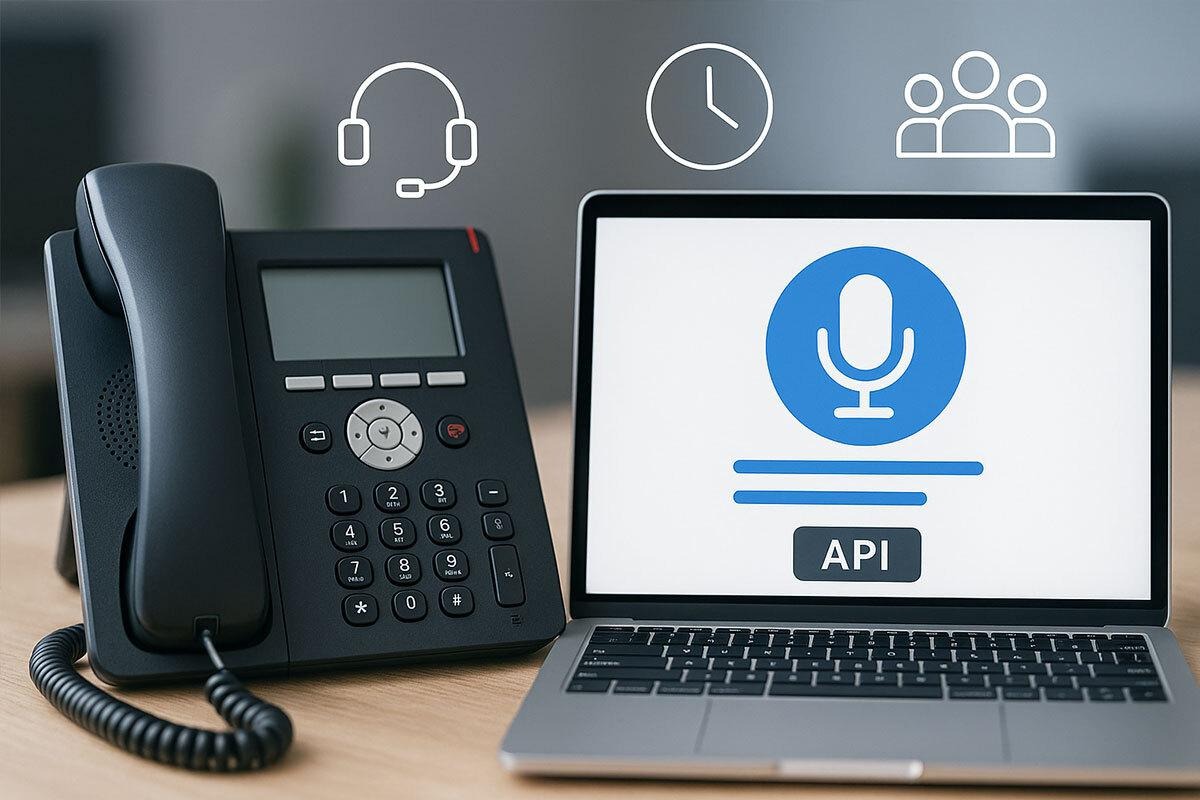
For many startups, customer support has long been a numbers game, which means more tickets, more agents. But that approach is reaching its limits.
Customers want instant answers at any hour in multiple channels. Hiring to meet the demand is expensive and much slower than the growth in demand itself. The real solution is not more people but rather smarter systems that could handle conversations just like any human agent would. Top emerging voice agent APIs are rapidly becoming game-changers, and Falcon by Murf leads this charge by helping companies provide frictionless 24/7 support without adding to their headcount.
The shift is subtle but profound. While older solutions relied on either rigid IVRs or limited chatbots, today’s voice agents listen, interpret intent, and respond in natural language. The outcome is a support channel that feels remarkably human but scales infinitely.
This guide explores how startups can deploy APIs for voice agents to offer always-on support, enhance user experience, and cut costs without expanding their workforce.
What a Voice Agent API Brings to the Table
With a voice agent API, your system can get spoken input from customers, decode meaning, and issue responses using natural speech.
Unlike traditional IVRs, which leave users stuck in menu trees, modern voice agents use conversational nuances, context switching, and dynamic queries. With Falcon by Murf, developers can integrate these capabilities directly into their apps, websites, or support infrastructure. More than just a question-answering tool, this is a fully programmable voice layer that can talk to your backend systems, access customer data, and provide real-time, accurate responses.
The practical benefit is immediate: your startup can now offer around-the-clock service that would have been provided before by dozens of additional hires. The API becomes effectively one voice-enabled support agent scaling horizontally, handling hundreds or thousands of conversations simultaneously without a degradation in quality.
Why Human-Only Models Fail
Traditional support models weigh heavily on the support systems due to scalability issues: scaling human teams means a rise in costs, training bottlenecks, and an increase in operational complexity. Time zone coverage is, in particular, a challenge, and quality often suffers as teams scale.
On the flip side, voice agent APIs finally decouple support from headcount. Once the system is in place, it can provide for a greatly increased amount of interactions without having to add personnel.
This isn’t about replacing humans entirely; rather, it’s about letting technology do the heavy lifting through monotonous or predictable interactions, freeing human agents to more critical, intricate, or high-impact cases. By automating routine inquiries, a startup can deliver faster, more consistent service while keeping payroll manageable.
How Voice Agents Work in Practice
Deploying a voice agent involves a number of connected activities: the user speaks their query, which is then transcribed into text via speech recognition. The system identifies intent via an AI engine, pulls relevant data from your CRM, ticketing system, or knowledge base, and crafts a response. That response is converted back into natural audio and delivered instantly to the user. The experience is conversational, not robotic, and it happens in seconds.
What’s remarkable about Murf Falcon is its low-latency response and natural voice, making the interactions seem real.The integrations can be done for any of the above-mentioned systems, such as an Order Management System, Status Monitoring tools, or FAQs, to let the voice agent answer questions or take actions that normally require a human agent.
Benefits Beyond Simple Automation
The benefits of voice agent APIs go well beyond cost savings:
- 24/7 Availability: Users receive immediate support at any time of the day without leaving any gaps related to time zones or shifts.
- Scalability: Hundreds of conversations can be handled simultaneously without any compromise on quality.
- Consistency: The responses from voice agents are uniform, unlike human agents, reducing errors and miscommunication.
- Reduced Operational Overhead: The need for training and onboarding new staff is less pressing when routine inquiries are automated.
Startups deploying voice agents find that the bulk of their support volume, such as password resets, delivery inquiries, and basic troubleshooting, can be completely automated, freeing humans to handle more complex or high-value interactions.
Best Practices for Implementing a Voice Agent
First, identify the most repetitive conversations within your support pipeline. Map out the user’s intents and design conversation flows that feel natural rather than scripted. Connect the voice agent to live systems so it has real-time access to customer data. Build escalation paths for those interactions that the agent cannot resolve, making sure users are seamlessly handed off to human support where necessary. Lastly, monitor performance metrics such as response times, resolution rates, and customer satisfaction while continuously refining the system.
Security and compliance are also paramount. Since voice data often contains personal or sensitive information, end-to-end encryption, secure storage, and audit trails are a must. These practices protect not only the customers but also the company and help to preserve trust.
Looking Ahead: The Future of Support
Scaling support no longer has to be linear. Voice agent APIs, such as Falcon from Murf, are changing the game: support is becoming a feature of your product, not an operational overhead. Startups can get ahead of their competitors by adopting such technologies early, providing faster and more consistent service at a lower cost, while maintaining lean operations.
The fact is stark. 24/7 support is no longer a dream or a privilege but achievable, programmable, and scalable. Companies that harness voice agent APIs will redefine how users experience service, turning support from a cost center into a growth enabler.


