
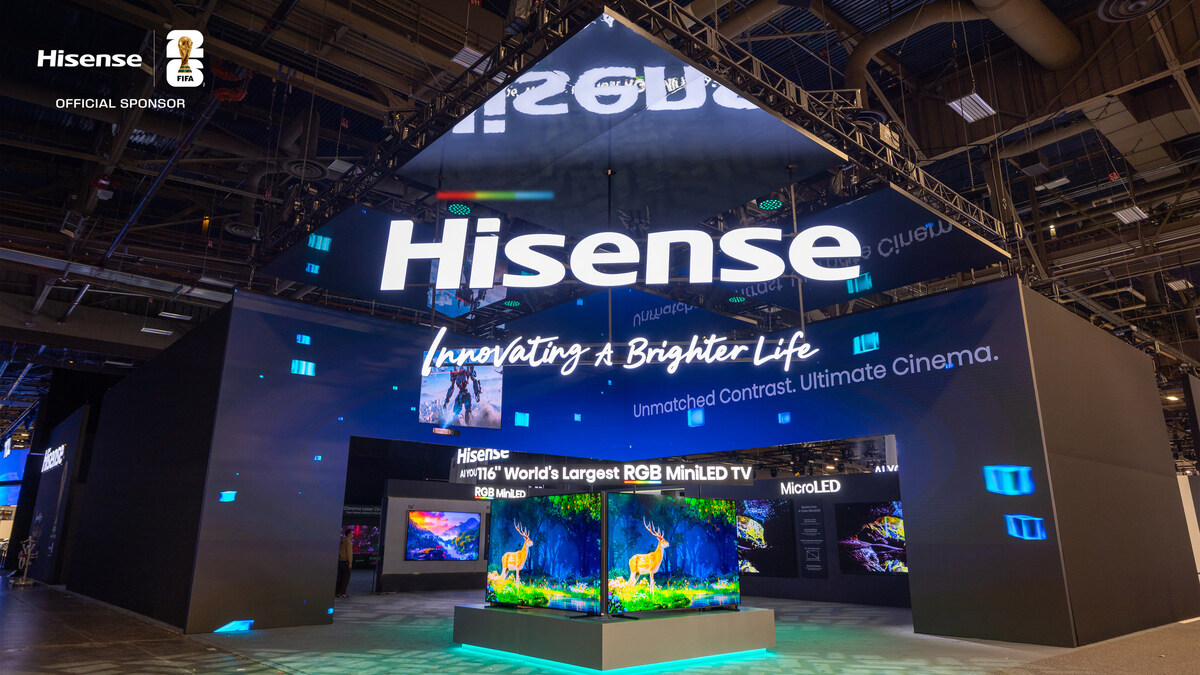
Hisense has unveiled a massive 116-inch MiniLED TV featuring a new cyan color sub-pixel, a first for consumer televisions. The innovation aims to dramatically expand color accuracy, brightness efficiency, and realism, signaling a major step forward in large-format TV technology as competition intensifies at the ultra-premium end of the market.
Introduction
Ultra-large televisions are no longer just about size. At CES 2026, Hisense showcased a bold evolution in display technology with its new 116-inch MiniLED TV, introducing an additional cyan pixel to the traditional RGB color structure.
According to hands-on coverage and technical details shared with CNET, this extra color channel is designed to unlock a wider color gamut, improve brightness efficiency, and reduce reliance on heavy software processing. The result, Hisense claims, is a more natural and vivid image — especially on a screen of this scale.
What Makes the Cyan Pixel a Big Deal
Most televisions today rely on an RGB (red, green, blue) sub-pixel structure. Hisense’s new panel adds cyan as a fourth color, creating an RGB-C system.
This change matters because cyan plays a crucial role in how the human eye perceives subtle shades between blue and green. By generating cyan natively instead of simulating it through mixing, the display can reproduce colors more accurately and efficiently.
Key benefits highlighted by Hisense include:
- More precise color gradients
- Reduced color banding in bright scenes
- Improved brightness without overdriving LEDs
- Better representation of skies, oceans, and neon tones
On a 116-inch display, even minor color inaccuracies become obvious. Hisense’s approach is aimed squarely at solving that problem at the hardware level.
MiniLED Technology at Massive Scale
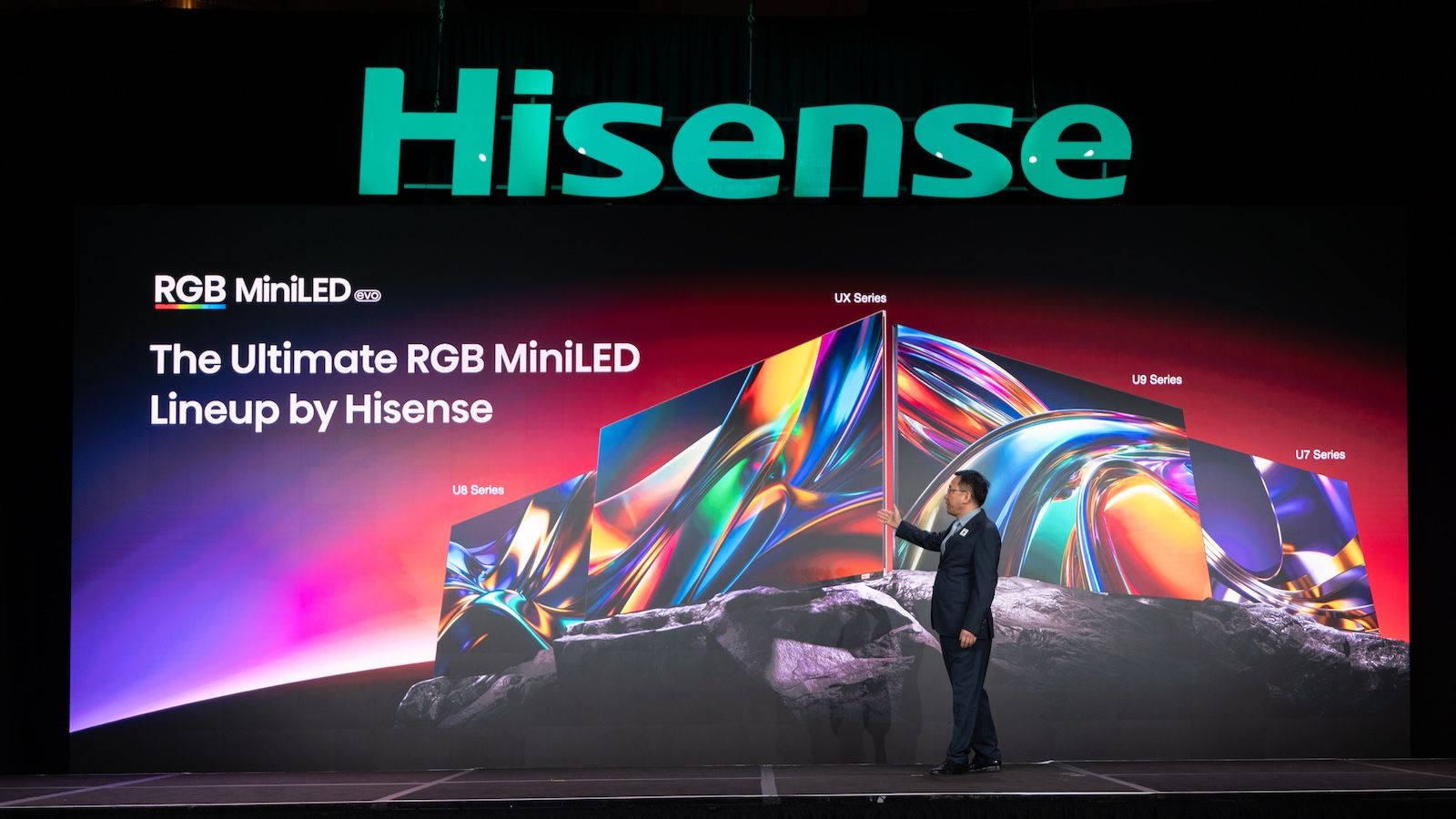
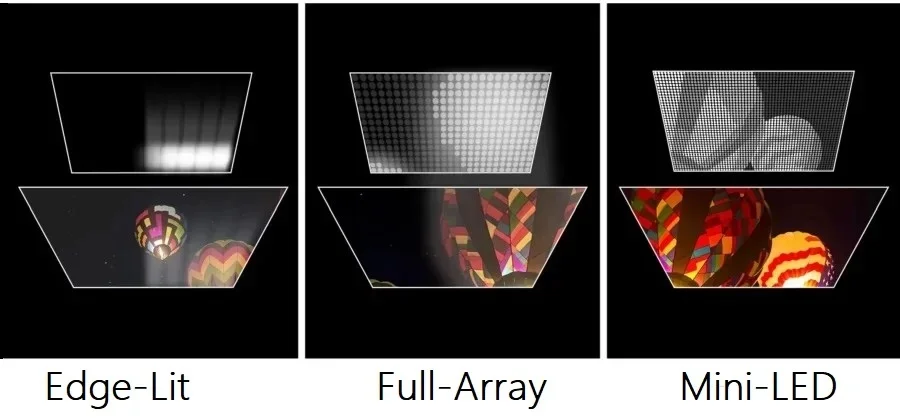
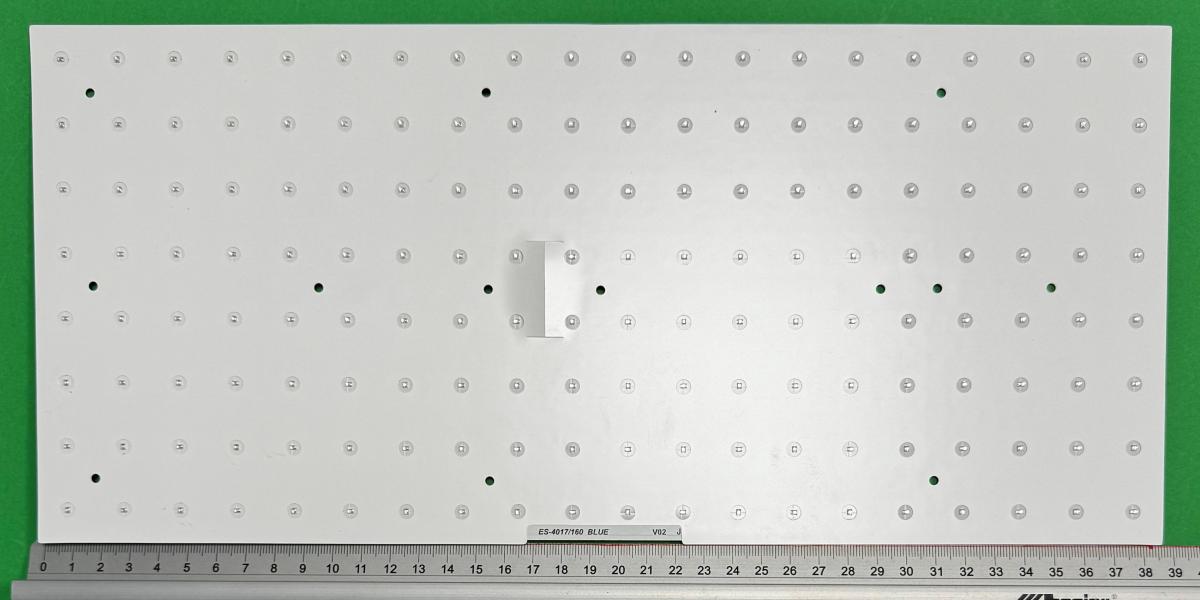
The new TV uses MiniLED backlighting, a technology that employs tens of thousands of tiny LEDs behind the panel. These LEDs are divided into thousands of local dimming zones, allowing for precise control of brightness and contrast.
For a display this large, MiniLED offers key advantages over OLED:
- Higher peak brightness for HDR content
- Less risk of burn-in over long viewing sessions
- Better performance in bright living rooms
Hisense claims the cyan pixel also helps MiniLED perform more efficiently, potentially reducing power draw while maintaining extreme brightness levels.
Color Performance and HDR Potential
Color reproduction is where Hisense expects this TV to stand apart. The company says the RGB-C system can cover a significantly wider portion of high-end color spaces such as BT.2020, which is increasingly important for modern HDR content.
This could translate into:
- More accurate HDR highlights
- Better tone mapping at high brightness levels
- Reduced color clipping in saturated scenes
For filmmakers and home-theater enthusiasts, this kind of hardware-level color expansion is particularly appealing, as it reduces the need for aggressive post-processing that can distort the creator’s intent.
Who Is This TV Really For?
At 116 inches, this MiniLED TV is clearly not aimed at the average consumer. Instead, it targets:
- Luxury home-theater installations
- High-end commercial environments
- Buyers considering large projection systems
While Hisense has not confirmed pricing, displays of this size and complexity typically command five-figure price tags, positioning them alongside premium projectors and custom LED walls.
How It Fits Into the Broader TV Market
The global TV market is increasingly split between OLED and advanced LCD technologies like MiniLED. Brands such as Samsung and TCL continue to push MiniLED forward, while LG dominates OLED.
Hisense’s cyan-pixel strategy suggests a different path: instead of chasing OLED’s perfect blacks, the company is focusing on color volume, brightness, and scalability — areas where MiniLED excels.
This also reflects a broader industry trend toward hardware-driven improvements rather than relying solely on AI upscaling and software tuning.
Challenges and Open Questions
Despite the promise, several questions remain unanswered:
- Will content be mastered to fully take advantage of the cyan pixel?
- How will calibration standards adapt to RGB-C panels?
- Can manufacturing yields stay high at this panel size?
There is also the question of consumer education. Explaining the benefits of an extra color sub-pixel may prove challenging in a market already saturated with technical jargon.
Conclusion
Hisense’s 116-inch MiniLED TV with a cyan pixel is more than a size flex. It represents a meaningful attempt to rethink how televisions reproduce color at extreme scales. By enhancing color accuracy at the hardware level, Hisense is positioning MiniLED as a serious contender for next-generation home cinema.
While this TV will remain a niche product due to its size and likely price, the underlying technology could eventually trickle down into smaller, more affordable models. If that happens, the cyan pixel may mark a quiet but important shift in how future TVs handle color.
Key Highlights
- Hisense unveiled a 116-inch MiniLED TV with a new cyan color sub-pixel
- The RGB-C system aims to improve color accuracy and brightness efficiency
- MiniLED backlighting enables high HDR brightness at massive screen sizes
- The TV targets luxury home-theater and premium commercial buyers


