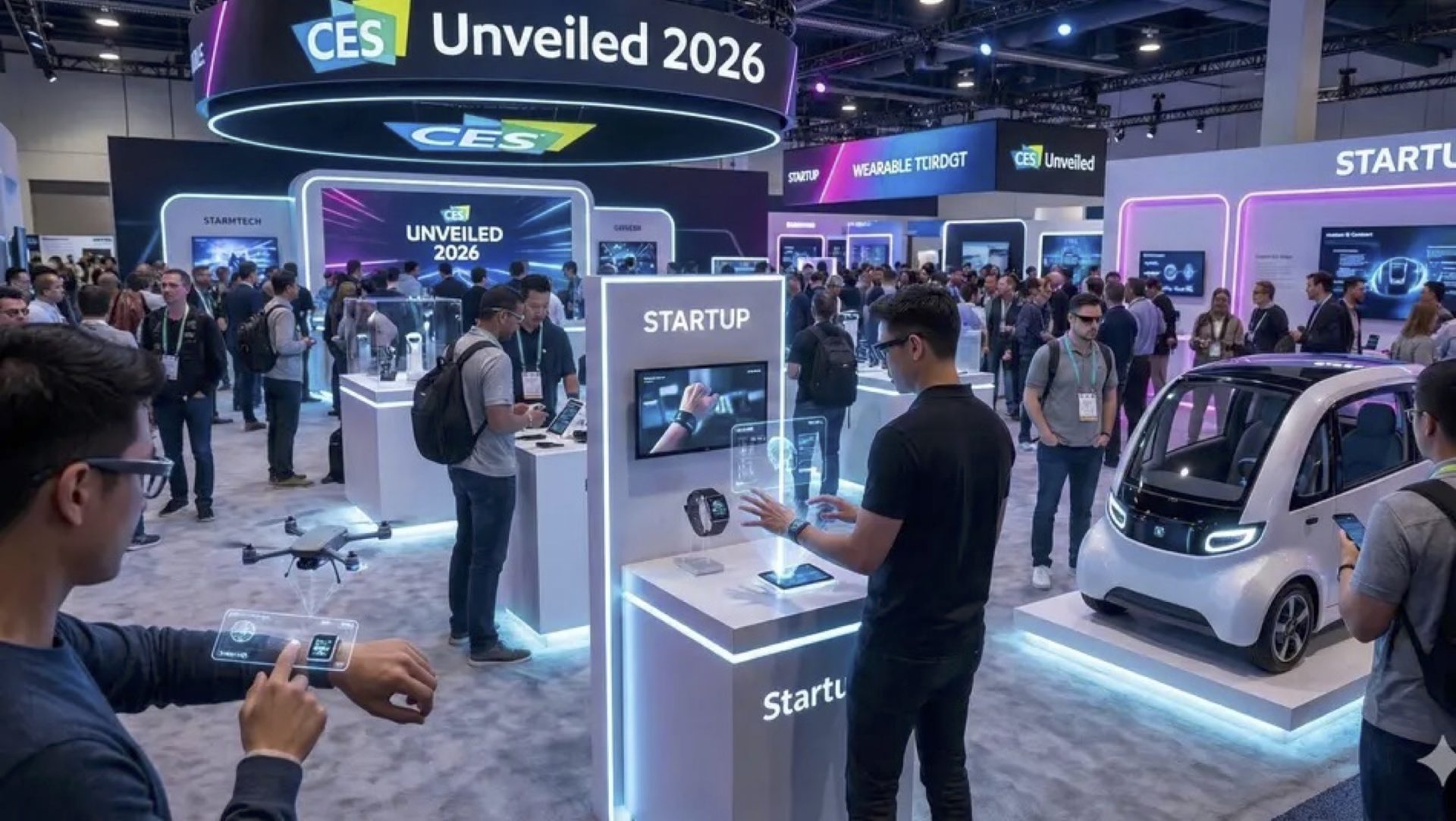
CES 2026: Top 15 Innovations Founders Should Watch

Share via:

In simple terms, CES 2026 highlighted 15 practical innovations that can help founders build faster, cheaper, and smarter products using AI, automation, new hardware, and climate-focused tech.

Introduction

CES is no longer just about gadgets for consumers. In 2026, it has become a signal for where technology, capital, and customer demand are moving next.

For startup founders, CES 2026 offered clear clues about which technologies are becoming affordable, scalable, and ready for real-world business use — not just demos. This matters whether you are building software, hardware, AI tools, or digital platforms.

Why CES 2026 Matters for Startups & Tech Founders

Founders are paying close attention to CES because:

  • AI costs are dropping, making advanced tools accessible to smaller teams
  • Hardware is becoming software-driven, opening new SaaS-style business models
  • Regulation and sustainability are shaping buying decisions globally
  • Competition is faster, and speed-to-market matters more than perfection

CES 2026 showed what customers, enterprises, and governments will likely adopt in the next 12–24 months.

CES 2026: Top 15 Innovations That Matter to Founders

1. On-Device AI (No Cloud Required)

  • AI models now run directly on phones, laptops, and devices
  • Reduces cloud costs and privacy risks
  • Ideal for consumer apps, healthcare, and fintech

2. AI Agents for Work Automation

  • AI that can plan, execute, and follow up on tasks
  • Used for sales ops, HR, customer support, and research
  • Strong opportunity for B2B SaaS startups

3. Smart Glasses for Everyday Use

  • Lighter, cheaper, and more practical than earlier versions
  • Use cases include field work, training, navigation, and retail

4. Robotics-as-a-Service (RaaS)

  • Robots offered via subscriptions, not large upfront purchases
  • Growing demand in logistics, warehouses, and manufacturing

5. Climate Tech for Small Businesses

  • Affordable energy monitoring and efficiency tools
  • Designed for SMEs, not just large enterprises

6. AI-Powered Personal Health Devices

  • Continuous health tracking with predictive insights
  • Strong demand from insurers, employers, and clinics

7. Voice-First Interfaces

  • Voice replacing screens for many tasks
  • Useful for cars, homes, customer support, and accessibility

8. Spatial Computing for Work

  • 3D workspaces for design, training, and collaboration
  • No longer limited to gaming or entertainment

9. Edge Computing Platforms

  • Data processed closer to the source
  • Faster response times and lower infrastructure costs

10. Smart Home Infrastructure (Not Gadgets)

  • Platforms that connect lighting, security, energy, and data
  • Opportunity for recurring revenue models

11. AI Video Creation Tools

  • Real-time video generation and editing
  • Used for marketing, education, and internal communication

12. Autonomous Retail Tech

  • Checkout-free and staff-assisted hybrid stores
  • Strong interest from convenience and grocery chains

13. Digital Twins for Operations

  • Virtual replicas of factories, cities, and supply chains
  • Helps reduce downtime and improve planning

14. Secure Identity & Privacy Tech

  • Built-in privacy controls and local data processing
  • Increasingly important due to regulation

15. Modular Hardware Platforms

  • Hardware built like software: upgradable and flexible

Reduces production risk for hardware startups

Comparison Table: What Founders Should Focus On

Innovation AreaCost ImpactSpeed to MarketBest For
On-device AILower cloud spendFastConsumer, Fintech
AI AgentsMediumFastB2B SaaS
Robotics-as-a-ServiceMediumMediumLogistics, Industry
Climate Tech ToolsLowFastSMEs, Energy
Digital TwinsHighSlowerEnterprise, Infra

Global Relevance

USA

  • Strong enterprise demand for AI automation and robotics
  • High adoption in healthcare and logistics

UK

Focus on climate tech, energy efficiency, and privacy-first solutions

UAE

Smart city tech, robotics, and autonomous retail gaining traction

Australia

Strong interest in climate, mining tech, and remote operations

Key Things to Know / Key Takeaways

  • CES 2026 focused on usable tech, not concepts
  • AI is moving closer to users, not just the cloud
  • Hardware startups are shifting to subscription models
  • Climate tech is now cost-driven, not just mission-driven
  • Privacy and regulation are shaping product design
  • Founders can ship faster with smaller teams
  • Enterprise buyers want ROI within months, not years

What Happens Next: 6–12 Month Outlook

  • More startups will build AI-native products
  • Hardware + software bundles will attract investors
  • Regulations will favor privacy-first architectures
  • Vertical-specific AI tools will outperform generic platforms
  • Founders who align early will gain distribution and cost advantages.

Final Takeaway

CES 2026 made one thing clear: founders no longer need massive budgets to build powerful products. The winning startups in 2026 will be those that apply these technologies to real problems, with speed, clarity, and focus on customer value.

FAQ

What was the biggest trend at CES 2026?
AI moving directly onto devices and into everyday workflows was the most important trend.

Is CES relevant for early-stage startup founders?
Yes. CES shows which technologies are becoming affordable and ready for real customers.

Which CES 2026 innovation is best for SaaS startups?
AI agents and automation tools offer the fastest path to revenue for SaaS founders.

Do founders need hardware expertise to benefit from CES trends?
No. Many innovations are platform-based and can be used via software or APIs.


Disclaimer

We strive to uphold the highest ethical standards in all of our reporting and coverage. We StartupNews.fyi want to be transparent with our readers about any potential conflicts of interest that may arise in our work. It’s possible that some of the investors we feature may have connections to other businesses, including competitors or companies we write about. However, we want to assure our readers that this will not have any impact on the integrity or impartiality of our reporting. We are committed to delivering accurate, unbiased news and information to our audience, and we will continue to uphold our ethics and principles in all of our work. Thank you for your trust and support.

Popular

More Like this

CES 2026: Top 15 Innovations Founders Should Watch

In simple terms, CES 2026 highlighted 15 practical innovations that can help founders build faster, cheaper, and smarter products using AI, automation, new hardware, and climate-focused tech.

Introduction

CES is no longer just about gadgets for consumers. In 2026, it has become a signal for where technology, capital, and customer demand are moving next.

For startup founders, CES 2026 offered clear clues about which technologies are becoming affordable, scalable, and ready for real-world business use — not just demos. This matters whether you are building software, hardware, AI tools, or digital platforms.

Why CES 2026 Matters for Startups & Tech Founders

Founders are paying close attention to CES because:

  • AI costs are dropping, making advanced tools accessible to smaller teams
  • Hardware is becoming software-driven, opening new SaaS-style business models
  • Regulation and sustainability are shaping buying decisions globally
  • Competition is faster, and speed-to-market matters more than perfection

CES 2026 showed what customers, enterprises, and governments will likely adopt in the next 12–24 months.

CES 2026: Top 15 Innovations That Matter to Founders

1. On-Device AI (No Cloud Required)

  • AI models now run directly on phones, laptops, and devices
  • Reduces cloud costs and privacy risks
  • Ideal for consumer apps, healthcare, and fintech

2. AI Agents for Work Automation

  • AI that can plan, execute, and follow up on tasks
  • Used for sales ops, HR, customer support, and research
  • Strong opportunity for B2B SaaS startups

3. Smart Glasses for Everyday Use

  • Lighter, cheaper, and more practical than earlier versions
  • Use cases include field work, training, navigation, and retail

4. Robotics-as-a-Service (RaaS)

  • Robots offered via subscriptions, not large upfront purchases
  • Growing demand in logistics, warehouses, and manufacturing

5. Climate Tech for Small Businesses

  • Affordable energy monitoring and efficiency tools
  • Designed for SMEs, not just large enterprises

6. AI-Powered Personal Health Devices

  • Continuous health tracking with predictive insights
  • Strong demand from insurers, employers, and clinics

7. Voice-First Interfaces

  • Voice replacing screens for many tasks
  • Useful for cars, homes, customer support, and accessibility

8. Spatial Computing for Work

  • 3D workspaces for design, training, and collaboration
  • No longer limited to gaming or entertainment

9. Edge Computing Platforms

  • Data processed closer to the source
  • Faster response times and lower infrastructure costs

10. Smart Home Infrastructure (Not Gadgets)

  • Platforms that connect lighting, security, energy, and data
  • Opportunity for recurring revenue models

11. AI Video Creation Tools

  • Real-time video generation and editing
  • Used for marketing, education, and internal communication

12. Autonomous Retail Tech

  • Checkout-free and staff-assisted hybrid stores
  • Strong interest from convenience and grocery chains

13. Digital Twins for Operations

  • Virtual replicas of factories, cities, and supply chains
  • Helps reduce downtime and improve planning

14. Secure Identity & Privacy Tech

  • Built-in privacy controls and local data processing
  • Increasingly important due to regulation

15. Modular Hardware Platforms

  • Hardware built like software: upgradable and flexible

Reduces production risk for hardware startups

Comparison Table: What Founders Should Focus On

Innovation AreaCost ImpactSpeed to MarketBest For
On-device AILower cloud spendFastConsumer, Fintech
AI AgentsMediumFastB2B SaaS
Robotics-as-a-ServiceMediumMediumLogistics, Industry
Climate Tech ToolsLowFastSMEs, Energy
Digital TwinsHighSlowerEnterprise, Infra

Global Relevance

USA

  • Strong enterprise demand for AI automation and robotics
  • High adoption in healthcare and logistics

UK

Focus on climate tech, energy efficiency, and privacy-first solutions

UAE

Smart city tech, robotics, and autonomous retail gaining traction

Australia

Strong interest in climate, mining tech, and remote operations

Key Things to Know / Key Takeaways

  • CES 2026 focused on usable tech, not concepts
  • AI is moving closer to users, not just the cloud
  • Hardware startups are shifting to subscription models
  • Climate tech is now cost-driven, not just mission-driven
  • Privacy and regulation are shaping product design
  • Founders can ship faster with smaller teams
  • Enterprise buyers want ROI within months, not years

What Happens Next: 6–12 Month Outlook

  • More startups will build AI-native products
  • Hardware + software bundles will attract investors
  • Regulations will favor privacy-first architectures
  • Vertical-specific AI tools will outperform generic platforms
  • Founders who align early will gain distribution and cost advantages.

Final Takeaway

CES 2026 made one thing clear: founders no longer need massive budgets to build powerful products. The winning startups in 2026 will be those that apply these technologies to real problems, with speed, clarity, and focus on customer value.

FAQ

What was the biggest trend at CES 2026?
AI moving directly onto devices and into everyday workflows was the most important trend.

Is CES relevant for early-stage startup founders?
Yes. CES shows which technologies are becoming affordable and ready for real customers.

Which CES 2026 innovation is best for SaaS startups?
AI agents and automation tools offer the fastest path to revenue for SaaS founders.

Do founders need hardware expertise to benefit from CES trends?
No. Many innovations are platform-based and can be used via software or APIs.

Disclaimer

We strive to uphold the highest ethical standards in all of our reporting and coverage. We StartupNews.fyi want to be transparent with our readers about any potential conflicts of interest that may arise in our work. It’s possible that some of the investors we feature may have connections to other businesses, including competitors or companies we write about. However, we want to assure our readers that this will not have any impact on the integrity or impartiality of our reporting. We are committed to delivering accurate, unbiased news and information to our audience, and we will continue to uphold our ethics and principles in all of our work. Thank you for your trust and support.

Website Upgradation is going on for any glitch kindly connect at office@startupnews.fyi

More like this

This HP laptop just set a new record for...

Follow ZDNET: Add us as a preferred...

AI-Powered Social Media App Hopes To Build More Purposeful...

A founder of Twitter and a founder of...

I found the cutest (and strangest) Android phone at...

Ryan Haines / Android AuthorityI know that the Clicks...

Popular

iptv iptv iptv