
The writer behind Street Fighter: Assassin’s Fist has revealed that plans for a darker, Game of Thrones-inspired follow-up series were firmly rejected by showrunners. The denial sheds light on the creative limits of adapting legacy video game franchises, the tension between ambition and brand protection, and why one of the most respected live-action game adaptations never received a true continuation.
Introduction
More than a decade after its release, Street Fighter: Assassin’s Fist continues to be cited as one of the strongest live-action adaptations of a video game franchise. Unlike earlier attempts that leaned heavily into spectacle or camp, the series chose restraint. It focused on character psychology, martial arts philosophy, and emotional consequence. That grounded approach earned it credibility among fans who had long been disappointed by previous adaptations.
Yet despite its positive reception and cult status, Assassin’s Fist never evolved into a larger serialized universe. According to its writer, this was not due to a lack of ideas. In fact, plans for a follow-up existed and were significantly more ambitious than what audiences ultimately saw. The proposed continuation would have pushed the Street Fighter universe into darker, more morally complex territory, borrowing narrative DNA from Game of Thrones. Political intrigue, shifting alliances, and irreversible character deaths were central to the concept.
That vision, however, was decisively rejected by showrunners and stakeholders, effectively ending any chance of the series continuing in that form. The story behind that rejection offers valuable insight into how franchise adaptations are shaped not just by creative vision, but by commercial caution and long-term brand strategy.
The Unique Position of Street Fighter: Assassin’s Fist
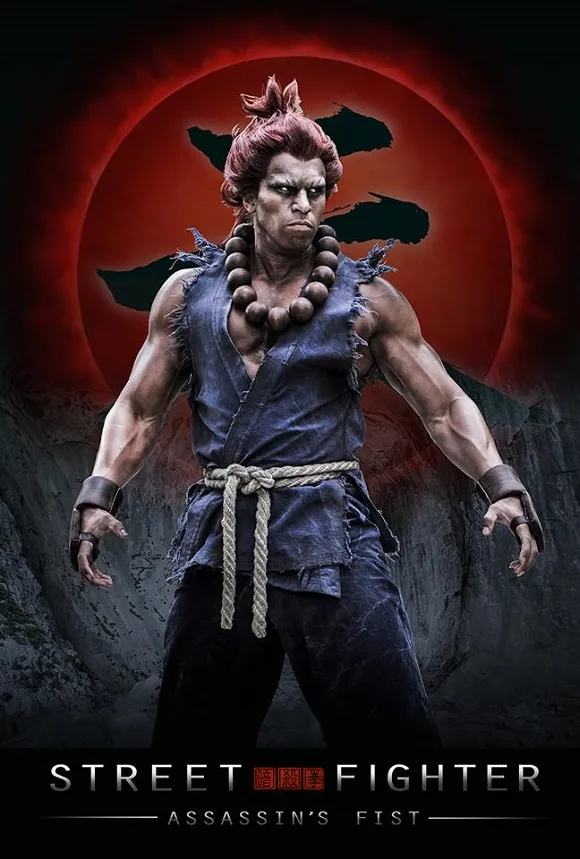
To understand why the darker sequel mattered, it is important to understand why Assassin’s Fist stood apart in the first place. Released in 2014, the series was a prequel centered on Ryu and Ken before the world tournament that defines most Street Fighter narratives. Instead of flashy moves and exaggerated villains, it leaned into discipline, rivalry, mentorship, and the psychological burden of power.
The series treated martial arts as a philosophy rather than a gimmick. Training scenes emphasized repetition and restraint. Violence carried weight. Characters made choices that shaped their futures rather than simply advancing a plot toward a final battle. For many fans, this was the first time the Street Fighter universe felt emotionally grounded in live action.
Because of that approach, Assassin’s Fist was often described as proof that video game adaptations could work if creators respected the source material while adapting it thoughtfully to a different medium.
The Writer’s Vision for a Darker Follow-Up
According to the writer, the success of Assassin’s Fist opened the door to something far more expansive. The follow-up series was conceived not as a simple sequel, but as a tonal evolution. The intention was to move beyond a personal origin story and into a broader exploration of the Street Fighter world, including its factions, ideologies, and power structures.
The inspiration from Game of Thrones was not superficial. The writer envisioned a narrative structure built around intersecting storylines, political maneuvering, and moral ambiguity. Characters would no longer be clearly heroic or villainous. Instead, they would be driven by competing philosophies about strength, control, and destiny.
Importantly, the darker tone was not meant to be shocking for its own sake. Character deaths were planned, but only when they served the story and reinforced consequences. Power would come at a cost. Loyalty would be tested. Victory would rarely feel clean or triumphant.
This direction would have represented a fundamental shift for Street Fighter as a live-action property, taking it closer to prestige television than traditional action adaptation.
Why Game of Thrones Was the Blueprint
At the time the sequel was pitched, Game of Thrones had transformed television storytelling. It demonstrated that audiences would engage deeply with complex worlds, large ensembles, and narratives that refused to protect their characters. Stakes felt real because no one was safe.
The writer believed Street Fighter was uniquely suited to this treatment. The franchise already featured a global cast, secret organizations, rival schools of martial arts, and philosophical conflicts about power and restraint. In theory, it had all the ingredients necessary for serialized drama with real emotional weight.
Characters like Akuma, Gouken, M. Bison, and the Shadaloo organization could have been explored as ideological forces rather than cartoon villains. The darker follow-up aimed to examine how violence shapes societies and individuals, not just who wins a fight.
The Showrunners’ Rejection
Despite the ambition behind the proposal, the idea was firmly rejected. According to the writer, the showrunners and rights holders were unwilling to approve such a drastic tonal shift. The rejection was not presented as a critique of the writing itself, but as a concern about brand alignment and audience expectations.
At the core of the denial was the belief that Street Fighter should remain broadly accessible. The franchise spans arcade players, casual gamers, esports professionals, and younger audiences. A grim, morally ambiguous television series with character deaths risked narrowing that appeal.
There were also concerns about canon. Street Fighter is a long-running franchise with decades of established characters. Killing or permanently altering major figures in a live-action adaptation could conflict with future games, merchandise, and marketing strategies.
From a business standpoint, the darker sequel represented risk without guaranteed reward.
Brand Protection Over Creative Expansion
The rejection highlights a recurring reality in franchise storytelling. When intellectual property is valuable and long-lived, experimentation becomes difficult. Each new adaptation must coexist with games, films, merchandise, and competitive scenes that depend on consistency.
For licensors, protecting recognizable characters often matters more than allowing those characters to evolve in unpredictable ways. A Game of Thrones-style narrative thrives on unpredictability. A global fighting game franchise thrives on familiarity.
This fundamental mismatch made the darker sequel incompatible with the long-term goals of the Street Fighter brand.
The Creative Cost of Playing It Safe
While the decision may have been commercially logical, it came at a creative cost. Assassin’s Fist ended up existing as a standalone achievement rather than the foundation of a larger narrative universe.
For fans, the lack of continuation has long felt frustrating. The series proved that a mature, grounded take on Street Fighter could work. The rejected sequel suggests that the creators were ready to go even further, but were stopped by structural constraints rather than creative exhaustion.
This is a familiar pattern in video game adaptations. The most interesting ideas often emerge once creators gain confidence, yet that is also the point where oversight increases.
How the Landscape Has Changed Since Assassin’s Fist
The rejection of the darker sequel happened in a very different entertainment environment. At the time, streaming platforms were still finding their footing, and adult-oriented game adaptations were rare.
Today, the situation is markedly different. Streaming audiences have embraced darker reimaginings of established IPs, provided they are well written and emotionally grounded. Prestige adaptations no longer need to appeal to everyone to succeed. Niche audiences can sustain ambitious projects.
Ironically, the type of series the Assassin’s Fist writer proposed might be more viable now than when it was originally pitched.
Why Street Fighter Still Faces Unique Barriers
Despite shifts in audience expectations, Street Fighter remains a challenging property to adapt darkly. Unlike narrative-driven games, it is fundamentally competitive and iterative. Characters are less defined by arcs and more by iconic moves, rivalries, and visual identity.
This makes permanent narrative consequences harder to justify. A television series that kills or fundamentally alters a character could clash with the endless reset inherent in fighting games.
As a result, adaptation attempts often default to safe storytelling that preserves the status quo.
What the Rejected Sequel Reveals About Adaptation Limits
The story behind the denied sequel offers a rare look behind the curtain of adaptation politics. It shows how even well-received projects can hit a ceiling when they threaten to reshape a brand’s identity.
It also illustrates the tension between writers who see adaptation as an opportunity for reinvention and stakeholders who see it as an extension of existing commercial ecosystems.
Neither perspective is inherently wrong, but they are often incompatible.
The Lasting Legacy of Assassin’s Fist
Despite never receiving a sequel, Street Fighter: Assassin’s Fist remains influential. It is frequently cited in discussions about how video game adaptations should approach tone, pacing, and respect for source material.
Its restrained style stands in contrast to louder, more chaotic adaptations. Its focus on character psychology continues to resonate with fans who want more than surface-level fan service.
The unrealized darker sequel has only strengthened the series’ mystique, transforming it into a symbol of unrealized potential.
Could the Idea Ever Be Revived?
A direct revival under the Street Fighter banner appears unlikely, particularly in the darker form originally envisioned. However, the creative philosophy behind the idea is far from dead.
Original martial arts series, or adaptations of less rigid franchises, could embrace similar themes without the burden of protecting iconic characters. In that sense, the rejected sequel may have influenced other projects indirectly.
Sometimes, ideas that cannot survive within one franchise find new life elsewhere.
Interlinking Opportunities for Readers
To deepen reader engagement and SEO authority, this article can naturally link to a retrospective on the history of Street Fighter live-action adaptations, an analysis of why Assassin’s Fist succeeded where others failed, a broader feature on the evolution of video game adaptations in television, and an opinion piece examining how Game of Thrones reshaped genre storytelling across media.
These contextual connections help place the rejected sequel within a larger industry narrative rather than treating it as an isolated disappointment.
Conclusion
The revelation that the Street Fighter: Assassin’s Fist writer wanted to create a darker, Game of Thrones-style follow-up — only to be denied by showrunners — is more than a behind-the-scenes anecdote. It is a case study in how creative ambition collides with franchise stewardship.
While the darker sequel never materialized, the original series remains a rare success story in video game adaptation history. Its unrealized continuation serves as a reminder that some of the most compelling ideas never reach audiences, not because they lack merit, but because they challenge the boundaries of what a brand is willing to become.
For fans, Assassin’s Fist endures as both an achievement and a missed opportunity — a glimpse of what Street Fighter could have been if it had been allowed to grow darker, deeper, and more dangerous.


