
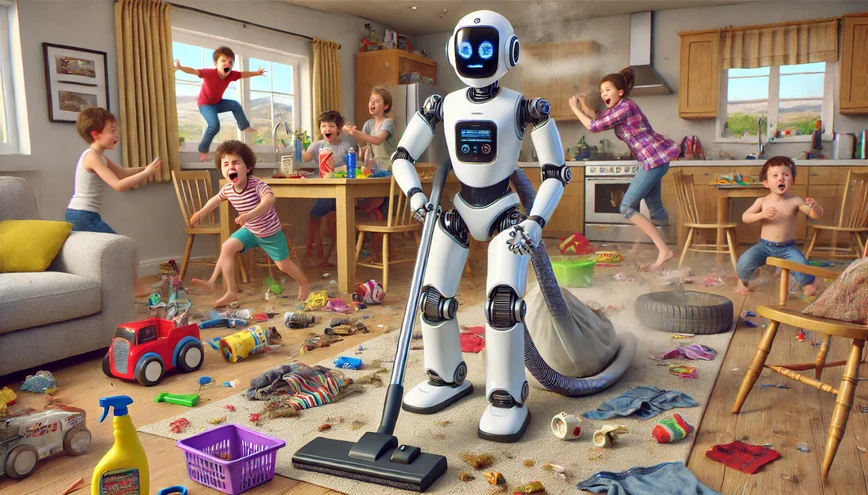
CES 2026 was defined by the rise of physical AI, with robots, smartsmart appliances, and intelligent machines taking center stage across the show floor. However, despite impressive progress in mobility, perception, and autonomy, experts agree that truly capable humanoid servants remain out of reach. The technology is advancing rapidly, but real-world limitations in cost, safety, and reliability mean widespread humanoid adoption will take longer than popular imagination suggests.
Introduction
CES 2026 made one thing unmistakably clear: artificial intelligence has moved beyond screens and software and into the physical world. Robots navigated exhibition halls, appliances adapted to user behavior, and smart home systems responded intelligently to their environments. Physical AI, a term used to describe AI systems that interact directly with the real world through movement and sensors, dominated conversations throughout the event.
According to reporting from Reuters, while physical AI was everywhere at CES 2026, expectations around humanoid robot servants still need to be tempered. Despite eye-catching demonstrations, industry leaders and researchers cautioned that general-purpose humanoid helpers capable of seamlessly integrating into homes remain a long-term goal rather than an imminent reality.
What Physical AI Looked Like at CES 2026
Physical AI at CES 2026 appeared in many forms, extending well beyond humanoid robots. Autonomous machines handled logistics tasks, robotic arms demonstrated precision manufacturing, and service robots assisted with cleaning, delivery, and monitoring. These systems combined AI vision, machine learning, and sensor fusion to perform specific tasks with increasing reliability.
Unlike previous years, many demonstrations focused on repeatable, unsupervised operation rather than theatrical performances. Robots navigated crowded spaces, avoided obstacles, and adjusted behavior dynamically. This shift signaled that physical AI is transitioning from experimental showcase to early-stage deployment across controlled environments.
Why Humanoid Robots Still Face Major Barriers
Despite visible progress, experts at CES 2026 emphasized that humanoid robots capable of performing a wide range of household tasks remain a complex challenge. Human environments are unpredictable, cluttered, and designed for people rather than machines. Replicating human dexterity, balance, and judgment requires enormous computational power and sophisticated hardware.
Cost is another significant obstacle. Building humanoid robots with advanced sensors, actuators, and safety systems remains expensive, limiting scalability. Energy efficiency also poses challenges, as humanoid robots must operate for extended periods without frequent recharging. These factors collectively slow the path toward affordable, reliable humanoid servants.
Task-Specific Robots Lead the Way
While general-purpose humanoids lag behind expectations, task-specific robots are advancing quickly. CES 2026 showcased robots designed for narrowly defined roles such as warehouse logistics, hospitality service, security patrols, and elder assistance. These machines benefit from constrained environments and predictable workflows, allowing AI systems to perform more effectively.
This approach reflects a broader industry consensus that specialization, rather than human-like generalization, will drive near-term success. By focusing on clearly defined problems, physical AI systems can deliver tangible value today rather than speculative promises.
Physical AI Beyond Robots
Physical AI at CES 2026 extended into everyday consumer electronics. Smart appliances used AI to optimize energy consumption and adapt to usage patterns. Televisions adjusted picture quality dynamically based on room conditions. Smart home systems coordinated lighting, climate, and security using contextual awareness rather than explicit commands.
These products demonstrate how physical AI is becoming embedded into familiar devices, quietly enhancing functionality without drawing attention to the underlying intelligence. This integration suggests that the future of AI will be increasingly subtle, operating behind the scenes rather than presenting itself as a standalone feature.
Safety and Trust Remain Central Concerns
One recurring theme at CES 2026 was the importance of safety and trust in physical AI systems. Robots operating in human environments must be predictable, transparent, and resilient to failure. Any malfunction carries physical risk, raising the stakes compared to software-only AI.
Industry leaders emphasized extensive testing, redundancy, and regulatory compliance as prerequisites for broader adoption. These requirements slow deployment but are essential for building public confidence. Until physical AI systems can demonstrate consistent safety at scale, humanoid servants will remain largely confined to controlled demonstrations.
The Role of AI in Smart Homes and Appliances
Smart homes and appliances offered a glimpse of how physical AI can deliver immediate benefits. Devices used sensors and local processing to respond to environmental changes in real time. This approach reduced reliance on cloud connectivity and improved responsiveness.
At CES 2026, these systems were positioned as stepping stones toward more advanced physical AI. By gradually introducing intelligence into everyday objects, companies are preparing consumers for increasingly autonomous systems while avoiding the risks associated with fully mobile humanoid robots.
Industry Perspective on Timelines
Experts interviewed during CES 2026 urged patience regarding humanoid robots. While progress in AI perception, control systems, and hardware continues steadily, integrating these components into a reliable, affordable humanoid platform remains a multi-year challenge.
Many researchers believe that incremental advances in physical AI will continue to appear in industrial and commercial settings long before humanoid servants become common in homes. This measured outlook contrasts sharply with popular narratives fueled by science fiction and viral videos.
Why Physical AI Still Matters Today
Even without humanoid servants, physical AI is already reshaping industries. Automation in logistics, manufacturing, healthcare, and energy management delivers efficiency gains and addresses labor shortages. At CES 2026, these applications received more attention from investors and buyers than speculative humanoid concepts.
This focus underscores a pragmatic approach to innovation, where usefulness and reliability take precedence over spectacle. Physical AI does not need to resemble humans to transform how work and daily life function.
What CES 2026 Reveals About the Future
CES 2026 highlighted a clear trajectory for artificial intelligence. AI is becoming embodied, contextual, and increasingly autonomous, but its evolution is grounded in realism rather than fantasy. The industry is prioritizing systems that solve specific problems today while laying the groundwork for more ambitious goals tomorrow.
Humanoid robots remain an aspirational endpoint, not an immediate destination. In the meantime, physical AI will continue to appear in forms that feel less dramatic but far more impactful.
Conclusion
Physical AI dominated CES 2026, shaping conversations around robots, appliances, TVs, and smart homes. The show demonstrated impressive progress in machines that can perceive, move, and adapt in the real world. However, as experts emphasized, humanity will still have to wait for truly capable humanoid servants.
Rather than signaling disappointment, this reality reflects a maturing technology industry focused on achievable innovation. CES 2026 showed that physical AI is already delivering value, even if the dream of human-like robotic helpers remains just beyond the horizon.


