Apple Taps Google Gemini to Rebuild Siri in Landmark AI Partnership

Share via:

Apple and Google have spent more than a decade competing across smartphones, operating systems, cloud services, and digital ecosystems. Their rivalry has defined modern consumer technology. Yet, in a major shift that reflects the realities of the artificial intelligence era, the two companies have now reached a deal that brings Google’s Gemini AI model into Apple’s Siri ecosystem.

The agreement, widely viewed as a strategic win for Alphabet, marks one of the most significant partnerships between the two companies in recent years. It also signals Apple’s acknowledgment that the pace of generative AI innovation requires collaboration, not just internal development. For Google, the deal places Gemini at the center of one of the world’s largest consumer platforms, reaching hundreds of millions of iPhone users globally.

This partnership is not about replacing Apple’s identity or handing control of Siri to Google. Instead, it reflects a carefully structured approach where Apple retains control over the user experience, privacy layers, and system integration, while leveraging Google’s strengths in large-scale AI models. The outcome is expected to be a more capable, conversational, and context-aware Siri, one that can finally compete with modern AI assistants shaping user expectations.
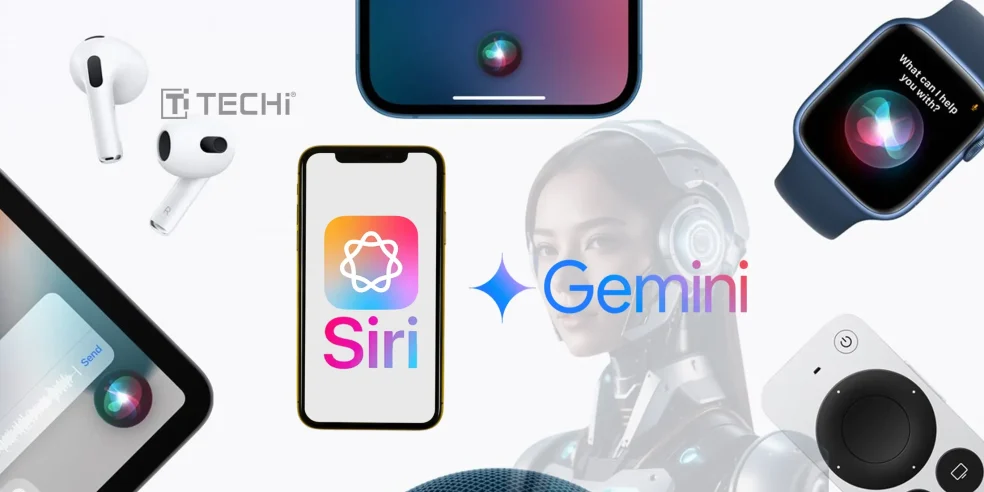
The Context Behind Apple’s Siri Challenges

Siri was once a symbol of Apple’s innovation leadership. When it launched in 2011, it introduced voice assistants to the mainstream. Over time, however, Siri fell behind competitors in natural language understanding, reasoning, and adaptability. While Apple continued to refine on-device processing and privacy safeguards, the broader AI landscape moved quickly toward large language models capable of multi-step reasoning and open-ended conversation.

The rise of generative AI tools changed how users interact with technology. AI assistants became less about setting timers and more about synthesizing information, drafting content, answering complex questions, and assisting with creative and professional tasks. This shift exposed the limitations of Siri’s architecture, which was not originally designed for large-scale generative reasoning.

Internally, Apple invested heavily in AI research, but its conservative rollout strategy and privacy-first approach slowed public-facing progress. Meanwhile, competitors moved aggressively. This created a growing gap between what users expected from an AI assistant and what Siri could deliver.

The Gemini partnership should be understood in this context. Rather than rebuilding Siri entirely from scratch, Apple chose to integrate best-in-class generative capabilities while maintaining its core principles around control and user trust.

Why Gemini Was the Logical Choice

Google’s Gemini represents years of investment in AI research, infrastructure, and model training. It is designed to handle text, voice, code, and multimodal inputs at scale. Unlike earlier AI models that focused on narrow tasks, Gemini is positioned as a general-purpose AI system capable of understanding context, intent, and nuance.

For Apple, Gemini offers several advantages. First, it provides immediate access to advanced generative capabilities without waiting years for internal models to reach similar maturity. Second, Gemini has already been tested across consumer and enterprise products, giving Apple confidence in its scalability and performance. Third, Google’s experience with AI-powered search, assistants, and productivity tools aligns closely with Siri’s intended evolution.

From Alphabet’s perspective, the deal is transformative. Embedding Gemini into Siri gives Google an unprecedented presence on Apple devices, even without controlling the operating system or hardware. It extends Gemini’s reach beyond Google’s own ecosystem and strengthens its position against competing AI platforms.

How the Gemini Integration Is Expected to Work

The partnership is structured to preserve Apple’s control over the user experience. Siri remains Apple’s assistant, branded, designed, and governed by Apple’s interface standards. Gemini operates behind the scenes, handling complex language understanding and generative tasks when needed.

Apple has emphasized that not all queries will be sent to external AI models. Routine tasks, on-device commands, and privacy-sensitive actions will continue to be handled locally or through Apple’s own systems. Gemini will be invoked selectively, particularly for open-ended questions, content generation, and advanced reasoning.

This hybrid approach reflects Apple’s broader strategy of combining on-device intelligence with cloud-based AI when appropriate. It also addresses regulatory and privacy concerns by limiting unnecessary data exposure while still delivering competitive AI functionality.

What This Means for Alphabet and Google’s AI Strategy

For Alphabet, the deal represents more than just a distribution win. It validates Gemini as a trusted, enterprise-grade AI platform capable of supporting one of the world’s most valuable consumer brands. This endorsement carries weight across the AI industry, particularly as companies evaluate which models to build upon.

The partnership also strengthens Google’s negotiating position with other hardware manufacturers, developers, and enterprise clients. Gemini is no longer just Google’s internal AI engine; it is becoming a foundational layer for external ecosystems.

Financially, while the exact terms of the deal remain undisclosed, analysts expect it to generate substantial long-term value for Alphabet. Even limited usage across Apple’s installed base translates into enormous scale. It also reinforces Google’s AI leadership narrative at a time when competition in generative AI is intensifying.

Apple’s Strategic Calculus and Long-Term Vision

Apple’s decision to partner with Google does not indicate a lack of ambition in AI. Instead, it reflects a pragmatic recognition of timelines and user expectations. Apple continues to invest heavily in its own AI infrastructure, custom silicon, and machine learning research.

The Gemini integration can be seen as a bridge. It allows Apple to deliver immediate improvements to Siri while continuing to develop proprietary capabilities behind the scenes. Over time, Apple may blend internal models with third-party AI systems, adjusting the balance as its technology matures.

This approach mirrors Apple’s historical strategy in other areas. The company has often relied on external partnerships during transitional periods, later bringing more functionality in-house once it reaches the desired level of quality and integration.

Competitive Implications Across the Tech Industry

The Apple-Google Gemini deal reshapes the competitive landscape for AI assistants. It raises the baseline expectations for what built-in assistants should be capable of, forcing other platforms to accelerate their own AI integrations.

For startups building AI-powered applications, the partnership highlights the importance of platform-level distribution. Access to billions of users increasingly depends on aligning with major ecosystems rather than operating independently. It also underscores the value of interoperability, as users expect AI tools to work seamlessly across devices and services.

The deal also blurs traditional competitive lines. Apple and Google remain rivals in many areas, but the AI era is creating new forms of cooperation driven by complexity, cost, and speed.

Implications for Founders and Product Builders

For founders, the revamped Siri powered by Gemini changes how consumers interact with apps and services. Voice and conversational interfaces are likely to become more capable and more widely used. This creates opportunities for startups to design experiences that integrate naturally with AI assistants rather than relying solely on traditional interfaces.

Product discovery, customer support, scheduling, and content creation may increasingly happen through conversational layers. Startups that adapt early to this shift will be better positioned as AI assistants become central to daily workflows.

The partnership also signals that even the largest technology companies are willing to collaborate when the stakes are high. For founders navigating partnerships, it reinforces the idea that strategic alignment can outweigh competitive history.

Regulatory and Privacy Considerations

Any collaboration between Apple and Google inevitably attracts regulatory attention. Both companies operate under scrutiny in multiple jurisdictions, particularly in the areas of data privacy, competition, and platform dominance.

Apple’s emphasis on user consent, data minimization, and on-device processing is likely to remain central to the Gemini integration. The company understands that its brand trust depends on maintaining strict privacy standards, even when working with external AI providers.

For Google, the partnership requires careful handling of data boundaries and transparency. The success of Gemini within Siri will depend not just on performance, but on public confidence that user information is protected.

Global Relevance and Market Impact

The Apple-Google Gemini deal has global implications across major markets including the USA, UK, UAE, Germany, Australia, and France. In each of these regions, smartphone adoption is high, AI regulation is evolving, and consumer expectations around digital assistants are increasing.

Because Apple and Google operate at global scale, changes to Siri powered by Gemini will influence how AI is perceived and adopted worldwide. The partnership reflects shared trends in AI investment, platform convergence, and the growing importance of conversational interfaces across industries.

The Broader AI Industry Signal

Beyond the immediate impact on Siri, the deal sends a clear signal to the AI industry. Large language models are becoming core infrastructure, not standalone products. Their value lies in integration, distribution, and trust.

The partnership also highlights the cost and complexity of building frontier AI models. Even companies with Apple’s resources recognize the benefits of collaboration when timelines and user expectations demand rapid progress.

In simple terms, Apple is partnering with Google to use the Gemini AI model to power a new version of Siri, giving Apple users more advanced AI capabilities while strengthening Google’s position in the global AI race.


Disclaimer

We strive to uphold the highest ethical standards in all of our reporting and coverage. We StartupNews.fyi want to be transparent with our readers about any potential conflicts of interest that may arise in our work. It’s possible that some of the investors we feature may have connections to other businesses, including competitors or companies we write about. However, we want to assure our readers that this will not have any impact on the integrity or impartiality of our reporting. We are committed to delivering accurate, unbiased news and information to our audience, and we will continue to uphold our ethics and principles in all of our work. Thank you for your trust and support.

Popular

More Like this

Apple Taps Google Gemini to Rebuild Siri in Landmark AI Partnership

Apple and Google have spent more than a decade competing across smartphones, operating systems, cloud services, and digital ecosystems. Their rivalry has defined modern consumer technology. Yet, in a major shift that reflects the realities of the artificial intelligence era, the two companies have now reached a deal that brings Google’s Gemini AI model into Apple’s Siri ecosystem.

The agreement, widely viewed as a strategic win for Alphabet, marks one of the most significant partnerships between the two companies in recent years. It also signals Apple’s acknowledgment that the pace of generative AI innovation requires collaboration, not just internal development. For Google, the deal places Gemini at the center of one of the world’s largest consumer platforms, reaching hundreds of millions of iPhone users globally.

This partnership is not about replacing Apple’s identity or handing control of Siri to Google. Instead, it reflects a carefully structured approach where Apple retains control over the user experience, privacy layers, and system integration, while leveraging Google’s strengths in large-scale AI models. The outcome is expected to be a more capable, conversational, and context-aware Siri, one that can finally compete with modern AI assistants shaping user expectations.

The Context Behind Apple’s Siri Challenges

Siri was once a symbol of Apple’s innovation leadership. When it launched in 2011, it introduced voice assistants to the mainstream. Over time, however, Siri fell behind competitors in natural language understanding, reasoning, and adaptability. While Apple continued to refine on-device processing and privacy safeguards, the broader AI landscape moved quickly toward large language models capable of multi-step reasoning and open-ended conversation.

The rise of generative AI tools changed how users interact with technology. AI assistants became less about setting timers and more about synthesizing information, drafting content, answering complex questions, and assisting with creative and professional tasks. This shift exposed the limitations of Siri’s architecture, which was not originally designed for large-scale generative reasoning.

Internally, Apple invested heavily in AI research, but its conservative rollout strategy and privacy-first approach slowed public-facing progress. Meanwhile, competitors moved aggressively. This created a growing gap between what users expected from an AI assistant and what Siri could deliver.

The Gemini partnership should be understood in this context. Rather than rebuilding Siri entirely from scratch, Apple chose to integrate best-in-class generative capabilities while maintaining its core principles around control and user trust.

Why Gemini Was the Logical Choice

Google’s Gemini represents years of investment in AI research, infrastructure, and model training. It is designed to handle text, voice, code, and multimodal inputs at scale. Unlike earlier AI models that focused on narrow tasks, Gemini is positioned as a general-purpose AI system capable of understanding context, intent, and nuance.

For Apple, Gemini offers several advantages. First, it provides immediate access to advanced generative capabilities without waiting years for internal models to reach similar maturity. Second, Gemini has already been tested across consumer and enterprise products, giving Apple confidence in its scalability and performance. Third, Google’s experience with AI-powered search, assistants, and productivity tools aligns closely with Siri’s intended evolution.

From Alphabet’s perspective, the deal is transformative. Embedding Gemini into Siri gives Google an unprecedented presence on Apple devices, even without controlling the operating system or hardware. It extends Gemini’s reach beyond Google’s own ecosystem and strengthens its position against competing AI platforms.

How the Gemini Integration Is Expected to Work

The partnership is structured to preserve Apple’s control over the user experience. Siri remains Apple’s assistant, branded, designed, and governed by Apple’s interface standards. Gemini operates behind the scenes, handling complex language understanding and generative tasks when needed.

Apple has emphasized that not all queries will be sent to external AI models. Routine tasks, on-device commands, and privacy-sensitive actions will continue to be handled locally or through Apple’s own systems. Gemini will be invoked selectively, particularly for open-ended questions, content generation, and advanced reasoning.

This hybrid approach reflects Apple’s broader strategy of combining on-device intelligence with cloud-based AI when appropriate. It also addresses regulatory and privacy concerns by limiting unnecessary data exposure while still delivering competitive AI functionality.

What This Means for Alphabet and Google’s AI Strategy

For Alphabet, the deal represents more than just a distribution win. It validates Gemini as a trusted, enterprise-grade AI platform capable of supporting one of the world’s most valuable consumer brands. This endorsement carries weight across the AI industry, particularly as companies evaluate which models to build upon.

The partnership also strengthens Google’s negotiating position with other hardware manufacturers, developers, and enterprise clients. Gemini is no longer just Google’s internal AI engine; it is becoming a foundational layer for external ecosystems.

Financially, while the exact terms of the deal remain undisclosed, analysts expect it to generate substantial long-term value for Alphabet. Even limited usage across Apple’s installed base translates into enormous scale. It also reinforces Google’s AI leadership narrative at a time when competition in generative AI is intensifying.

Apple’s Strategic Calculus and Long-Term Vision

Apple’s decision to partner with Google does not indicate a lack of ambition in AI. Instead, it reflects a pragmatic recognition of timelines and user expectations. Apple continues to invest heavily in its own AI infrastructure, custom silicon, and machine learning research.

The Gemini integration can be seen as a bridge. It allows Apple to deliver immediate improvements to Siri while continuing to develop proprietary capabilities behind the scenes. Over time, Apple may blend internal models with third-party AI systems, adjusting the balance as its technology matures.

This approach mirrors Apple’s historical strategy in other areas. The company has often relied on external partnerships during transitional periods, later bringing more functionality in-house once it reaches the desired level of quality and integration.

Competitive Implications Across the Tech Industry

The Apple-Google Gemini deal reshapes the competitive landscape for AI assistants. It raises the baseline expectations for what built-in assistants should be capable of, forcing other platforms to accelerate their own AI integrations.

For startups building AI-powered applications, the partnership highlights the importance of platform-level distribution. Access to billions of users increasingly depends on aligning with major ecosystems rather than operating independently. It also underscores the value of interoperability, as users expect AI tools to work seamlessly across devices and services.

The deal also blurs traditional competitive lines. Apple and Google remain rivals in many areas, but the AI era is creating new forms of cooperation driven by complexity, cost, and speed.

Implications for Founders and Product Builders

For founders, the revamped Siri powered by Gemini changes how consumers interact with apps and services. Voice and conversational interfaces are likely to become more capable and more widely used. This creates opportunities for startups to design experiences that integrate naturally with AI assistants rather than relying solely on traditional interfaces.

Product discovery, customer support, scheduling, and content creation may increasingly happen through conversational layers. Startups that adapt early to this shift will be better positioned as AI assistants become central to daily workflows.

The partnership also signals that even the largest technology companies are willing to collaborate when the stakes are high. For founders navigating partnerships, it reinforces the idea that strategic alignment can outweigh competitive history.

Regulatory and Privacy Considerations

Any collaboration between Apple and Google inevitably attracts regulatory attention. Both companies operate under scrutiny in multiple jurisdictions, particularly in the areas of data privacy, competition, and platform dominance.

Apple’s emphasis on user consent, data minimization, and on-device processing is likely to remain central to the Gemini integration. The company understands that its brand trust depends on maintaining strict privacy standards, even when working with external AI providers.

For Google, the partnership requires careful handling of data boundaries and transparency. The success of Gemini within Siri will depend not just on performance, but on public confidence that user information is protected.

Global Relevance and Market Impact

The Apple-Google Gemini deal has global implications across major markets including the USA, UK, UAE, Germany, Australia, and France. In each of these regions, smartphone adoption is high, AI regulation is evolving, and consumer expectations around digital assistants are increasing.

Because Apple and Google operate at global scale, changes to Siri powered by Gemini will influence how AI is perceived and adopted worldwide. The partnership reflects shared trends in AI investment, platform convergence, and the growing importance of conversational interfaces across industries.

The Broader AI Industry Signal

Beyond the immediate impact on Siri, the deal sends a clear signal to the AI industry. Large language models are becoming core infrastructure, not standalone products. Their value lies in integration, distribution, and trust.

The partnership also highlights the cost and complexity of building frontier AI models. Even companies with Apple’s resources recognize the benefits of collaboration when timelines and user expectations demand rapid progress.

In simple terms, Apple is partnering with Google to use the Gemini AI model to power a new version of Siri, giving Apple users more advanced AI capabilities while strengthening Google’s position in the global AI race.

Disclaimer

We strive to uphold the highest ethical standards in all of our reporting and coverage. We StartupNews.fyi want to be transparent with our readers about any potential conflicts of interest that may arise in our work. It’s possible that some of the investors we feature may have connections to other businesses, including competitors or companies we write about. However, we want to assure our readers that this will not have any impact on the integrity or impartiality of our reporting. We are committed to delivering accurate, unbiased news and information to our audience, and we will continue to uphold our ethics and principles in all of our work. Thank you for your trust and support.

Website Upgradation is going on for any glitch kindly connect at office@startupnews.fyi

More like this

Trump Doesn’t Need the Proud Boys Anymore

Whether it was protesting Covid lockdowns, attending school board...

New Horizons expansion has arrived earlier than expected

For a number of very obvious reasons, we don’t...

Popular

iptv iptv iptv iptv iptv iptv iptv iptv iptv iptv iptv iptv iptv iptv iptv iptv iptv iptv iptv iptv iptv iptv iptv iptv iptv iptv iptv iptv iptv iptv iptv iptv iptv iptv iptv iptv iptv iptv iptv iptv iptv iptv iptv iptv iptv iptv iptv iptv iptv iptv iptv iptv iptv iptv iptv iptv iptv iptv iptv iptv iptv iptv iptv iptv iptv iptv iptv iptv iptv iptv iptv iptv iptv iptv iptv iptv iptv iptv iptv iptv iptv iptv iptv iptv iptv iptv iptv iptv iptv iptv iptv iptv iptv iptv iptv iptv iptv iptv iptv iptv iptv iptv iptv iptv iptv iptv iptv iptv iptv iptv iptv iptv iptv iptv iptv iptv iptv iptv iptv iptv iptv iptv iptv iptv iptv iptv iptv iptv iptv iptv iptv iptv iptv iptv iptv iptv iptv iptv iptv iptv iptv iptv iptv iptv iptv iptv iptv iptv iptv iptv iptv iptv iptv iptv iptv iptv iptv iptv iptv iptv iptv iptv iptv iptv iptv iptv iptv iptv iptv iptv iptv iptv iptv iptv iptv iptv iptv iptv iptv iptv iptv iptv iptv iptv iptv iptv iptv iptv iptv iptv iptv iptv iptv iptv iptv iptv iptv iptv iptv iptv iptv iptv iptv iptv iptv iptv iptv iptv iptv iptv iptv iptv iptv iptv iptv iptv iptv iptv iptv iptv iptv iptv iptv iptv iptv iptv iptv iptv iptv iptv iptv iptv iptv iptv iptv iptv iptv iptv iptv iptv iptv iptv iptv iptv iptv iptv iptv iptv iptv iptv iptv iptv iptv iptv iptv iptv iptv iptv iptv iptv iptv iptv iptv iptv iptv iptv iptv iptv iptv iptv iptv iptv iptv iptv iptv iptv iptv iptv iptv iptv iptv iptv iptv iptv iptv iptv iptv iptv iptv iptv iptv iptv iptv iptv iptv iptv iptv iptv iptv iptv iptv iptv iptv iptv iptv iptv iptv iptv iptv iptv iptv iptv iptv iptv iptv iptv iptv iptv iptv iptv iptv iptv iptv iptv iptv iptv iptv iptv iptv iptv iptv iptv iptv iptv iptv iptv iptv iptv iptv iptv iptv iptv iptv iptv iptv iptv iptv iptv iptv iptv iptv iptv iptv iptv iptv iptv iptv iptv iptv iptv iptv iptv iptv iptv iptv iptv iptv iptv iptv iptv iptv iptv iptv iptv iptv iptv iptv iptv iptv iptv iptv iptv iptv iptv iptv iptv iptv iptv iptv iptv iptv iptv iptv iptv iptv iptv iptv iptv iptv iptv iptv iptv iptv iptv iptv iptv iptv iptv iptv iptv iptv iptv iptv iptv iptv iptv iptv iptv iptv iptv iptv iptv iptv iptv iptv iptv iptv iptv iptv iptv iptv iptv iptv iptv iptv iptv iptv iptv iptv iptv iptv iptv iptv iptv iptv iptv iptv iptv iptv iptv iptv iptv iptv iptv iptv iptv iptv iptv iptv iptv iptv iptv iptv iptv iptv iptv iptv iptv iptv iptv iptv iptv iptv iptv iptv iptv