Samsung’s Galaxy Z TriFold Is a Phone-Tablet Hybrid With a Clear Purpose — A Bold New Direction for Foldables

Share via:

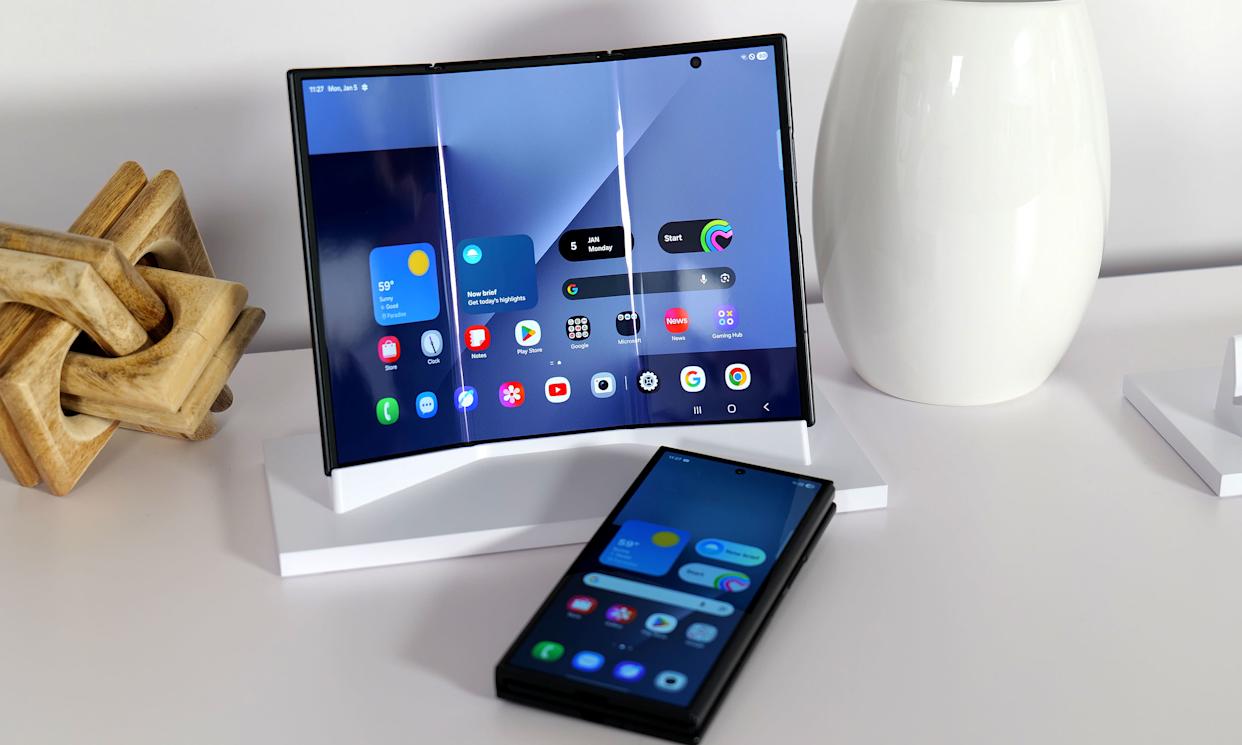
Samsung has once again pushed the boundaries of smartphone design with the unveiling of the Galaxy Z TriFold, a bold new foldable concept showcased at CES 2026. First detailed in hands-on impressions by CNET, the Galaxy Z TriFold is not merely an experimental device meant to grab headlines. Instead, it presents a surprisingly clear vision of where foldable technology could be headed: toward a true convergence of phone and tablet in a single, purpose-driven device.

Unlike earlier foldable concepts that often felt like technical demonstrations searching for a use case, the Galaxy Z TriFold appears intentionally designed around productivity, multitasking, and flexible screen real estate. Samsung is signaling that the next phase of foldables is not about novelty, but about solving real problems for users who want larger screens without carrying multiple devices.

A Tri-Fold Design That Goes Beyond Gimmicks

The defining feature of the Galaxy Z TriFold is its three-panel folding display. When fully unfolded, the device expands into a tablet-sized screen, offering significantly more surface area than Samsung’s current Galaxy Z Fold lineup. Folded down, it can transition into intermediate modes that balance portability and usability, allowing users to choose how much screen they need at any given moment.

This multi-stage folding approach is what sets the TriFold apart. Rather than a simple open-or-closed experience, the device supports multiple configurations, each tailored to different tasks. Samsung’s design suggests that foldables can adapt dynamically to user intent, whether that is quick communication, focused work, or immersive content consumption.

Why Samsung Built the Galaxy Z TriFold

Samsung’s motivation behind the Galaxy Z TriFold becomes clearer when viewed through the lens of user behavior. Many professionals already carry both a smartphone and a tablet to handle communication, productivity, and entertainment. The TriFold attempts to collapse those roles into a single device without forcing compromises.

By offering a display that can scale from phone-sized to tablet-sized, Samsung is addressing a long-standing tension in mobile computing. Traditional smartphones prioritize portability, while tablets prioritize screen space. The Galaxy Z TriFold suggests that future devices do not need to choose between the two.

A Productivity-First Foldable Vision

Productivity appears to be at the heart of the Galaxy Z TriFold’s design philosophy. Samsung has consistently positioned its foldables as multitasking tools, and the TriFold takes that idea to its logical extreme. With a much larger unfolded display, users can comfortably run multiple apps side by side, reference documents while typing, or participate in video calls while viewing related content.

This aligns closely with Samsung’s broader ecosystem strategy, which emphasizes continuity between devices and workflows. The Galaxy Z TriFold feels designed for users who treat their mobile devices as primary computing tools rather than accessories.
Display Technology as the Foundation

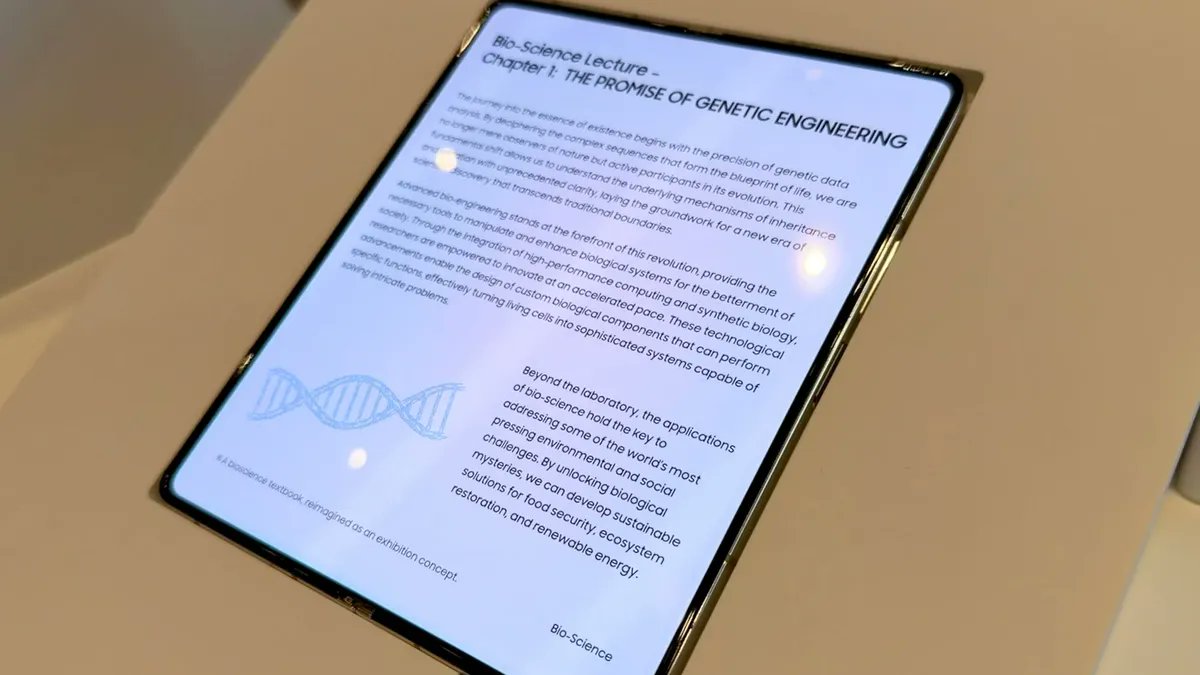
At the core of the Galaxy Z TriFold is Samsung’s advanced foldable display technology. Creating a tri-fold display is far more complex than a single hinge design. It requires precise engineering to ensure consistent brightness, durability, and responsiveness across multiple folding points.

Samsung has spent years refining foldable panels, and the TriFold showcases how far that technology has progressed. The display appears engineered to maintain visual consistency across all panels, reinforcing the sense that this is a cohesive screen rather than three separate parts stitched together.

Durability and Engineering Challenges

One of the biggest questions surrounding any foldable device is durability. Adding more folds naturally increases mechanical complexity, raising concerns about long-term reliability. Samsung’s willingness to show the Galaxy Z TriFold publicly suggests confidence in its engineering progress, even if the device remains a concept.

Samsung has already demonstrated improvements in hinge design, ultra-thin glass, and internal support structures across its foldable lineup. The TriFold builds on that foundation, hinting that Samsung believes it can scale foldable durability to more complex designs.

A Clear Use Case for Creative and Professional Work

Beyond general productivity, the Galaxy Z TriFold has clear appeal for creative professionals. Designers, writers, and content creators often benefit from larger screens and flexible layouts. The TriFold’s expansive display could support sketching, editing, and reviewing work in ways that traditional smartphones cannot.

Samsung’s approach suggests that foldables may increasingly target professionals who want mobile devices capable of handling serious tasks. The TriFold reinforces the idea that smartphones are evolving into full-fledged creative platforms.

How the Galaxy Z TriFold Fits Into Samsung’s Foldable Strategy

Samsung has been the most consistent advocate for foldable smartphones, steadily iterating on its Galaxy Z Fold and Z Flip lines. The Galaxy Z TriFold does not replace those devices but expands the vision of what foldables can be.

By introducing a tri-fold concept, Samsung is effectively testing the boundaries of user acceptance and technological feasibility. Even if the TriFold does not reach consumers in its current form, its ideas are likely to influence future commercial devices.

A Response to Changing Mobile Computing Needs

The Galaxy Z TriFold reflects broader changes in how people use mobile technology. Remote work, cloud-based tools, and always-on connectivity have increased demand for devices that can handle complex tasks on the go. Smartphones alone often feel limiting, while laptops are not always practical.

Samsung’s tri-fold concept positions the smartphone as the central computing hub, capable of expanding to meet different needs. This vision aligns with the growing expectation that mobile devices should adapt to users, not the other way around.

Comparisons With Existing Foldables

Compared to traditional book-style foldables, the Galaxy Z TriFold offers a more dramatic increase in screen size. While current foldables already blur the line between phone and tablet, the TriFold pushes firmly into tablet territory when fully unfolded.

This raises interesting questions about how foldables may eventually compete with tablets themselves. If a tri-fold device can deliver a tablet-like experience without sacrificing portability, it could challenge the need for standalone tablets for some users.

Software Will Be Just as Important as Hardware

The success of a device like the Galaxy Z TriFold depends heavily on software optimization. Managing multiple screen configurations requires intelligent UI scaling, responsive multitasking, and seamless transitions between modes.

Samsung has made significant progress with foldable software features, including flexible app layouts and task management tools. The TriFold concept suggests that Samsung is continuing to invest heavily in software as a differentiator for foldables.

Why Samsung Is Showing This Now

CES 2026 provides the perfect stage for a concept like the Galaxy Z TriFold. The event is known for showcasing forward-looking ideas, and Samsung’s presentation sends a message about its long-term ambitions. Rather than reacting to competitors, Samsung is setting the agenda for what foldable devices could become.

Showing the TriFold now allows Samsung to gauge public and industry reaction while refining the technology behind the scenes. It also reinforces Samsung’s image as the leader in foldable innovation.

What This Means for the Future of Smartphones

The Galaxy Z TriFold hints at a future where smartphones are no longer defined by a fixed form factor. Instead, they become adaptable tools that change shape based on context. This flexibility could redefine how users think about mobile devices altogether.

If Samsung eventually brings a tri-fold device to market, it would represent one of the most significant shifts in smartphone design since the introduction of touchscreens.

Challenges to Mainstream Adoption

Despite its promise, the Galaxy Z TriFold also highlights the challenges foldables still face. Cost, durability perceptions, and learning curves remain barriers for mainstream consumers. A tri-fold device would likely command a premium price, limiting its initial audience.

However, as with earlier foldables, today’s concepts often become tomorrow’s refined products. What seems ambitious now could become routine within a few product cycles.

Conclusion: A Foldable With Intent, Not Just Innovation

Samsung’s Galaxy Z TriFold stands out because it feels purposeful. Rather than chasing novelty, it presents a clear vision of how foldable technology can enhance productivity, creativity, and flexibility. It suggests that Samsung sees foldables not as niche devices, but as the future of mobile computing.

While the TriFold remains a concept, its implications are real. It shows that Samsung is thinking beyond incremental improvements and toward redefining what a smartphone can be. If this vision reaches consumers, the Galaxy Z TriFold could mark a turning point where the phone-tablet hybrid finally makes sense—not as a compromise, but as a powerful all-in-one device.


Disclaimer

We strive to uphold the highest ethical standards in all of our reporting and coverage. We StartupNews.fyi want to be transparent with our readers about any potential conflicts of interest that may arise in our work. It’s possible that some of the investors we feature may have connections to other businesses, including competitors or companies we write about. However, we want to assure our readers that this will not have any impact on the integrity or impartiality of our reporting. We are committed to delivering accurate, unbiased news and information to our audience, and we will continue to uphold our ethics and principles in all of our work. Thank you for your trust and support.

Popular

More Like this

Samsung’s Galaxy Z TriFold Is a Phone-Tablet Hybrid With a Clear Purpose — A Bold New Direction for Foldables

Samsung has once again pushed the boundaries of smartphone design with the unveiling of the Galaxy Z TriFold, a bold new foldable concept showcased at CES 2026. First detailed in hands-on impressions by CNET, the Galaxy Z TriFold is not merely an experimental device meant to grab headlines. Instead, it presents a surprisingly clear vision of where foldable technology could be headed: toward a true convergence of phone and tablet in a single, purpose-driven device.

Unlike earlier foldable concepts that often felt like technical demonstrations searching for a use case, the Galaxy Z TriFold appears intentionally designed around productivity, multitasking, and flexible screen real estate. Samsung is signaling that the next phase of foldables is not about novelty, but about solving real problems for users who want larger screens without carrying multiple devices.

A Tri-Fold Design That Goes Beyond Gimmicks

The defining feature of the Galaxy Z TriFold is its three-panel folding display. When fully unfolded, the device expands into a tablet-sized screen, offering significantly more surface area than Samsung’s current Galaxy Z Fold lineup. Folded down, it can transition into intermediate modes that balance portability and usability, allowing users to choose how much screen they need at any given moment.

This multi-stage folding approach is what sets the TriFold apart. Rather than a simple open-or-closed experience, the device supports multiple configurations, each tailored to different tasks. Samsung’s design suggests that foldables can adapt dynamically to user intent, whether that is quick communication, focused work, or immersive content consumption.

Why Samsung Built the Galaxy Z TriFold

Samsung’s motivation behind the Galaxy Z TriFold becomes clearer when viewed through the lens of user behavior. Many professionals already carry both a smartphone and a tablet to handle communication, productivity, and entertainment. The TriFold attempts to collapse those roles into a single device without forcing compromises.

By offering a display that can scale from phone-sized to tablet-sized, Samsung is addressing a long-standing tension in mobile computing. Traditional smartphones prioritize portability, while tablets prioritize screen space. The Galaxy Z TriFold suggests that future devices do not need to choose between the two.

A Productivity-First Foldable Vision

Productivity appears to be at the heart of the Galaxy Z TriFold’s design philosophy. Samsung has consistently positioned its foldables as multitasking tools, and the TriFold takes that idea to its logical extreme. With a much larger unfolded display, users can comfortably run multiple apps side by side, reference documents while typing, or participate in video calls while viewing related content.

This aligns closely with Samsung’s broader ecosystem strategy, which emphasizes continuity between devices and workflows. The Galaxy Z TriFold feels designed for users who treat their mobile devices as primary computing tools rather than accessories.

Display Technology as the Foundation

At the core of the Galaxy Z TriFold is Samsung’s advanced foldable display technology. Creating a tri-fold display is far more complex than a single hinge design. It requires precise engineering to ensure consistent brightness, durability, and responsiveness across multiple folding points.

Samsung has spent years refining foldable panels, and the TriFold showcases how far that technology has progressed. The display appears engineered to maintain visual consistency across all panels, reinforcing the sense that this is a cohesive screen rather than three separate parts stitched together.

Durability and Engineering Challenges

One of the biggest questions surrounding any foldable device is durability. Adding more folds naturally increases mechanical complexity, raising concerns about long-term reliability. Samsung’s willingness to show the Galaxy Z TriFold publicly suggests confidence in its engineering progress, even if the device remains a concept.

Samsung has already demonstrated improvements in hinge design, ultra-thin glass, and internal support structures across its foldable lineup. The TriFold builds on that foundation, hinting that Samsung believes it can scale foldable durability to more complex designs.

A Clear Use Case for Creative and Professional Work

Beyond general productivity, the Galaxy Z TriFold has clear appeal for creative professionals. Designers, writers, and content creators often benefit from larger screens and flexible layouts. The TriFold’s expansive display could support sketching, editing, and reviewing work in ways that traditional smartphones cannot.

Samsung’s approach suggests that foldables may increasingly target professionals who want mobile devices capable of handling serious tasks. The TriFold reinforces the idea that smartphones are evolving into full-fledged creative platforms.

How the Galaxy Z TriFold Fits Into Samsung’s Foldable Strategy

Samsung has been the most consistent advocate for foldable smartphones, steadily iterating on its Galaxy Z Fold and Z Flip lines. The Galaxy Z TriFold does not replace those devices but expands the vision of what foldables can be.

By introducing a tri-fold concept, Samsung is effectively testing the boundaries of user acceptance and technological feasibility. Even if the TriFold does not reach consumers in its current form, its ideas are likely to influence future commercial devices.

A Response to Changing Mobile Computing Needs

The Galaxy Z TriFold reflects broader changes in how people use mobile technology. Remote work, cloud-based tools, and always-on connectivity have increased demand for devices that can handle complex tasks on the go. Smartphones alone often feel limiting, while laptops are not always practical.

Samsung’s tri-fold concept positions the smartphone as the central computing hub, capable of expanding to meet different needs. This vision aligns with the growing expectation that mobile devices should adapt to users, not the other way around.

Comparisons With Existing Foldables

Compared to traditional book-style foldables, the Galaxy Z TriFold offers a more dramatic increase in screen size. While current foldables already blur the line between phone and tablet, the TriFold pushes firmly into tablet territory when fully unfolded.

This raises interesting questions about how foldables may eventually compete with tablets themselves. If a tri-fold device can deliver a tablet-like experience without sacrificing portability, it could challenge the need for standalone tablets for some users.

Software Will Be Just as Important as Hardware

The success of a device like the Galaxy Z TriFold depends heavily on software optimization. Managing multiple screen configurations requires intelligent UI scaling, responsive multitasking, and seamless transitions between modes.

Samsung has made significant progress with foldable software features, including flexible app layouts and task management tools. The TriFold concept suggests that Samsung is continuing to invest heavily in software as a differentiator for foldables.

Why Samsung Is Showing This Now

CES 2026 provides the perfect stage for a concept like the Galaxy Z TriFold. The event is known for showcasing forward-looking ideas, and Samsung’s presentation sends a message about its long-term ambitions. Rather than reacting to competitors, Samsung is setting the agenda for what foldable devices could become.

Showing the TriFold now allows Samsung to gauge public and industry reaction while refining the technology behind the scenes. It also reinforces Samsung’s image as the leader in foldable innovation.

What This Means for the Future of Smartphones

The Galaxy Z TriFold hints at a future where smartphones are no longer defined by a fixed form factor. Instead, they become adaptable tools that change shape based on context. This flexibility could redefine how users think about mobile devices altogether.

If Samsung eventually brings a tri-fold device to market, it would represent one of the most significant shifts in smartphone design since the introduction of touchscreens.

Challenges to Mainstream Adoption

Despite its promise, the Galaxy Z TriFold also highlights the challenges foldables still face. Cost, durability perceptions, and learning curves remain barriers for mainstream consumers. A tri-fold device would likely command a premium price, limiting its initial audience.

However, as with earlier foldables, today’s concepts often become tomorrow’s refined products. What seems ambitious now could become routine within a few product cycles.

Conclusion: A Foldable With Intent, Not Just Innovation

Samsung’s Galaxy Z TriFold stands out because it feels purposeful. Rather than chasing novelty, it presents a clear vision of how foldable technology can enhance productivity, creativity, and flexibility. It suggests that Samsung sees foldables not as niche devices, but as the future of mobile computing.

While the TriFold remains a concept, its implications are real. It shows that Samsung is thinking beyond incremental improvements and toward redefining what a smartphone can be. If this vision reaches consumers, the Galaxy Z TriFold could mark a turning point where the phone-tablet hybrid finally makes sense—not as a compromise, but as a powerful all-in-one device.

Disclaimer

We strive to uphold the highest ethical standards in all of our reporting and coverage. We StartupNews.fyi want to be transparent with our readers about any potential conflicts of interest that may arise in our work. It’s possible that some of the investors we feature may have connections to other businesses, including competitors or companies we write about. However, we want to assure our readers that this will not have any impact on the integrity or impartiality of our reporting. We are committed to delivering accurate, unbiased news and information to our audience, and we will continue to uphold our ethics and principles in all of our work. Thank you for your trust and support.

Website Upgradation is going on for any glitch kindly connect at office@startupnews.fyi

More like this

How do you use Tom’s Hardware? Take our survey...

We here at Tom's Hardware are running a short...

How to watch Senegal vs Egypt (it’s free) —...

The Senegal vs Egypt live stream is set to...

Own a Samsung smartwatch? My 30-second routine will keep...

Follow ZDNET: Add us as a...

Popular

iptv iptv iptv iptv iptv iptv iptv iptv iptv iptv iptv iptv iptv iptv iptv iptv iptv iptv iptv iptv iptv iptv iptv iptv iptv iptv iptv iptv iptv iptv iptv iptv iptv iptv iptv iptv iptv iptv iptv iptv iptv iptv iptv iptv iptv iptv iptv iptv iptv iptv iptv iptv iptv iptv iptv iptv iptv iptv iptv iptv iptv iptv iptv iptv iptv iptv iptv iptv iptv iptv iptv iptv iptv iptv iptv iptv iptv iptv iptv iptv iptv iptv iptv iptv iptv iptv iptv iptv iptv iptv iptv iptv iptv iptv iptv iptv iptv iptv iptv iptv iptv iptv iptv iptv iptv iptv iptv iptv iptv iptv iptv iptv iptv iptv iptv iptv iptv iptv iptv iptv iptv iptv iptv iptv iptv iptv iptv iptv iptv iptv iptv iptv iptv iptv iptv iptv iptv iptv iptv iptv iptv iptv iptv iptv iptv iptv iptv iptv iptv iptv iptv iptv iptv iptv iptv iptv iptv iptv iptv iptv iptv iptv iptv iptv iptv iptv iptv iptv iptv iptv iptv iptv iptv iptv iptv iptv iptv iptv iptv iptv iptv iptv iptv iptv iptv iptv iptv iptv iptv iptv iptv iptv iptv iptv iptv iptv iptv iptv iptv iptv iptv iptv iptv iptv iptv iptv iptv iptv iptv iptv iptv iptv iptv iptv iptv iptv iptv iptv iptv iptv iptv iptv iptv iptv iptv iptv iptv iptv iptv iptv iptv iptv iptv iptv iptv iptv iptv iptv iptv iptv iptv iptv iptv iptv iptv iptv iptv iptv iptv iptv iptv iptv iptv iptv iptv iptv iptv iptv iptv iptv iptv iptv iptv iptv iptv iptv iptv iptv iptv iptv iptv iptv iptv iptv iptv iptv iptv iptv iptv iptv iptv iptv iptv iptv iptv iptv iptv iptv iptv iptv iptv iptv iptv iptv iptv iptv iptv iptv iptv iptv iptv iptv iptv iptv iptv iptv iptv iptv iptv iptv iptv iptv iptv iptv iptv iptv iptv iptv iptv iptv iptv iptv iptv iptv iptv iptv iptv iptv iptv iptv iptv iptv iptv iptv iptv iptv iptv iptv iptv iptv iptv iptv iptv iptv iptv iptv iptv iptv iptv iptv iptv iptv iptv iptv iptv iptv iptv iptv iptv iptv iptv iptv iptv iptv iptv iptv iptv iptv iptv iptv iptv iptv iptv iptv iptv iptv iptv iptv iptv iptv iptv iptv iptv iptv iptv iptv iptv iptv iptv iptv iptv iptv iptv iptv iptv iptv iptv iptv iptv iptv iptv iptv iptv iptv iptv iptv iptv iptv iptv iptv iptv iptv iptv iptv iptv iptv iptv iptv iptv iptv iptv iptv iptv iptv iptv iptv iptv iptv iptv iptv iptv iptv iptv iptv iptv iptv iptv iptv iptv iptv iptv iptv iptv iptv iptv iptv iptv iptv iptv iptv iptv iptv iptv iptv iptv iptv iptv iptv iptv iptv iptv iptv iptv iptv iptv iptv iptv iptv iptv iptv iptv iptv iptv iptv iptv iptv