Minecraft Introduces ‘Mounts of Mayhem: Dungeon Descent’ — A Bold New Take on Combat, Chaos, and Cooperative Play

Share via:

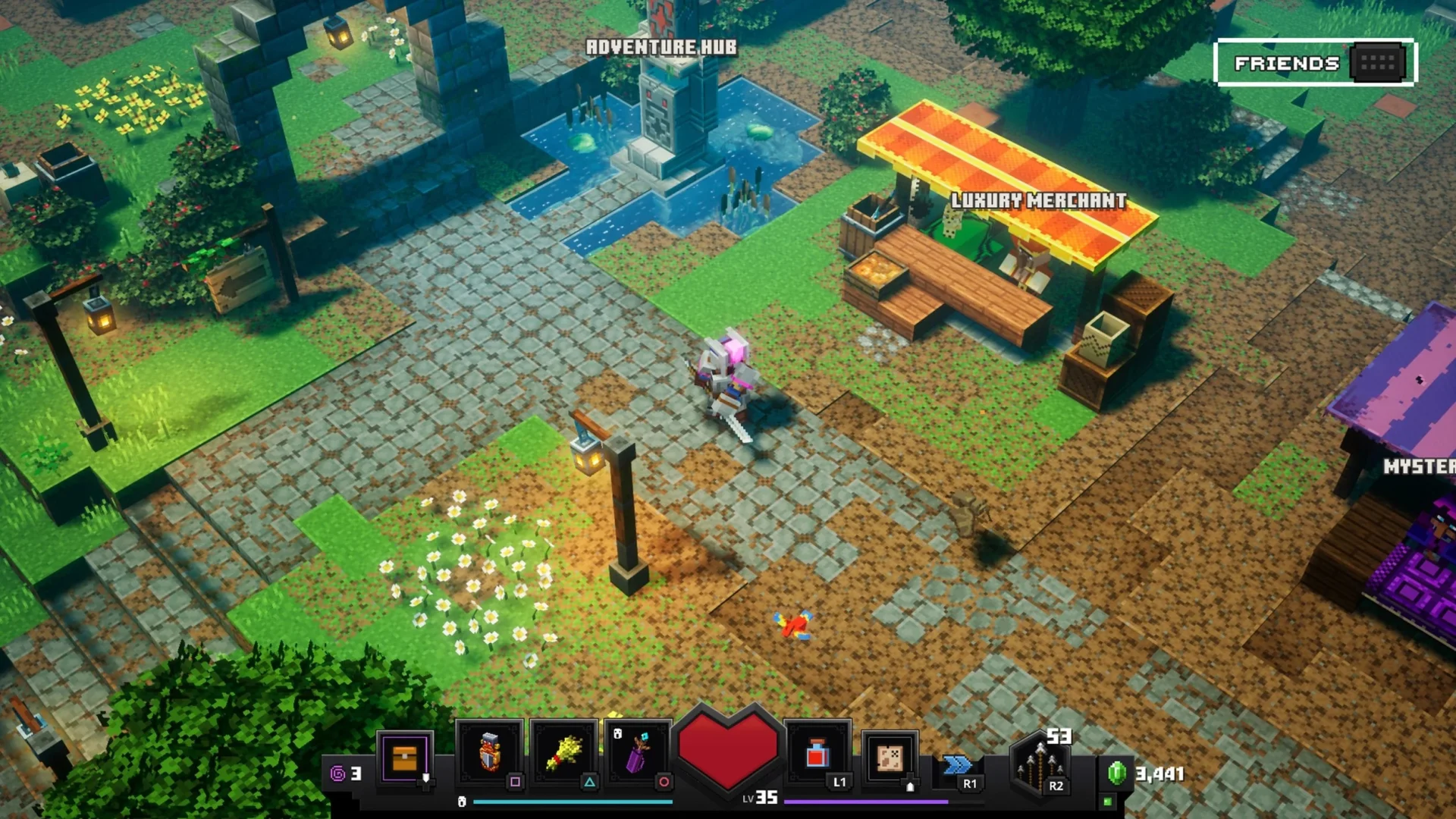
Minecraft has never been a game that stands still. Over the years, Mojang has repeatedly reinvented how players build, explore, and survive within its blocky universe. With the introduction of Mounts of Mayhem: Dungeon Descent, the game takes another ambitious step forward, blending fast-paced dungeon crawling with mounted combat and cooperative chaos. Revealed through Minecraft’s official site, this new experience reimagines how action unfolds in the Minecraft world while staying true to its playful roots.

Dungeon Descent is not just another content drop. It represents a shift in how Minecraft approaches structured gameplay. Instead of open-ended survival or purely creative experimentation, this mode focuses on tightly designed encounters, escalating difficulty, and a strong emphasis on teamwork. The result is an experience that feels both fresh and familiar, appealing to longtime fans and newer players alike.

A New Kind of Dungeon Experience in Minecraft

Dungeon Descent places players into action-heavy dungeon environments designed for repeated runs and escalating challenges. Unlike traditional Minecraft exploration, where danger emerges organically, these dungeons are purpose-built for combat intensity. Enemies spawn aggressively, layouts funnel players into encounters, and progression depends on momentum rather than patience.

This structured design borrows inspiration from classic dungeon crawlers while preserving Minecraft’s accessible tone. The goal is not punishing difficulty, but controlled chaos. Each descent feels unpredictable, encouraging players to adapt quickly rather than rely on memorized paths.

Mounts Take Center Stage

The defining feature of Mounts of Mayhem is mounted combat. Players are no longer limited to fighting on foot. Instead, they can ride powerful mounts that dramatically change how battles unfold. Speed, impact, and mobility become core combat mechanics rather than secondary advantages.

Mounted combat adds a kinetic energy rarely seen in Minecraft. Charging through groups of enemies, dodging attacks at high speed, and coordinating mounted assaults with teammates introduces a sense of momentum that contrasts sharply with traditional sword-and-bow encounters. It is a deliberate attempt to make combat feel faster and more expressive.

Why Mounted Combat Changes Everything

In standard Minecraft gameplay, combat often revolves around positioning, timing, and resource management. Mounts of Mayhem shifts that balance. Mobility becomes a weapon. Players must think about angles of attack, crowd control, and spacing in entirely new ways.

This design encourages more aggressive playstyles. Rather than cautiously backing away from enemies, players are rewarded for bold movement and coordinated strikes. Mounted combat also raises the skill ceiling, giving experienced players new ways to express mastery.

Chaos as a Feature, Not a Bug

Minecraft has always embraced a certain level of chaos, and Dungeon Descent leans into it intentionally. Enemies swarm, environments collapse, and fights can escalate quickly. This controlled chaos is central to the mode’s appeal.

Rather than punishing mistakes harshly, the mode encourages improvisation. When plans fall apart, players must react on the fly, using mounts, abilities, and terrain creatively. This design philosophy keeps runs exciting even after multiple playthroughs.

Designed for Cooperative Play

While Dungeon Descent can be enjoyed solo, its true strength emerges in cooperative play. The mode is clearly designed around teamwork. Different players can take on complementary roles, coordinating mounted charges, crowd control, and support actions.

Communication becomes essential as difficulty ramps up. Teams that plan their approach and adapt together are far more likely to succeed. This emphasis on cooperation reinforces Minecraft’s long-standing identity as a social experience.

Progression That Rewards Experimentation

Mounts of Mayhem introduces progression systems that encourage players to experiment rather than stick to a single strategy. Different mounts offer unique strengths, and dungeon modifiers can dramatically alter how encounters play out.

This variability ensures that no two runs feel exactly the same. Players are incentivized to try new combinations, adjust tactics, and learn from failure. Over time, mastery comes not from memorization, but from adaptability.

A Bridge Between Minecraft and Action RPGs

Dungeon Descent feels like a bridge between traditional Minecraft and action-focused RPGs. The structured levels, escalating difficulty, and emphasis on combat echo elements found in dungeon crawler games, but without abandoning Minecraft’s identity.

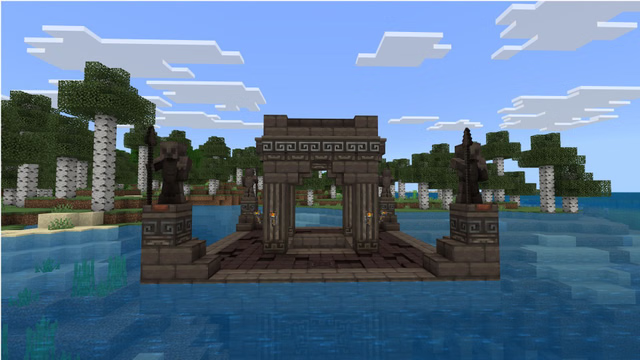
The visuals remain unmistakably Minecraft. The tone stays playful rather than grim. This balance allows the mode to attract players who might not normally gravitate toward hardcore action games.
How This Fits Into Minecraft’s Broader Evolution

Minecraft’s history is marked by bold experiments. From survival mode to creative mode, from Redstone to massive world updates, each major addition has expanded what the game can be. Mounts of Mayhem continues this tradition by exploring a more curated, action-driven experience.

Importantly, this mode does not replace existing playstyles. Instead, it exists alongside them, offering an alternative way to engage with the Minecraft universe. This modular approach helps Minecraft remain relevant to an increasingly diverse player base.

Appeal to New and Returning Players

For new players, Dungeon Descent offers a guided, high-energy entry point into Minecraft’s mechanics. The structured nature of the mode reduces the intimidation factor of open-world survival while still showcasing the game’s depth.

For veterans, it provides a refreshing change of pace. After years of building and exploring, the chance to dive into focused combat scenarios can reignite excitement. Mounted combat, in particular, introduces mechanics that feel genuinely new even to long-time fans.

Designing for Replayability

Replayability is at the core of Mounts of Mayhem. Procedural elements, randomized encounters, and evolving challenges ensure that dungeon runs remain engaging over time. This approach aligns with modern game design trends that favor repeatable content over one-off experiences.

By encouraging players to return again and again, Dungeon Descent extends Minecraft’s longevity without fragmenting its community.

The Role of Difficulty and Accessibility

Despite its action-heavy focus, Dungeon Descent maintains Minecraft’s accessibility. Difficulty scales gradually, allowing players of varying skill levels to participate. This inclusivity is crucial for a game with such a broad audience.

Rather than locking content behind extreme difficulty, the mode invites players to grow into its challenges. Success feels earned, but failure never feels unfair.

Community and Creative Potential

As with all Minecraft content, the community will likely find ways to expand on Mounts of Mayhem. Custom challenges, speed runs, and creative reinterpretations are almost inevitable. This organic extension of official content has always been one of Minecraft’s greatest strengths.

Dungeon Descent provides a framework that players can build upon, both figuratively and literally.

What Mounts of Mayhem Signals About Minecraft’s Future

The introduction of Dungeon Descent suggests that Minecraft is increasingly willing to explore genre hybrids. While the core sandbox experience remains untouched, Mojang appears open to experimenting with more curated gameplay modes.

This flexibility is key to Minecraft’s continued success. By offering multiple ways to play within the same universe, the game can evolve without alienating its core audience.

Conclusion: Controlled Chaos, Clear Direction

Mounts of Mayhem: Dungeon Descent is more than a novelty mode. It is a carefully designed experiment that expands Minecraft’s combat, embraces chaos, and emphasizes cooperation. By introducing mounted combat and structured dungeon runs, Minecraft opens the door to new forms of expression within its familiar world.


Disclaimer

We strive to uphold the highest ethical standards in all of our reporting and coverage. We StartupNews.fyi want to be transparent with our readers about any potential conflicts of interest that may arise in our work. It’s possible that some of the investors we feature may have connections to other businesses, including competitors or companies we write about. However, we want to assure our readers that this will not have any impact on the integrity or impartiality of our reporting. We are committed to delivering accurate, unbiased news and information to our audience, and we will continue to uphold our ethics and principles in all of our work. Thank you for your trust and support.

Popular

More Like this

Minecraft Introduces ‘Mounts of Mayhem: Dungeon Descent’ — A Bold New Take on Combat, Chaos, and Cooperative Play

Minecraft has never been a game that stands still. Over the years, Mojang has repeatedly reinvented how players build, explore, and survive within its blocky universe. With the introduction of Mounts of Mayhem: Dungeon Descent, the game takes another ambitious step forward, blending fast-paced dungeon crawling with mounted combat and cooperative chaos. Revealed through Minecraft’s official site, this new experience reimagines how action unfolds in the Minecraft world while staying true to its playful roots.

Dungeon Descent is not just another content drop. It represents a shift in how Minecraft approaches structured gameplay. Instead of open-ended survival or purely creative experimentation, this mode focuses on tightly designed encounters, escalating difficulty, and a strong emphasis on teamwork. The result is an experience that feels both fresh and familiar, appealing to longtime fans and newer players alike.

A New Kind of Dungeon Experience in Minecraft

Dungeon Descent places players into action-heavy dungeon environments designed for repeated runs and escalating challenges. Unlike traditional Minecraft exploration, where danger emerges organically, these dungeons are purpose-built for combat intensity. Enemies spawn aggressively, layouts funnel players into encounters, and progression depends on momentum rather than patience.

This structured design borrows inspiration from classic dungeon crawlers while preserving Minecraft’s accessible tone. The goal is not punishing difficulty, but controlled chaos. Each descent feels unpredictable, encouraging players to adapt quickly rather than rely on memorized paths.

Mounts Take Center Stage

The defining feature of Mounts of Mayhem is mounted combat. Players are no longer limited to fighting on foot. Instead, they can ride powerful mounts that dramatically change how battles unfold. Speed, impact, and mobility become core combat mechanics rather than secondary advantages.

Mounted combat adds a kinetic energy rarely seen in Minecraft. Charging through groups of enemies, dodging attacks at high speed, and coordinating mounted assaults with teammates introduces a sense of momentum that contrasts sharply with traditional sword-and-bow encounters. It is a deliberate attempt to make combat feel faster and more expressive.

Why Mounted Combat Changes Everything

In standard Minecraft gameplay, combat often revolves around positioning, timing, and resource management. Mounts of Mayhem shifts that balance. Mobility becomes a weapon. Players must think about angles of attack, crowd control, and spacing in entirely new ways.

This design encourages more aggressive playstyles. Rather than cautiously backing away from enemies, players are rewarded for bold movement and coordinated strikes. Mounted combat also raises the skill ceiling, giving experienced players new ways to express mastery.

Chaos as a Feature, Not a Bug

Minecraft has always embraced a certain level of chaos, and Dungeon Descent leans into it intentionally. Enemies swarm, environments collapse, and fights can escalate quickly. This controlled chaos is central to the mode’s appeal.

Rather than punishing mistakes harshly, the mode encourages improvisation. When plans fall apart, players must react on the fly, using mounts, abilities, and terrain creatively. This design philosophy keeps runs exciting even after multiple playthroughs.

Designed for Cooperative Play

While Dungeon Descent can be enjoyed solo, its true strength emerges in cooperative play. The mode is clearly designed around teamwork. Different players can take on complementary roles, coordinating mounted charges, crowd control, and support actions.

Communication becomes essential as difficulty ramps up. Teams that plan their approach and adapt together are far more likely to succeed. This emphasis on cooperation reinforces Minecraft’s long-standing identity as a social experience.

Progression That Rewards Experimentation

Mounts of Mayhem introduces progression systems that encourage players to experiment rather than stick to a single strategy. Different mounts offer unique strengths, and dungeon modifiers can dramatically alter how encounters play out.

This variability ensures that no two runs feel exactly the same. Players are incentivized to try new combinations, adjust tactics, and learn from failure. Over time, mastery comes not from memorization, but from adaptability.

A Bridge Between Minecraft and Action RPGs

Dungeon Descent feels like a bridge between traditional Minecraft and action-focused RPGs. The structured levels, escalating difficulty, and emphasis on combat echo elements found in dungeon crawler games, but without abandoning Minecraft’s identity.

The visuals remain unmistakably Minecraft. The tone stays playful rather than grim. This balance allows the mode to attract players who might not normally gravitate toward hardcore action games.

How This Fits Into Minecraft’s Broader Evolution

Minecraft’s history is marked by bold experiments. From survival mode to creative mode, from Redstone to massive world updates, each major addition has expanded what the game can be. Mounts of Mayhem continues this tradition by exploring a more curated, action-driven experience.

Importantly, this mode does not replace existing playstyles. Instead, it exists alongside them, offering an alternative way to engage with the Minecraft universe. This modular approach helps Minecraft remain relevant to an increasingly diverse player base.

Appeal to New and Returning Players

For new players, Dungeon Descent offers a guided, high-energy entry point into Minecraft’s mechanics. The structured nature of the mode reduces the intimidation factor of open-world survival while still showcasing the game’s depth.

For veterans, it provides a refreshing change of pace. After years of building and exploring, the chance to dive into focused combat scenarios can reignite excitement. Mounted combat, in particular, introduces mechanics that feel genuinely new even to long-time fans.

Designing for Replayability

Replayability is at the core of Mounts of Mayhem. Procedural elements, randomized encounters, and evolving challenges ensure that dungeon runs remain engaging over time. This approach aligns with modern game design trends that favor repeatable content over one-off experiences.

By encouraging players to return again and again, Dungeon Descent extends Minecraft’s longevity without fragmenting its community.

The Role of Difficulty and Accessibility

Despite its action-heavy focus, Dungeon Descent maintains Minecraft’s accessibility. Difficulty scales gradually, allowing players of varying skill levels to participate. This inclusivity is crucial for a game with such a broad audience.

Rather than locking content behind extreme difficulty, the mode invites players to grow into its challenges. Success feels earned, but failure never feels unfair.

Community and Creative Potential

As with all Minecraft content, the community will likely find ways to expand on Mounts of Mayhem. Custom challenges, speed runs, and creative reinterpretations are almost inevitable. This organic extension of official content has always been one of Minecraft’s greatest strengths.

Dungeon Descent provides a framework that players can build upon, both figuratively and literally.

What Mounts of Mayhem Signals About Minecraft’s Future

The introduction of Dungeon Descent suggests that Minecraft is increasingly willing to explore genre hybrids. While the core sandbox experience remains untouched, Mojang appears open to experimenting with more curated gameplay modes.

This flexibility is key to Minecraft’s continued success. By offering multiple ways to play within the same universe, the game can evolve without alienating its core audience.

Conclusion: Controlled Chaos, Clear Direction

Mounts of Mayhem: Dungeon Descent is more than a novelty mode. It is a carefully designed experiment that expands Minecraft’s combat, embraces chaos, and emphasizes cooperation. By introducing mounted combat and structured dungeon runs, Minecraft opens the door to new forms of expression within its familiar world.

Disclaimer

We strive to uphold the highest ethical standards in all of our reporting and coverage. We StartupNews.fyi want to be transparent with our readers about any potential conflicts of interest that may arise in our work. It’s possible that some of the investors we feature may have connections to other businesses, including competitors or companies we write about. However, we want to assure our readers that this will not have any impact on the integrity or impartiality of our reporting. We are committed to delivering accurate, unbiased news and information to our audience, and we will continue to uphold our ethics and principles in all of our work. Thank you for your trust and support.

Website Upgradation is going on for any glitch kindly connect at office@startupnews.fyi

More like this

Google Wallet is finally improving transaction history

Edgar Cervantes / Android AuthorityTL;DR Google Wallet will soon let...

Google Wallet is finally improving transaction history

Edgar Cervantes / Android AuthorityTL;DR Google Wallet will soon let...

Apple Releases New Firmware Update for iPhone Air MagSafe...

Apple this week released another firmware update for the...

Popular

iptv iptv iptv iptv iptv iptv iptv iptv iptv iptv iptv iptv iptv iptv iptv iptv iptv iptv iptv iptv iptv iptv iptv iptv iptv iptv iptv iptv iptv iptv iptv iptv iptv iptv iptv iptv iptv iptv iptv iptv iptv iptv iptv iptv iptv iptv iptv iptv iptv iptv iptv iptv iptv iptv iptv iptv iptv iptv iptv iptv iptv iptv iptv iptv iptv iptv iptv iptv iptv iptv iptv iptv iptv iptv iptv iptv iptv iptv iptv iptv iptv iptv iptv iptv iptv iptv iptv iptv iptv iptv iptv iptv iptv iptv iptv iptv iptv iptv iptv iptv iptv iptv iptv iptv iptv iptv iptv iptv iptv iptv iptv iptv iptv iptv iptv iptv iptv iptv iptv iptv iptv iptv iptv iptv iptv iptv iptv iptv iptv iptv iptv iptv iptv iptv iptv iptv iptv iptv iptv iptv iptv iptv iptv iptv iptv iptv iptv iptv iptv iptv iptv iptv iptv iptv iptv iptv iptv iptv iptv iptv iptv iptv iptv iptv iptv iptv iptv iptv iptv iptv iptv iptv iptv iptv iptv iptv iptv iptv iptv iptv iptv iptv iptv iptv iptv iptv iptv iptv iptv iptv iptv iptv iptv iptv iptv iptv iptv iptv iptv iptv iptv iptv iptv iptv iptv iptv iptv iptv iptv iptv iptv iptv iptv iptv iptv iptv iptv iptv iptv iptv iptv iptv iptv iptv iptv iptv iptv iptv iptv iptv iptv iptv iptv iptv iptv iptv iptv iptv iptv iptv iptv iptv iptv iptv iptv iptv iptv iptv iptv iptv iptv iptv iptv iptv iptv iptv iptv iptv iptv iptv iptv iptv iptv iptv iptv iptv iptv iptv iptv iptv iptv iptv iptv iptv iptv iptv iptv iptv iptv iptv iptv iptv iptv iptv iptv iptv iptv iptv iptv iptv iptv iptv iptv iptv iptv iptv iptv iptv iptv iptv iptv iptv iptv iptv iptv iptv iptv iptv iptv iptv iptv iptv iptv iptv iptv iptv iptv iptv iptv iptv iptv iptv iptv iptv iptv iptv iptv iptv iptv iptv iptv iptv iptv iptv iptv iptv iptv iptv iptv iptv iptv iptv iptv iptv iptv iptv iptv iptv iptv iptv iptv iptv iptv iptv iptv iptv iptv iptv iptv iptv iptv iptv iptv iptv iptv iptv iptv iptv iptv iptv iptv iptv iptv iptv iptv iptv iptv iptv iptv iptv iptv iptv iptv iptv iptv iptv iptv iptv iptv iptv iptv iptv iptv iptv iptv iptv iptv iptv iptv iptv iptv iptv iptv iptv iptv iptv iptv iptv iptv iptv iptv iptv iptv iptv iptv iptv iptv iptv iptv iptv iptv iptv iptv iptv iptv iptv iptv iptv iptv iptv iptv iptv iptv iptv iptv iptv iptv iptv iptv iptv iptv iptv iptv iptv iptv iptv iptv iptv iptv iptv iptv iptv iptv iptv iptv iptv iptv iptv iptv iptv iptv iptv iptv iptv iptv iptv iptv iptv iptv iptv iptv iptv iptv iptv iptv iptv