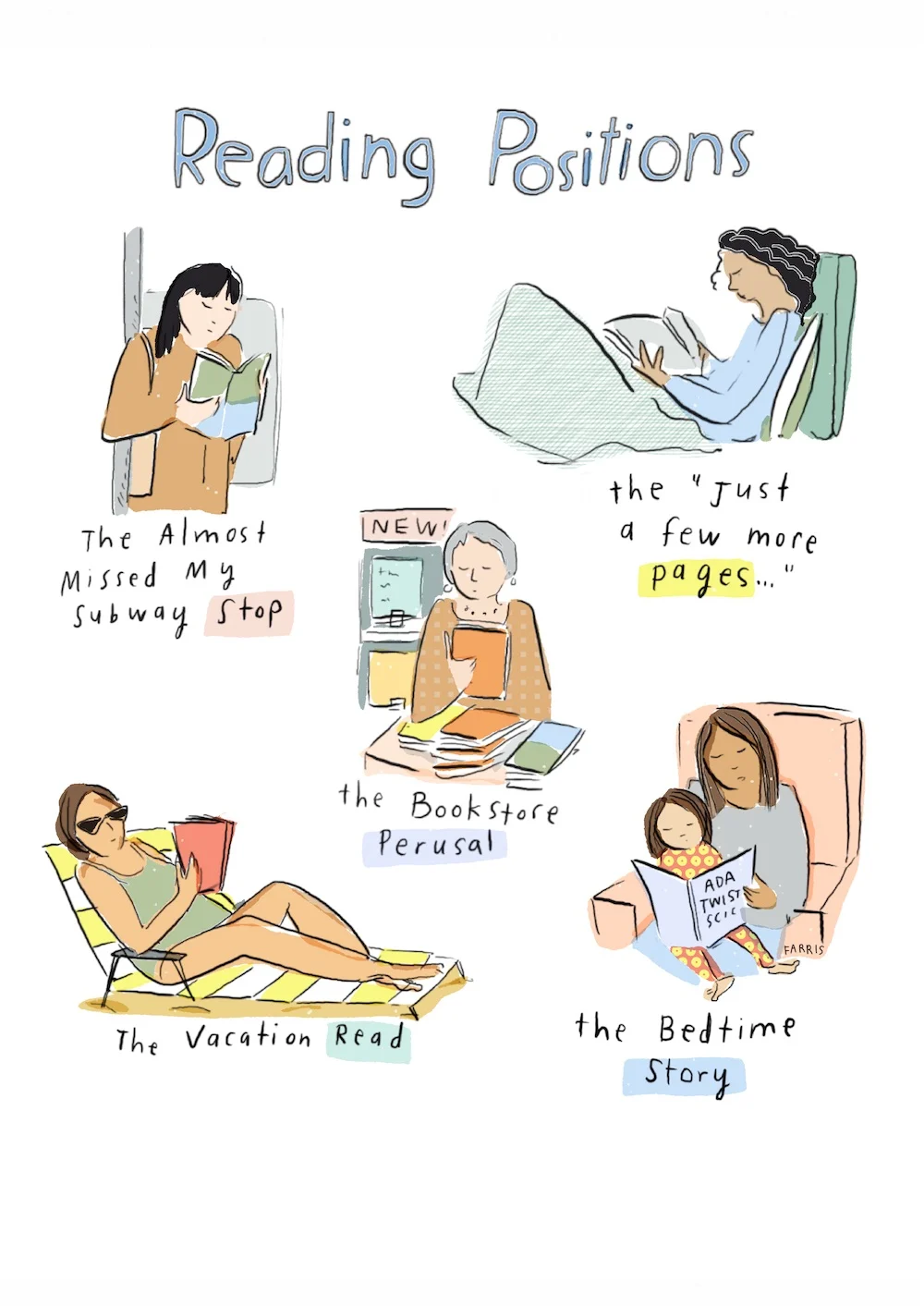
There Is No Comfortable Reading Position — And That’s Exactly the Point

Share via:

If you have ever shifted in your chair for the fifth time while reading, stretched your neck, adjusted a pillow, or wondered why a supposedly relaxing activity leaves your back aching, you are not alone. The uncomfortable truth is simple: there is no truly comfortable reading position. As explored in a recent essay by Slate, reading is an activity that quietly but persistently asks the human body to do something it was never designed to do for long periods—remain still while the eyes and brain work intensely.

This realization runs counter to how reading is often marketed. Books are associated with comfort, coziness, and rest. Yet the physical experience of reading is frequently marked by discomfort, stiffness, and low-grade pain. The contradiction reveals something important not just about posture, but about how modern bodies interact with static activities in general.

Why Reading Feels Like It Should Be Comfortable

Culturally, reading is framed as a restful act. We picture armchairs, soft beds, warm blankets, and quiet corners. The act of reading is linked to leisure, introspection, and calm.

That expectation shapes how we approach it. We look for the “right” position, assuming that once we find it, discomfort will disappear. When it does not, we assume something is wrong with our posture, our furniture, or our bodies.

The Slate piece challenges that assumption. The problem is not that we are doing it wrong. The problem is that reading itself is inherently static, and static positions are fundamentally uncomfortable over time.

The Body Is Built for Movement, Not Stillness

Human bodies evolved to move. Muscles, joints, and connective tissue function best when they alternate between contraction and release. Prolonged stillness, even in seemingly neutral positions, leads to strain.

Reading asks the body to remain relatively motionless while the eyes focus at a fixed distance and the hands hold an object at a precise angle. Over time, small muscles fatigue, joints compress, and tension accumulates.

Discomfort is not a failure of ergonomics. It is a biological signal.

Why Every Reading Position Eventually Hurts

Whether you read sitting upright, lying down, curled on a couch, or propped against pillows, the same pattern emerges. The position feels fine—until it doesn’t.

Sitting strains the lower back and neck. Lying down stresses the shoulders and wrists. Reading on your side compresses one half of the body. Even so-called ergonomic setups create pressure points when held too long.

The Slate essay makes a crucial point: there is no position that remains comfortable indefinitely, because comfort itself is dynamic, not static.

The Myth of Perfect Posture

Much of the discomfort around reading is compounded by posture anxiety. We are told there is a “correct” way to sit or lie, and that pain is evidence of doing it wrong.

In reality, posture science has shifted away from rigid ideals. Many experts now agree that the best posture is simply the next one. Variation matters more than precision.

The idea that one perfect reading position exists is a myth that sets readers up for frustration.

Why Reading Magnifies Bodily Awareness

Unlike scrolling or watching television, reading demands sustained attention. The mind is engaged deeply, which paradoxically makes the body’s discomfort more noticeable.

When the brain is focused, small aches break through more clearly. A stiff neck becomes distracting. A numb leg demands attention. Reading amplifies the conversation between mind and body.

This is not a flaw in reading. It is evidence of how embodied the experience truly is.

Digital Reading Has Not Solved the Problem

Switching from books to tablets or phones does not eliminate discomfort. It often shifts it.

Phones encourage neck flexion. Tablets strain wrists. E-readers still require fixed gaze and static holding positions. The medium changes, but the fundamental issue remains.

Reading—digital or physical—keeps the body still in ways it resists over time.

Why Discomfort Does Not Mean Damage

An important clarification in the Slate discussion is that discomfort does not automatically equal harm. Feeling stiff or sore while reading does not mean you are injuring yourself.

Discomfort is often the body’s way of requesting movement, not signaling danger. The problem arises when discomfort is ignored for long periods without adjustment.

Understanding this distinction reduces fear and reframes discomfort as communication rather than failure.

Movement Is the Real Solution, Not Furniture

It is tempting to believe that the right chair, pillow, or mattress will finally solve reading discomfort. While good furniture helps, it cannot eliminate the underlying issue.

Movement is the real antidote. Shifting positions, standing up, stretching, or walking briefly resets the body.

Reading becomes more sustainable when it is broken into intervals rather than treated as a single uninterrupted posture.

Why This Mirrors Broader Modern Problems

Reading discomfort reflects a larger issue in modern life. Many activities—work, gaming, streaming—require prolonged stillness.

The body reacts the same way across contexts. Discomfort is not a personal weakness. It is a structural mismatch between how we live and how we evolved.

Reading simply exposes that mismatch more clearly.

Reframing Discomfort as Part of the Reading Experience

One of the most useful ideas in the Slate piece is acceptance. Instead of searching endlessly for a pain-free position, readers can acknowledge that discomfort is part of the process.

This does not mean suffering through pain. It means letting go of the expectation that reading should feel physically effortless.

When discomfort arises, the response is not frustration, but adjustment.

How Professional Readers Cope

Writers, editors, and academics—people who read for a living—rarely sit still for hours. They shift, pace, annotate standing up, or read in short bursts.

Their habits reflect an intuitive understanding that the body must move even when the mind is focused.

Reading comfortably is less about position and more about rhythm.

Why Reading in Bed Feels So Deceptive

Reading in bed feels especially cozy at first, which makes the eventual discomfort more surprising. Beds encourage slouching, twisting, and unsupported neck angles.

The comfort is front-loaded. The cost arrives later.

This pattern reinforces the idea that comfort is temporary, not sustainable.

The Emotional Layer of Reading Discomfort

There is also an emotional dimension. Discomfort can feel like an interruption, breaking immersion in a story or argument.

Accepting discomfort as normal reduces that irritation. Instead of fighting the body, readers can work with it.

This acceptance often deepens rather than disrupts engagement.

Why Audiobooks and Movement Pair So Well

Audiobooks have grown in popularity partly because they allow movement. Walking, cleaning, or stretching while listening keeps the body engaged.

This does not replace reading, but it highlights a truth: cognition thrives when paired with motion.

The discomfort of reading reminds us of that balance.

What Ergonomics Gets Right—and Wrong

Ergonomics is valuable, but it is often misunderstood as a quest for stillness. True ergonomic thinking emphasizes variability and adaptability.

The best reading setup is one that allows easy repositioning, not one that locks the body into place.

Flexibility beats perfection.

Why This Should Change How We Talk About Reading

We often describe reading as escapism, as leaving the body behind. The discomfort tells a different story.

Reading is embodied. Eyes strain. Muscles work. Joints respond. Acknowledging this makes reading feel more honest, not less magical.

The mind never leaves the body—it reads with it.

Conclusion: Discomfort Is Not the Enemy of Reading

There is no comfortable reading position, and that is not a failure of design or discipline. It is a reminder of what bodies are.

Reading asks for stillness in a body built for movement. The solution is not to eliminate discomfort, but to listen to it.

Shift positions. Take breaks. Let movement coexist with thought.

In doing so, reading becomes not less comfortable, but more sustainable—an activity that respects both mind and body, even when neither stays perfectly still.


Disclaimer

We strive to uphold the highest ethical standards in all of our reporting and coverage. We StartupNews.fyi want to be transparent with our readers about any potential conflicts of interest that may arise in our work. It’s possible that some of the investors we feature may have connections to other businesses, including competitors or companies we write about. However, we want to assure our readers that this will not have any impact on the integrity or impartiality of our reporting. We are committed to delivering accurate, unbiased news and information to our audience, and we will continue to uphold our ethics and principles in all of our work. Thank you for your trust and support.

Popular

More Like this

There Is No Comfortable Reading Position — And That’s Exactly the Point

If you have ever shifted in your chair for the fifth time while reading, stretched your neck, adjusted a pillow, or wondered why a supposedly relaxing activity leaves your back aching, you are not alone. The uncomfortable truth is simple: there is no truly comfortable reading position. As explored in a recent essay by Slate, reading is an activity that quietly but persistently asks the human body to do something it was never designed to do for long periods—remain still while the eyes and brain work intensely.

This realization runs counter to how reading is often marketed. Books are associated with comfort, coziness, and rest. Yet the physical experience of reading is frequently marked by discomfort, stiffness, and low-grade pain. The contradiction reveals something important not just about posture, but about how modern bodies interact with static activities in general.

Why Reading Feels Like It Should Be Comfortable

Culturally, reading is framed as a restful act. We picture armchairs, soft beds, warm blankets, and quiet corners. The act of reading is linked to leisure, introspection, and calm.

That expectation shapes how we approach it. We look for the “right” position, assuming that once we find it, discomfort will disappear. When it does not, we assume something is wrong with our posture, our furniture, or our bodies.

The Slate piece challenges that assumption. The problem is not that we are doing it wrong. The problem is that reading itself is inherently static, and static positions are fundamentally uncomfortable over time.

The Body Is Built for Movement, Not Stillness

Human bodies evolved to move. Muscles, joints, and connective tissue function best when they alternate between contraction and release. Prolonged stillness, even in seemingly neutral positions, leads to strain.

Reading asks the body to remain relatively motionless while the eyes focus at a fixed distance and the hands hold an object at a precise angle. Over time, small muscles fatigue, joints compress, and tension accumulates.

Discomfort is not a failure of ergonomics. It is a biological signal.

Why Every Reading Position Eventually Hurts

Whether you read sitting upright, lying down, curled on a couch, or propped against pillows, the same pattern emerges. The position feels fine—until it doesn’t.

Sitting strains the lower back and neck. Lying down stresses the shoulders and wrists. Reading on your side compresses one half of the body. Even so-called ergonomic setups create pressure points when held too long.

The Slate essay makes a crucial point: there is no position that remains comfortable indefinitely, because comfort itself is dynamic, not static.

The Myth of Perfect Posture

Much of the discomfort around reading is compounded by posture anxiety. We are told there is a “correct” way to sit or lie, and that pain is evidence of doing it wrong.

In reality, posture science has shifted away from rigid ideals. Many experts now agree that the best posture is simply the next one. Variation matters more than precision.

The idea that one perfect reading position exists is a myth that sets readers up for frustration.

Why Reading Magnifies Bodily Awareness

Unlike scrolling or watching television, reading demands sustained attention. The mind is engaged deeply, which paradoxically makes the body’s discomfort more noticeable.

When the brain is focused, small aches break through more clearly. A stiff neck becomes distracting. A numb leg demands attention. Reading amplifies the conversation between mind and body.

This is not a flaw in reading. It is evidence of how embodied the experience truly is.

Digital Reading Has Not Solved the Problem

Switching from books to tablets or phones does not eliminate discomfort. It often shifts it.

Phones encourage neck flexion. Tablets strain wrists. E-readers still require fixed gaze and static holding positions. The medium changes, but the fundamental issue remains.

Reading—digital or physical—keeps the body still in ways it resists over time.

Why Discomfort Does Not Mean Damage

An important clarification in the Slate discussion is that discomfort does not automatically equal harm. Feeling stiff or sore while reading does not mean you are injuring yourself.

Discomfort is often the body’s way of requesting movement, not signaling danger. The problem arises when discomfort is ignored for long periods without adjustment.

Understanding this distinction reduces fear and reframes discomfort as communication rather than failure.

Movement Is the Real Solution, Not Furniture

It is tempting to believe that the right chair, pillow, or mattress will finally solve reading discomfort. While good furniture helps, it cannot eliminate the underlying issue.

Movement is the real antidote. Shifting positions, standing up, stretching, or walking briefly resets the body.

Reading becomes more sustainable when it is broken into intervals rather than treated as a single uninterrupted posture.

Why This Mirrors Broader Modern Problems

Reading discomfort reflects a larger issue in modern life. Many activities—work, gaming, streaming—require prolonged stillness.

The body reacts the same way across contexts. Discomfort is not a personal weakness. It is a structural mismatch between how we live and how we evolved.

Reading simply exposes that mismatch more clearly.

Reframing Discomfort as Part of the Reading Experience

One of the most useful ideas in the Slate piece is acceptance. Instead of searching endlessly for a pain-free position, readers can acknowledge that discomfort is part of the process.

This does not mean suffering through pain. It means letting go of the expectation that reading should feel physically effortless.

When discomfort arises, the response is not frustration, but adjustment.

How Professional Readers Cope

Writers, editors, and academics—people who read for a living—rarely sit still for hours. They shift, pace, annotate standing up, or read in short bursts.

Their habits reflect an intuitive understanding that the body must move even when the mind is focused.

Reading comfortably is less about position and more about rhythm.

Why Reading in Bed Feels So Deceptive

Reading in bed feels especially cozy at first, which makes the eventual discomfort more surprising. Beds encourage slouching, twisting, and unsupported neck angles.

The comfort is front-loaded. The cost arrives later.

This pattern reinforces the idea that comfort is temporary, not sustainable.

The Emotional Layer of Reading Discomfort

There is also an emotional dimension. Discomfort can feel like an interruption, breaking immersion in a story or argument.

Accepting discomfort as normal reduces that irritation. Instead of fighting the body, readers can work with it.

This acceptance often deepens rather than disrupts engagement.

Why Audiobooks and Movement Pair So Well

Audiobooks have grown in popularity partly because they allow movement. Walking, cleaning, or stretching while listening keeps the body engaged.

This does not replace reading, but it highlights a truth: cognition thrives when paired with motion.

The discomfort of reading reminds us of that balance.

What Ergonomics Gets Right—and Wrong

Ergonomics is valuable, but it is often misunderstood as a quest for stillness. True ergonomic thinking emphasizes variability and adaptability.

The best reading setup is one that allows easy repositioning, not one that locks the body into place.

Flexibility beats perfection.

Why This Should Change How We Talk About Reading

We often describe reading as escapism, as leaving the body behind. The discomfort tells a different story.

Reading is embodied. Eyes strain. Muscles work. Joints respond. Acknowledging this makes reading feel more honest, not less magical.

The mind never leaves the body—it reads with it.

Conclusion: Discomfort Is Not the Enemy of Reading

There is no comfortable reading position, and that is not a failure of design or discipline. It is a reminder of what bodies are.

Reading asks for stillness in a body built for movement. The solution is not to eliminate discomfort, but to listen to it.

Shift positions. Take breaks. Let movement coexist with thought.

In doing so, reading becomes not less comfortable, but more sustainable—an activity that respects both mind and body, even when neither stays perfectly still.

Disclaimer

We strive to uphold the highest ethical standards in all of our reporting and coverage. We StartupNews.fyi want to be transparent with our readers about any potential conflicts of interest that may arise in our work. It’s possible that some of the investors we feature may have connections to other businesses, including competitors or companies we write about. However, we want to assure our readers that this will not have any impact on the integrity or impartiality of our reporting. We are committed to delivering accurate, unbiased news and information to our audience, and we will continue to uphold our ethics and principles in all of our work. Thank you for your trust and support.

Website Upgradation is going on for any glitch kindly connect at office@startupnews.fyi

More like this

Indie App Spotlight: ‘Radiance’ is a fantastic, free wallpaper...

Welcome to Indie App Spotlight. This is a weekly...

A Developer’s Guide to Marshaling Data With JSON

While code and data interplay with each other...

Elon Musk’s X is offering ₹9 crore prize for...

Elon Musk-led X is offering creators a chance...

Popular

best iptv best iptv best iptv best iptv best iptv best iptv best iptv best iptv best iptv best iptv best iptv best iptv best iptv best iptv best iptv best iptv best iptv best iptv best iptv best iptv best iptv best iptv best iptv best iptv best iptv best iptv best iptv best iptv best iptv best iptv best iptv best iptv best iptv best iptv best iptv best iptv best iptv best iptv best iptv best iptv best iptv best iptv best iptv best iptv best iptv best iptv best iptv best iptv best iptv best iptv best iptv best iptv best iptv best iptv best iptv best iptv best iptv best iptv best iptv best iptv best iptv best iptv best iptv best iptv best iptv best iptv best iptv best iptv best iptv best iptv best iptv best iptv best iptv best iptv best iptv best iptv best iptv best iptv best iptv best iptv best iptv best iptv best iptv best iptv best iptv best iptv best iptv best iptv best iptv best iptv best iptv best iptv best iptv best iptv best iptv best iptv best iptv best iptv best iptv best iptv best iptv best iptv best iptv best iptv best iptv best iptv best iptv best iptv best iptv best iptv best iptv best iptv best iptv best iptv best iptv best iptv best iptv best iptv best iptv best iptv best iptv best iptv best iptv best iptv best iptv best iptv best iptv best iptv best iptv best iptv best iptv best iptv best iptv best iptv best iptv best iptv best iptv best iptv best iptv best iptv best iptv best iptv best iptv best iptv best iptv best iptv best iptv best iptv best iptv best iptv best iptv best iptv best iptv best iptv best iptv best iptv best iptv best iptv best iptv best iptv best iptv best iptv best iptv best iptv best iptv best iptv best iptv best iptv best iptv best iptv best iptv best iptv best iptv best iptv best iptv best iptv best iptv best iptv best iptv best iptv best iptv best iptv best iptv best iptv best iptv best iptv best iptv best iptv best iptv best iptv best iptv best iptv best iptv best iptv best iptv best iptv best iptv