Apple Unleashes M5: The Next Big Leap in AI Performance for Apple Silicon

Share via:

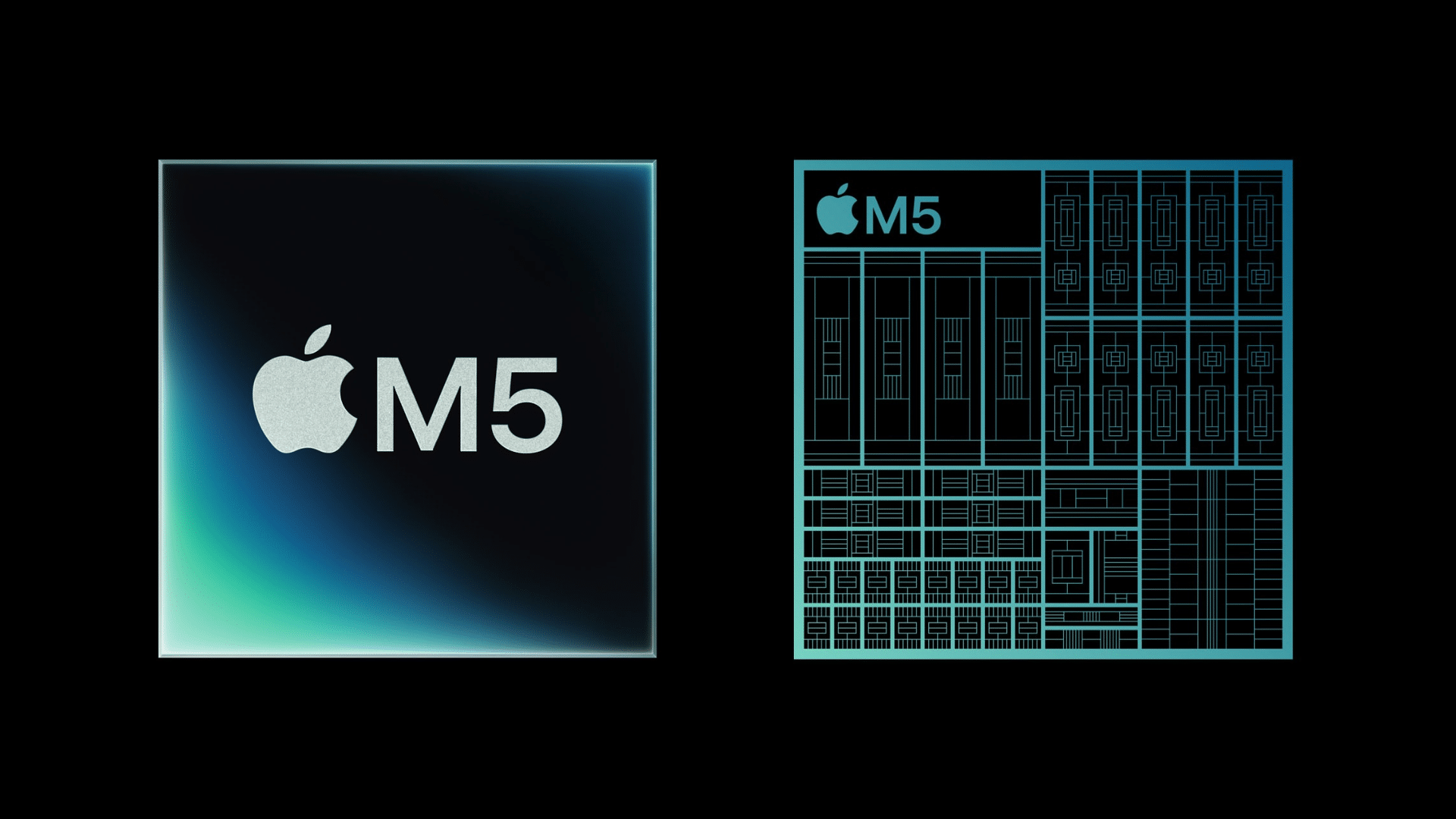
Apple has officially unveiled M5, its next-generation Apple silicon chip, positioning it as the company’s most significant leap forward in AI performance, efficiency, and on-device intelligence to date. Announced through Apple’s Newsroom, M5 is not simply a faster successor to previous M-series chips—it represents a strategic shift toward an AI-first computing era where machine learning, neural processing, and system-wide intelligence define performance as much as raw CPU and GPU power.

With M5, Apple is signaling that the future of personal computing will be driven less by benchmark supremacy and more by how effectively devices understand, assist, and adapt to users in real time. This chip is the foundation of that vision.

Why M5 Matters More Than a Typical Chip Upgrade

Apple has released several impressive Apple silicon generations since its transition away from Intel. Each generation improved performance-per-watt, graphics capabilities, and system integration. M5, however, stands apart because it is designed explicitly around AI workloads rather than treating them as secondary accelerations.

In Apple’s own framing, M5 is built to support the next decade of computing—where AI is not a feature, but an operating principle embedded across macOS, iPadOS, and future platforms.

This makes M5 less of an incremental upgrade and more of an architectural inflection point.

Apple Silicon’s Evolution Reaches an AI-First Phas

Earlier Apple silicon chips focused on unifying CPU, GPU, and memory. With M5, Apple adds a fourth pillar: deeply integrated AI acceleration.

Apple describes M5 as its most advanced system-on-a-chip ever for machine learning tasks, driven by:
• A dramatically upgraded Neural Engine
• Faster on-device inference
• Lower-latency AI processing
• Improved memory bandwidth for ML workloads

These changes allow AI features to run locally, securely, and continuously—without depending on cloud servers.

The Neural Engine Is the Star of M5

At the heart of M5 is Apple’s most powerful Neural Engine yet. While Apple has not focused solely on headline numbers, it emphasizes that M5 delivers a massive jump in AI throughput compared to previous generations.

This Neural Engine is designed to handle:
• Large language model inference
• Image and video understanding
• Speech recognition and synthesis
• Contextual system intelligence

Crucially, these tasks run efficiently enough to stay active throughout the day without draining battery life.

Why On-Device AI Is Apple’s Competitive Advantage

Unlike many competitors that rely heavily on cloud-based AI, Apple continues to double down on on-device intelligence.

With M5, Apple can:
• Keep personal data local
• Reduce latency to near-zero
• Improve reliability offline
• Avoid constant network dependency

This approach aligns with Apple’s long-standing privacy philosophy while also delivering tangible performance benefits. M5 makes on-device AI not just viable, but preferable.

M5 and the Future of Apple Intelligence

M5 is designed to power Apple Intelligence, Apple’s umbrella term for system-wide AI features across its platforms.

Rather than launching as a standalone assistant or app, Apple Intelligence is embedded throughout the OS—anticipating actions, summarizing content, understanding context, and automating workflows.

M5 enables these capabilities to run fluidly, invisibly, and predictably, which is essential for Apple’s vision of AI that “just works.”

CPU and GPU Gains Still Matter—But They’re Not the Headline

While AI is the focus, M5 also delivers meaningful CPU and GPU improvements. Apple notes improved single-core efficiency, stronger multi-core scaling, and enhanced graphics performance for both creative and computational workloads.

However, Apple’s messaging is clear: raw speed alone is no longer the primary metric of progress.

M5’s true strength lies in how these components collaborate with AI acceleration rather than competing for resources.

Unified Memory Takes on a Bigger Role

Apple’s unified memory architecture becomes even more important with M5. AI models often require rapid access to large datasets, and unified memory reduces the bottlenecks associated with traditional system designs.

With M5:
• AI models can access memory faster
• Data duplication is minimized
• Power efficiency improves

This architecture allows Apple to run sophisticated AI models without ballooning power consumption.

What M5 Enables for macOS and iPadOS

M5 unlocks a new class of features across Apple’s operating systems. While Apple has been careful not to overpromise, the company hints at capabilities such as:
• Real-time content summarization
• Smarter system search
• Context-aware automation
• Advanced photo and video analysis

These features depend on fast, reliable, local AI processing—exactly what M5 is built to deliver.

Why M5 Is About Consistency, Not Spectacle

One of Apple’s defining traits is its resistance to flashy but unreliable technology. M5 reflects that philosophy.

Rather than emphasizing dramatic demos, Apple focuses on consistency:
• AI features that work every time
• Predictable performance under load
• Minimal hallucinations or errors

This restraint differentiates Apple’s AI strategy from competitors chasing novelty.

Energy Efficiency Remains Central

AI workloads are notoriously power-hungry. Apple addresses this directly with M5’s efficiency gains.

The company emphasizes that M5 can run advanced AI tasks without sacrificing battery life, a critical requirement for laptops, tablets, and future wearable devices.

Efficiency is what allows AI to remain always-on rather than situational.

M5 and the Broader Apple Ecosyste

M5 is not designed in isolation. It is part of a tightly integrated ecosystem spanning hardware, software, and services.

This integration allows Apple to:
• Optimize AI features end-to-end
• Ensure consistent behavior across devices
• Scale capabilities without fragmentation

M5 becomes a common foundation rather than a niche processor.

Why Developers Should Care About M5

For developers, M5 opens new possibilities. On-device AI performance allows apps to:
• Perform inference locally
• Reduce cloud costs
• Improve responsiveness
• Enhance privacy compliance

Apple’s developer tools increasingly expose these capabilities, encouraging a new generation of AI-powered applications built natively for Apple platforms.

The Strategic Timing of M5

Apple’s M5 announcement arrives as AI expectations soar—and scrutiny intensifies. Users want smarter devices, but they also want trust, reliability, and privacy.

M5 positions Apple to meet those expectations without abandoning its core values.

Rather than racing competitors feature-for-feature, Apple is building a foundation designed to last.

Why This Is a Bigger Shift Than M1

When Apple introduced M1, it changed performance-per-watt expectations. M5 changes what performance means.

Success is no longer measured solely in frames per second or compile times. It is measured in:
• How well devices understand users
• How seamlessly tasks are automated
• How invisible technology becomes

M5 is Apple’s answer to that shift.

Potential Impact on Future Apple Products

While Apple has not detailed specific product timelines, M5 will likely influence:
• Future MacBook Pro models
• High-end iPads
• Desktop Macs
• New AI-focused devices

M5 is designed to scale, suggesting it will underpin Apple hardware for years.

How M5 Compares Philosophically to Competitors

Many competitors emphasize cloud AI, subscriptions, and server-side intelligence. Apple takes a different path.

M5 reflects a belief that personal intelligence should stay personal. AI should enhance devices without turning them into data collectors.

This philosophical difference may prove increasingly important as AI regulation and consumer awareness grow.
Risks Apple Still Faces

Despite M5’s promise, challenges remain. AI expectations are high, and delays or underwhelming features could invite criticism.

Apple must ensure that software fully utilizes M5’s capabilities. Hardware alone is not enough.

Execution will determine whether M5’s potential is realized.

Why Apple’s Slow-and-Steady AI Approach Could Win

In a crowded AI landscape filled with impressive but inconsistent tools, Apple’s approach stands out for its caution.

M5 embodies that strategy: powerful, efficient, and restrained.

Rather than chasing hype, Apple is building infrastructure.

What Success Looks Like for M5

Success will not be measured by benchmarks alone. It will be measured by:
• AI features users rely on daily
• Battery life that remains strong
• Systems that feel smarter without feeling intrusive

If users stop thinking about AI because it simply works, M5 will have succeeded.

Conclusion: M5 Is Apple’s AI Turning Point

Apple’s M5 is more than the next iteration of Apple silicon. It is a declaration of how Apple believes AI should evolve—locally, privately, efficiently, and invisibly.

By centering the chip around AI performance without sacrificing efficiency or trust, Apple is positioning itself for the next era of computing rather than the next product cycle.

If Apple’s vision holds, M5 will be remembered not as the fastest chip of its time, but as the one that quietly made intelligent computing feel natural.


Disclaimer

We strive to uphold the highest ethical standards in all of our reporting and coverage. We StartupNews.fyi want to be transparent with our readers about any potential conflicts of interest that may arise in our work. It’s possible that some of the investors we feature may have connections to other businesses, including competitors or companies we write about. However, we want to assure our readers that this will not have any impact on the integrity or impartiality of our reporting. We are committed to delivering accurate, unbiased news and information to our audience, and we will continue to uphold our ethics and principles in all of our work. Thank you for your trust and support.

Popular

More Like this

Apple Unleashes M5: The Next Big Leap in AI Performance for Apple Silicon

Apple has officially unveiled M5, its next-generation Apple silicon chip, positioning it as the company’s most significant leap forward in AI performance, efficiency, and on-device intelligence to date. Announced through Apple’s Newsroom, M5 is not simply a faster successor to previous M-series chips—it represents a strategic shift toward an AI-first computing era where machine learning, neural processing, and system-wide intelligence define performance as much as raw CPU and GPU power.

With M5, Apple is signaling that the future of personal computing will be driven less by benchmark supremacy and more by how effectively devices understand, assist, and adapt to users in real time. This chip is the foundation of that vision.

Why M5 Matters More Than a Typical Chip Upgrade

Apple has released several impressive Apple silicon generations since its transition away from Intel. Each generation improved performance-per-watt, graphics capabilities, and system integration. M5, however, stands apart because it is designed explicitly around AI workloads rather than treating them as secondary accelerations.

In Apple’s own framing, M5 is built to support the next decade of computing—where AI is not a feature, but an operating principle embedded across macOS, iPadOS, and future platforms.

This makes M5 less of an incremental upgrade and more of an architectural inflection point.

Apple Silicon’s Evolution Reaches an AI-First Phas

Earlier Apple silicon chips focused on unifying CPU, GPU, and memory. With M5, Apple adds a fourth pillar: deeply integrated AI acceleration.

Apple describes M5 as its most advanced system-on-a-chip ever for machine learning tasks, driven by:
• A dramatically upgraded Neural Engine
• Faster on-device inference
• Lower-latency AI processing
• Improved memory bandwidth for ML workloads

These changes allow AI features to run locally, securely, and continuously—without depending on cloud servers.

The Neural Engine Is the Star of M5

At the heart of M5 is Apple’s most powerful Neural Engine yet. While Apple has not focused solely on headline numbers, it emphasizes that M5 delivers a massive jump in AI throughput compared to previous generations.

This Neural Engine is designed to handle:
• Large language model inference
• Image and video understanding
• Speech recognition and synthesis
• Contextual system intelligence

Crucially, these tasks run efficiently enough to stay active throughout the day without draining battery life.

Why On-Device AI Is Apple’s Competitive Advantage

Unlike many competitors that rely heavily on cloud-based AI, Apple continues to double down on on-device intelligence.

With M5, Apple can:
• Keep personal data local
• Reduce latency to near-zero
• Improve reliability offline
• Avoid constant network dependency

This approach aligns with Apple’s long-standing privacy philosophy while also delivering tangible performance benefits. M5 makes on-device AI not just viable, but preferable.

M5 and the Future of Apple Intelligence

M5 is designed to power Apple Intelligence, Apple’s umbrella term for system-wide AI features across its platforms.

Rather than launching as a standalone assistant or app, Apple Intelligence is embedded throughout the OS—anticipating actions, summarizing content, understanding context, and automating workflows.

M5 enables these capabilities to run fluidly, invisibly, and predictably, which is essential for Apple’s vision of AI that “just works.”

CPU and GPU Gains Still Matter—But They’re Not the Headline

While AI is the focus, M5 also delivers meaningful CPU and GPU improvements. Apple notes improved single-core efficiency, stronger multi-core scaling, and enhanced graphics performance for both creative and computational workloads.

However, Apple’s messaging is clear: raw speed alone is no longer the primary metric of progress.

M5’s true strength lies in how these components collaborate with AI acceleration rather than competing for resources.

Unified Memory Takes on a Bigger Role

Apple’s unified memory architecture becomes even more important with M5. AI models often require rapid access to large datasets, and unified memory reduces the bottlenecks associated with traditional system designs.

With M5:
• AI models can access memory faster
• Data duplication is minimized
• Power efficiency improves

This architecture allows Apple to run sophisticated AI models without ballooning power consumption.

What M5 Enables for macOS and iPadOS

M5 unlocks a new class of features across Apple’s operating systems. While Apple has been careful not to overpromise, the company hints at capabilities such as:
• Real-time content summarization
• Smarter system search
• Context-aware automation
• Advanced photo and video analysis

These features depend on fast, reliable, local AI processing—exactly what M5 is built to deliver.

Why M5 Is About Consistency, Not Spectacle

One of Apple’s defining traits is its resistance to flashy but unreliable technology. M5 reflects that philosophy.

Rather than emphasizing dramatic demos, Apple focuses on consistency:
• AI features that work every time
• Predictable performance under load
• Minimal hallucinations or errors

This restraint differentiates Apple’s AI strategy from competitors chasing novelty.

Energy Efficiency Remains Central

AI workloads are notoriously power-hungry. Apple addresses this directly with M5’s efficiency gains.

The company emphasizes that M5 can run advanced AI tasks without sacrificing battery life, a critical requirement for laptops, tablets, and future wearable devices.

Efficiency is what allows AI to remain always-on rather than situational.

M5 and the Broader Apple Ecosyste

M5 is not designed in isolation. It is part of a tightly integrated ecosystem spanning hardware, software, and services.

This integration allows Apple to:
• Optimize AI features end-to-end
• Ensure consistent behavior across devices
• Scale capabilities without fragmentation

M5 becomes a common foundation rather than a niche processor.

Why Developers Should Care About M5

For developers, M5 opens new possibilities. On-device AI performance allows apps to:
• Perform inference locally
• Reduce cloud costs
• Improve responsiveness
• Enhance privacy compliance

Apple’s developer tools increasingly expose these capabilities, encouraging a new generation of AI-powered applications built natively for Apple platforms.

The Strategic Timing of M5

Apple’s M5 announcement arrives as AI expectations soar—and scrutiny intensifies. Users want smarter devices, but they also want trust, reliability, and privacy.

M5 positions Apple to meet those expectations without abandoning its core values.

Rather than racing competitors feature-for-feature, Apple is building a foundation designed to last.

Why This Is a Bigger Shift Than M1

When Apple introduced M1, it changed performance-per-watt expectations. M5 changes what performance means.

Success is no longer measured solely in frames per second or compile times. It is measured in:
• How well devices understand users
• How seamlessly tasks are automated
• How invisible technology becomes

M5 is Apple’s answer to that shift.

Potential Impact on Future Apple Products

While Apple has not detailed specific product timelines, M5 will likely influence:
• Future MacBook Pro models
• High-end iPads
• Desktop Macs
• New AI-focused devices

M5 is designed to scale, suggesting it will underpin Apple hardware for years.

How M5 Compares Philosophically to Competitors

Many competitors emphasize cloud AI, subscriptions, and server-side intelligence. Apple takes a different path.

M5 reflects a belief that personal intelligence should stay personal. AI should enhance devices without turning them into data collectors.

This philosophical difference may prove increasingly important as AI regulation and consumer awareness grow.

Risks Apple Still Faces

Despite M5’s promise, challenges remain. AI expectations are high, and delays or underwhelming features could invite criticism.

Apple must ensure that software fully utilizes M5’s capabilities. Hardware alone is not enough.

Execution will determine whether M5’s potential is realized.

Why Apple’s Slow-and-Steady AI Approach Could Win

In a crowded AI landscape filled with impressive but inconsistent tools, Apple’s approach stands out for its caution.

M5 embodies that strategy: powerful, efficient, and restrained.

Rather than chasing hype, Apple is building infrastructure.

What Success Looks Like for M5

Success will not be measured by benchmarks alone. It will be measured by:
• AI features users rely on daily
• Battery life that remains strong
• Systems that feel smarter without feeling intrusive

If users stop thinking about AI because it simply works, M5 will have succeeded.

Conclusion: M5 Is Apple’s AI Turning Point

Apple’s M5 is more than the next iteration of Apple silicon. It is a declaration of how Apple believes AI should evolve—locally, privately, efficiently, and invisibly.

By centering the chip around AI performance without sacrificing efficiency or trust, Apple is positioning itself for the next era of computing rather than the next product cycle.

If Apple’s vision holds, M5 will be remembered not as the fastest chip of its time, but as the one that quietly made intelligent computing feel natural.

Disclaimer

We strive to uphold the highest ethical standards in all of our reporting and coverage. We StartupNews.fyi want to be transparent with our readers about any potential conflicts of interest that may arise in our work. It’s possible that some of the investors we feature may have connections to other businesses, including competitors or companies we write about. However, we want to assure our readers that this will not have any impact on the integrity or impartiality of our reporting. We are committed to delivering accurate, unbiased news and information to our audience, and we will continue to uphold our ethics and principles in all of our work. Thank you for your trust and support.

Website Upgradation is going on for any glitch kindly connect at office@startupnews.fyi

More like this

Andreessen Horowitz makes a $3 billion bet against the...

An artificial intelligence startup that helps developers write...

UK, France mull social media bans for youth as...

Countries including France and Britain are considering following...

Popular

melhor-iptv-portugal melhor-iptv-portugal melhor-iptv-portugal melhor-iptv-portugal melhor-iptv-portugal melhor-iptv-portugal melhor-iptv-portugal melhor-iptv-portugal melhor-iptv-portugal melhor-iptv-portugal melhor-iptv-portugal melhor-iptv-portugal melhor-iptv-portugal melhor-iptv-portugal melhor-iptv-portugal melhor-iptv-portugal melhor-iptv-portugal melhor-iptv-portugal melhor-iptv-portugal melhor-iptv-portugal melhor-iptv-portugal melhor-iptv-portugal melhor-iptv-portugal melhor-iptv-portugal melhor-iptv-portugal melhor-iptv-portugal melhor-iptv-portugal melhor-iptv-portugal melhor-iptv-portugal melhor-iptv-portugal melhor-iptv-portugal melhor-iptv-portugal melhor-iptv-portugal melhor-iptv-portugal melhor-iptv-portugal melhor-iptv-portugal melhor-iptv-portugal melhor-iptv-portugal melhor-iptv-portugal melhor-iptv-portugal melhor-iptv-portugal melhor-iptv-portugal melhor-iptv-portugal melhor-iptv-portugal melhor-iptv-portugal melhor-iptv-portugal melhor-iptv-portugal melhor-iptv-portugal melhor-iptv-portugal melhor-iptv-portugal melhor-iptv-portugal melhor-iptv-portugal melhor-iptv-portugal melhor-iptv-portugal melhor-iptv-portugal melhor-iptv-portugal melhor-iptv-portugal melhor-iptv-portugal melhor-iptv-portugal melhor-iptv-portugal melhor-iptv-portugal melhor-iptv-portugal melhor-iptv-portugal melhor-iptv-portugal melhor-iptv-portugal melhor-iptv-portugal melhor-iptv-portugal melhor-iptv-portugal melhor-iptv-portugal melhor-iptv-portugal melhor-iptv-portugal melhor-iptv-portugal melhor-iptv-portugal melhor-iptv-portugal