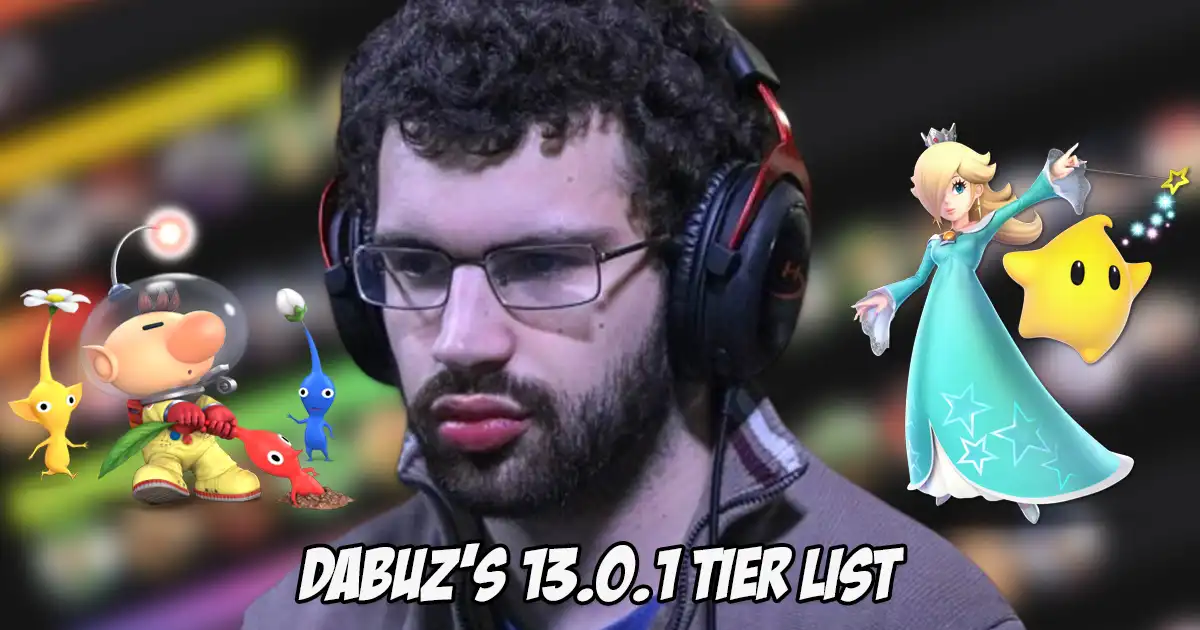
Dabuz Reveals New Super Smash Bros. Ultimate Tier List for 2026

Share via:

Years after its release, Super Smash Bros. Ultimate continues to evolve as one of the most competitive and deeply analysed fighting games in the world. Despite no longer receiving balance patches, the game’s meta is far from static. Player innovation, matchup knowledge, and tournament results continue to reshape how characters are evaluated.

A newly shared tier list by Dabuz, one of the most respected analytical minds in competitive Smash, has reignited discussion across the community. Tier lists in Smash Ultimate are not just casual rankings. They often reflect months of tournament data, scrimmage experience, and high-level insight into how characters function under real competitive pressure.

This latest tier list arrives at a moment when the Smash Ultimate scene is more mature than ever. With years of collective experience, players are refining strategies rather than discovering mechanics. That makes Dabuz’s perspective particularly influential, as it captures where the game truly stands in 2026.
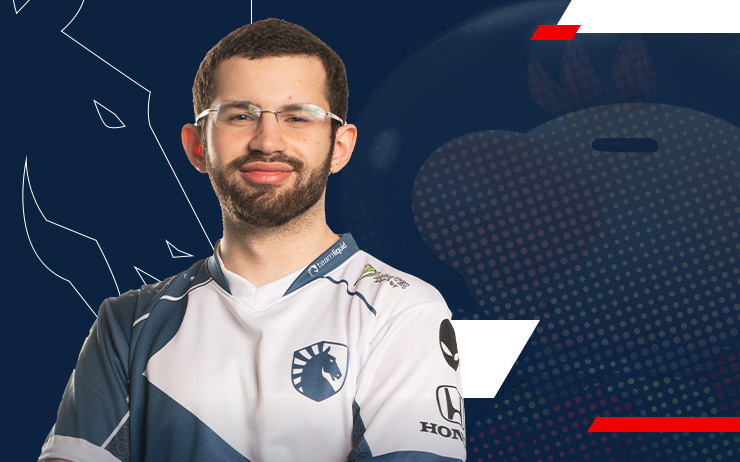
Dabuz

Why Dabuz’s Tier Lists Carry Weight

Dabuz is known less for flash and more for precision. Throughout his career, he has built a reputation as a methodical competitor who studies matchups, frame data, and risk-reward scenarios in depth. His approach to the game mirrors that of a strategist rather than a crowd-pleasing aggressor.

Because of this, Dabuz’s tier lists tend to age well. Rather than reacting to short-term tournament upsets, he focuses on consistency, matchup coverage, and how characters perform across long brackets. His rankings often reflect what works reliably at top-level play rather than what looks strong in isolated moments.

In previous years, many of Dabuz’s assessments have aligned closely with long-term tournament trends. Characters he rated highly often went on to dominate majors, while those placed lower struggled to maintain consistent results despite occasional breakout performances.

Understanding Tier Lists in a Post-Patch Era

Unlike many modern competitive games, Smash Ultimate no longer receives balance updates. This changes how tier lists function. Instead of reacting to buffs or nerfs, rankings evolve based on player mastery and meta development.

In a post-patch environment, characters rise or fall because players discover new optimisations, punish routes, or matchup-specific strategies. Defensive adaptations also matter. As counterplay improves, some characters lose their edge, while others gain value due to flexibility and survivability.

Dabuz’s new tier list reflects this reality. It is less about sudden shifts and more about gradual refinement. Characters that consistently succeed across regions and rule sets tend to remain near the top, while volatile or execution-heavy characters face more scrutiny.

The Continued Dominance of Top-Tier Characters

At the highest levels of Smash Ultimate, a small group of characters continues to define the meta. These characters typically share common traits: strong neutral tools, safe pressure options, reliable recoveries, and favourable matchup spreads.

Dabuz’s tier list reinforces the idea that top-tier dominance is not accidental. These characters allow players to control pace, limit risk, and adapt to different playstyles over the course of long tournaments. Consistency is the defining factor.

What stands out in this latest ranking is not radical change, but confirmation. The characters that have shaped the competitive scene for years remain central to it. This stability highlights how deeply optimised Smash Ultimate has become.

Mid-Tier Characters and the Skill Gap Question

One of the most discussed aspects of any tier list is the placement of mid-tier characters. Dabuz’s rankings suggest that while many characters are viable, the margin for error is significantly smaller outside the top tiers.

Mid-tier characters often require stronger reads, sharper execution, or matchup-specific knowledge to succeed. In a game where tournaments are increasingly stacked with elite players, these demands can become liabilities.

However, Dabuz’s analysis does not dismiss mid-tier characters outright. Instead, it frames them as specialists’ tools. In the hands of dedicated mains, many mid-tier characters can still perform at a high level, especially in favourable brackets or regions.

Low-Tier Perception Versus Tournament Reality

Low-tier placements tend to generate the most debate. Players often point to isolated tournament runs as evidence that certain characters are underrated. Dabuz’s tier list takes a broader view.

Rather than focusing on standout moments, the rankings reflect sustained performance across events. Characters placed near the bottom often struggle with poor recoveries, limited neutral options, or extreme matchup disadvantages that become impossible to overcome consistently.

This does not mean low-tier characters are unplayable. It means they demand disproportionate effort for comparable results. In a mature competitive scene, efficiency matters more than novelty.

How Player Evolution Shapes the Meta

One of the key themes in Dabuz’s latest tier list is player evolution. Over time, top players have become better at exploiting weaknesses and minimising risk. This has direct consequences for character viability.

Characters that rely on surprise or unfamiliarity tend to lose effectiveness as opponents gain experience. Conversely, characters with solid fundamentals benefit from the community’s growing understanding of spacing, advantage states, and defensive options.

Dabuz’s rankings reflect this shift toward stability. The meta increasingly rewards characters that remain strong even when opponents know exactly what to expect.

Matchup Knowledge as a Defining Factor

In Smash Ultimate, matchups are everything. A character’s overall strength often depends less on individual tools and more on how they interact with the rest of the roster.

Dabuz’s tier list implicitly highlights matchup coverage as a core metric. Characters that avoid severe losing matchups are valued more highly, especially in open-bracket formats where counterpicking is limited.

This emphasis explains why some flashy characters remain outside the top tier despite impressive highlight reels. Consistent success requires resilience across a wide range of opponents, not just dominance in select scenarios.

Tournament Structure and Its Influence on Rankings

Modern Smash Ultimate tournaments are long, intense, and unforgiving. Players must perform at a high level for hours, often across multiple days. This environment favours characters with strong endurance traits.

Dabuz’s analysis takes this into account. Characters that rely on precise execution or risky strategies may falter over extended play. Fatigue, pressure, and adaptation all play a role in determining which characters truly excel.

Tier lists that ignore tournament structure often misrepresent viability. Dabuz’s approach reflects real competitive conditions rather than theoretical matchups alone.

Community Reaction and Ongoing Debate

As expected, the release of Dabuz’s tier list has sparked widespread discussion. Players debate placements, defend their mains, and compare the rankings to recent tournament results.

This debate is part of what keeps Smash Ultimate alive as a competitive game. Tier lists are not definitive answers, but conversation starters. They encourage players to re-examine assumptions and explore why certain characters succeed or struggle.

Dabuz’s credibility ensures that even critics engage seriously with his reasoning, making the discussion more analytical than emotional.

What the Tier List Says About Smash Ultimate in 2026

Perhaps the most important takeaway from Dabuz’s tier list is what it says about the game itself. Smash Ultimate has reached a stage of maturity where innovation is subtle but meaningful.

The meta is no longer about discovering broken mechanics. It is about refinement, adaptation, and mastery. Characters rise and fall not because of patches, but because players get better.

This environment rewards deep understanding over experimentation. Dabuz’s rankings capture this reality, offering a snapshot of a game that continues to evolve through its players rather than its developers.


Disclaimer

We strive to uphold the highest ethical standards in all of our reporting and coverage. We StartupNews.fyi want to be transparent with our readers about any potential conflicts of interest that may arise in our work. It’s possible that some of the investors we feature may have connections to other businesses, including competitors or companies we write about. However, we want to assure our readers that this will not have any impact on the integrity or impartiality of our reporting. We are committed to delivering accurate, unbiased news and information to our audience, and we will continue to uphold our ethics and principles in all of our work. Thank you for your trust and support.

Previous News
Next News

Popular

More Like this

Dabuz Reveals New Super Smash Bros. Ultimate Tier List for 2026

Years after its release, Super Smash Bros. Ultimate continues to evolve as one of the most competitive and deeply analysed fighting games in the world. Despite no longer receiving balance patches, the game’s meta is far from static. Player innovation, matchup knowledge, and tournament results continue to reshape how characters are evaluated.

A newly shared tier list by Dabuz, one of the most respected analytical minds in competitive Smash, has reignited discussion across the community. Tier lists in Smash Ultimate are not just casual rankings. They often reflect months of tournament data, scrimmage experience, and high-level insight into how characters function under real competitive pressure.

This latest tier list arrives at a moment when the Smash Ultimate scene is more mature than ever. With years of collective experience, players are refining strategies rather than discovering mechanics. That makes Dabuz’s perspective particularly influential, as it captures where the game truly stands in 2026.

Dabuz

Why Dabuz’s Tier Lists Carry Weight

Dabuz is known less for flash and more for precision. Throughout his career, he has built a reputation as a methodical competitor who studies matchups, frame data, and risk-reward scenarios in depth. His approach to the game mirrors that of a strategist rather than a crowd-pleasing aggressor.

Because of this, Dabuz’s tier lists tend to age well. Rather than reacting to short-term tournament upsets, he focuses on consistency, matchup coverage, and how characters perform across long brackets. His rankings often reflect what works reliably at top-level play rather than what looks strong in isolated moments.

In previous years, many of Dabuz’s assessments have aligned closely with long-term tournament trends. Characters he rated highly often went on to dominate majors, while those placed lower struggled to maintain consistent results despite occasional breakout performances.

Understanding Tier Lists in a Post-Patch Era

Unlike many modern competitive games, Smash Ultimate no longer receives balance updates. This changes how tier lists function. Instead of reacting to buffs or nerfs, rankings evolve based on player mastery and meta development.

In a post-patch environment, characters rise or fall because players discover new optimisations, punish routes, or matchup-specific strategies. Defensive adaptations also matter. As counterplay improves, some characters lose their edge, while others gain value due to flexibility and survivability.

Dabuz’s new tier list reflects this reality. It is less about sudden shifts and more about gradual refinement. Characters that consistently succeed across regions and rule sets tend to remain near the top, while volatile or execution-heavy characters face more scrutiny.

The Continued Dominance of Top-Tier Characters

At the highest levels of Smash Ultimate, a small group of characters continues to define the meta. These characters typically share common traits: strong neutral tools, safe pressure options, reliable recoveries, and favourable matchup spreads.

Dabuz’s tier list reinforces the idea that top-tier dominance is not accidental. These characters allow players to control pace, limit risk, and adapt to different playstyles over the course of long tournaments. Consistency is the defining factor.

What stands out in this latest ranking is not radical change, but confirmation. The characters that have shaped the competitive scene for years remain central to it. This stability highlights how deeply optimised Smash Ultimate has become.

Mid-Tier Characters and the Skill Gap Question

One of the most discussed aspects of any tier list is the placement of mid-tier characters. Dabuz’s rankings suggest that while many characters are viable, the margin for error is significantly smaller outside the top tiers.

Mid-tier characters often require stronger reads, sharper execution, or matchup-specific knowledge to succeed. In a game where tournaments are increasingly stacked with elite players, these demands can become liabilities.

However, Dabuz’s analysis does not dismiss mid-tier characters outright. Instead, it frames them as specialists’ tools. In the hands of dedicated mains, many mid-tier characters can still perform at a high level, especially in favourable brackets or regions.

Low-Tier Perception Versus Tournament Reality

Low-tier placements tend to generate the most debate. Players often point to isolated tournament runs as evidence that certain characters are underrated. Dabuz’s tier list takes a broader view.

Rather than focusing on standout moments, the rankings reflect sustained performance across events. Characters placed near the bottom often struggle with poor recoveries, limited neutral options, or extreme matchup disadvantages that become impossible to overcome consistently.

This does not mean low-tier characters are unplayable. It means they demand disproportionate effort for comparable results. In a mature competitive scene, efficiency matters more than novelty.

How Player Evolution Shapes the Meta

One of the key themes in Dabuz’s latest tier list is player evolution. Over time, top players have become better at exploiting weaknesses and minimising risk. This has direct consequences for character viability.

Characters that rely on surprise or unfamiliarity tend to lose effectiveness as opponents gain experience. Conversely, characters with solid fundamentals benefit from the community’s growing understanding of spacing, advantage states, and defensive options.

Dabuz’s rankings reflect this shift toward stability. The meta increasingly rewards characters that remain strong even when opponents know exactly what to expect.

Matchup Knowledge as a Defining Factor

In Smash Ultimate, matchups are everything. A character’s overall strength often depends less on individual tools and more on how they interact with the rest of the roster.

Dabuz’s tier list implicitly highlights matchup coverage as a core metric. Characters that avoid severe losing matchups are valued more highly, especially in open-bracket formats where counterpicking is limited.

This emphasis explains why some flashy characters remain outside the top tier despite impressive highlight reels. Consistent success requires resilience across a wide range of opponents, not just dominance in select scenarios.

Tournament Structure and Its Influence on Rankings

Modern Smash Ultimate tournaments are long, intense, and unforgiving. Players must perform at a high level for hours, often across multiple days. This environment favours characters with strong endurance traits.

Dabuz’s analysis takes this into account. Characters that rely on precise execution or risky strategies may falter over extended play. Fatigue, pressure, and adaptation all play a role in determining which characters truly excel.

Tier lists that ignore tournament structure often misrepresent viability. Dabuz’s approach reflects real competitive conditions rather than theoretical matchups alone.

Community Reaction and Ongoing Debate

As expected, the release of Dabuz’s tier list has sparked widespread discussion. Players debate placements, defend their mains, and compare the rankings to recent tournament results.

This debate is part of what keeps Smash Ultimate alive as a competitive game. Tier lists are not definitive answers, but conversation starters. They encourage players to re-examine assumptions and explore why certain characters succeed or struggle.

Dabuz’s credibility ensures that even critics engage seriously with his reasoning, making the discussion more analytical than emotional.

What the Tier List Says About Smash Ultimate in 2026

Perhaps the most important takeaway from Dabuz’s tier list is what it says about the game itself. Smash Ultimate has reached a stage of maturity where innovation is subtle but meaningful.

The meta is no longer about discovering broken mechanics. It is about refinement, adaptation, and mastery. Characters rise and fall not because of patches, but because players get better.

This environment rewards deep understanding over experimentation. Dabuz’s rankings capture this reality, offering a snapshot of a game that continues to evolve through its players rather than its developers.

Disclaimer

We strive to uphold the highest ethical standards in all of our reporting and coverage. We StartupNews.fyi want to be transparent with our readers about any potential conflicts of interest that may arise in our work. It’s possible that some of the investors we feature may have connections to other businesses, including competitors or companies we write about. However, we want to assure our readers that this will not have any impact on the integrity or impartiality of our reporting. We are committed to delivering accurate, unbiased news and information to our audience, and we will continue to uphold our ethics and principles in all of our work. Thank you for your trust and support.

Website Upgradation is going on for any glitch kindly connect at office@startupnews.fyi

Previous News
Next News

More like this

D2C Brand Salty Raises INR 30 Cr To Expand...

SUMMARY The funding round was led by MG Investment,...

IPO-Bound Astrotalk Finds New Revenue Driver In Ecommerce

SUMMARY It took over six years for spiritual tech...

Shadowfax Raises INR 856 Cr From Anchor Investors Ahead...

SUMMARY Logistics major Shadowfax has raised INR 856 Cr...

Popular

melhor-iptv-portugal melhor-iptv-portugal melhor-iptv-portugal melhor-iptv-portugal melhor-iptv-portugal melhor-iptv-portugal melhor-iptv-portugal melhor-iptv-portugal melhor-iptv-portugal melhor-iptv-portugal melhor-iptv-portugal melhor-iptv-portugal melhor-iptv-portugal melhor-iptv-portugal melhor-iptv-portugal melhor-iptv-portugal melhor-iptv-portugal melhor-iptv-portugal melhor-iptv-portugal melhor-iptv-portugal melhor-iptv-portugal melhor-iptv-portugal melhor-iptv-portugal melhor-iptv-portugal melhor-iptv-portugal melhor-iptv-portugal melhor-iptv-portugal melhor-iptv-portugal melhor-iptv-portugal melhor-iptv-portugal melhor-iptv-portugal melhor-iptv-portugal melhor-iptv-portugal melhor-iptv-portugal melhor-iptv-portugal melhor-iptv-portugal melhor-iptv-portugal melhor-iptv-portugal melhor-iptv-portugal melhor-iptv-portugal melhor-iptv-portugal melhor-iptv-portugal melhor-iptv-portugal melhor-iptv-portugal melhor-iptv-portugal melhor-iptv-portugal melhor-iptv-portugal melhor-iptv-portugal melhor-iptv-portugal melhor-iptv-portugal melhor-iptv-portugal melhor-iptv-portugal melhor-iptv-portugal melhor-iptv-portugal melhor-iptv-portugal melhor-iptv-portugal melhor-iptv-portugal melhor-iptv-portugal melhor-iptv-portugal melhor-iptv-portugal melhor-iptv-portugal melhor-iptv-portugal melhor-iptv-portugal melhor-iptv-portugal melhor-iptv-portugal melhor-iptv-portugal melhor-iptv-portugal melhor-iptv-portugal melhor-iptv-portugal melhor-iptv-portugal melhor-iptv-portugal melhor-iptv-portugal melhor-iptv-portugal melhor-iptv-portugal