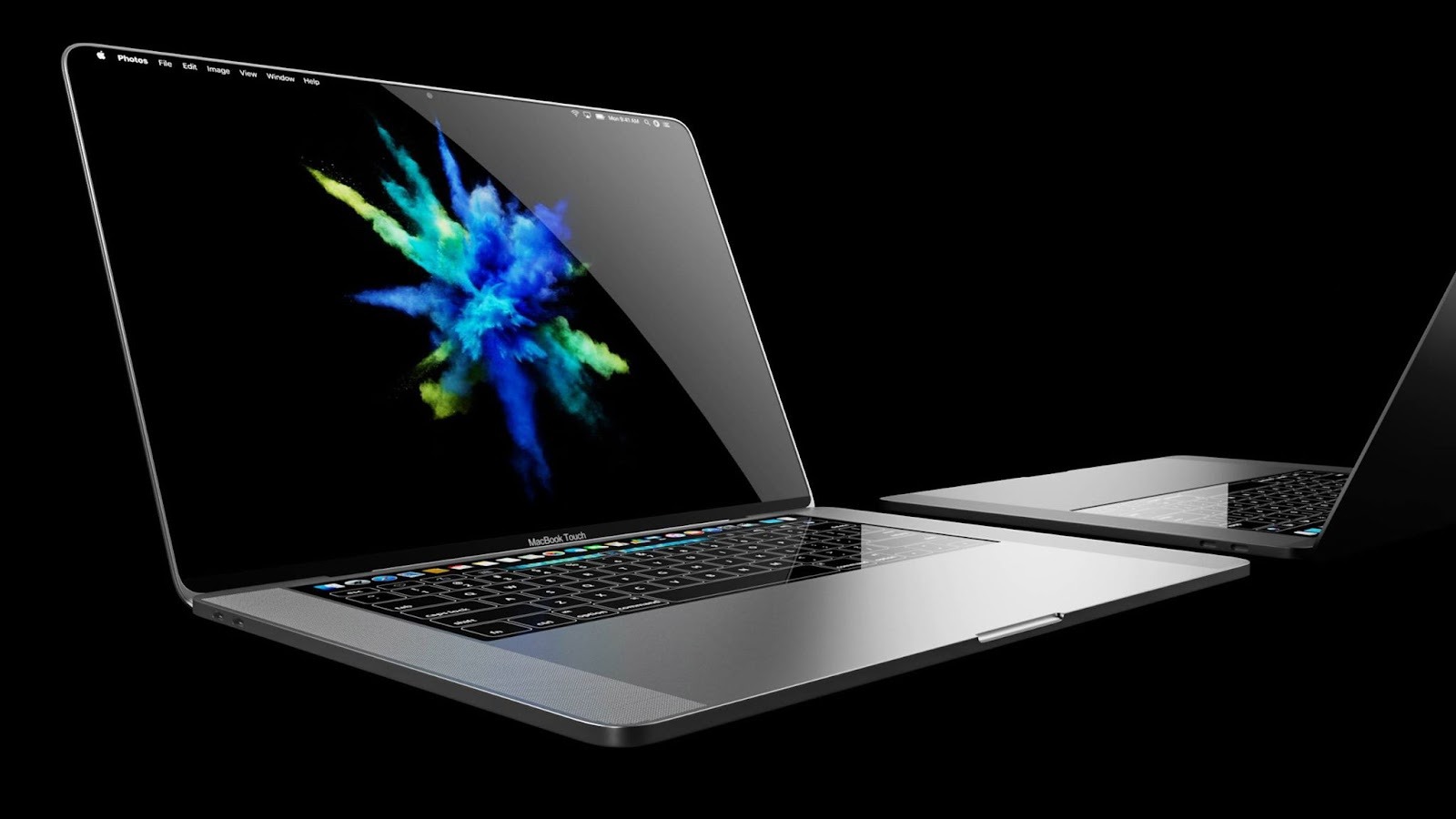
Apple’s Touchscreen MacBook Pro Signals a Break With Mac Tradition

Share via:

Apple appears to be moving closer to its first touchscreen MacBook Pro, featuring a new display technology not previously used on Macs. If launched, it would mark a fundamental shift in Apple’s long-held separation between macOS and touch input.

For more than a decade, Apple has resisted one of the most common laptop features in the PC world: touchscreens. That resistance may finally be nearing its end. According to reporting by Macworld, a touchscreen MacBook Pro now appears to be on track, potentially featuring a first-of-its-kind display for the Mac lineup.

If realized, the move would represent one of the most consequential changes to its personal computing philosophy since the transition to Apple Silicon. It would also blur a boundary Apple has defended consistently—that touch belongs on iPads, not Macs.

For developers, startups, and competitors alike, the implications would extend far beyond a single product refresh.

What the reporting suggests so far

Apple has not officially confirmed plans for a touchscreen Mac. However, Macworld reports that supply-chain and display-technology signals increasingly point to a MacBook Pro model that supports touch input, potentially paired with an advanced OLED or hybrid display architecture.

The report suggests the company may introduce touch alongside other display upgrades rather than as a standalone feature. That would align with Apple’s pattern of folding paradigm shifts into broader hardware transitions rather than framing them as isolated experiments.

What remains unclear is timing. While industry watchers have speculated about touchscreen Macs for years, there is still no public launch window, and Apple could delay or limit touch support to specific configurations.

Why Apple has resisted touch on Macs

Apple’s opposition to touchscreen Macs has been philosophical as much as technical. Executives have long argued that macOS is optimized for indirect input—trackpads, mice, and keyboards—while iPadOS is built around direct touch.

This separation allowed the company to develop two platforms in parallel without merging their identities. It also helped avoid UI compromises that plagued early touchscreen laptops in the Windows ecosystem.

Introducing touch to the MacBook Pro would signal a recalibration of that stance, likely driven by changes in display technology, processor efficiency, and user behavior rather than a simple change of mind.

A display-led transition, not a UI overhaul

Crucially, the Macworld report does not suggest Apple is turning macOS into a touch-first operating system. Instead, touch input may arrive as an additional interaction layer, complementing the trackpad rather than replacing it.

This distinction matters. Apple could enable limited touch interactions—scrolling, tapping, gesture-based navigation—without requiring developers to redesign macOS apps from scratch.

If paired with OLED or next-generation display technology, touch may be positioned as part of a premium visual and interaction experience rather than a wholesale platform shift.

Competitive and market implications

Touchscreen laptops are already common across Windows PCs, particularly in premium and convertible designs. Apple’s absence from this category has been notable, especially as competitors marketed touch as a productivity and creativity enhancer.

A touchscreen MacBook Pro would remove one of the last major feature gaps between Macs and high-end Windows laptops—while allowing the company to define its own interpretation of touch computing on laptops.

For competitors, the company’s entry would raise expectations around responsiveness, display quality, and power efficiency. Historically, when it adopts a feature late, it often reshapes user expectations rather than simply matching rivals.

What it means for developers and startups

For developers, the arrival of touch on macOS would introduce new design considerations without necessarily invalidating existing workflows. Apps optimized for Apple Silicon and modern macOS frameworks would be best positioned to adapt.

Startups building creative tools, productivity software, or accessibility solutions could find new opportunities if touch becomes a supported—and encouraged—input method on Macs.

At the same time, Apple would need to provide clear guidance to avoid fragmenting the macOS experience. Ambiguity around touch support could create uncertainty for smaller teams deciding where to invest development resources.

Why Apple might move now

Several factors may be converging. Advances in display durability and efficiency reduce the historical downsides of touchscreen panels. Apple Silicon’s performance-per-watt gains allow more flexibility in power-hungry features. And user behavior has evolved, with many customers moving fluidly between Macs and iPads throughout the day.

From a strategic standpoint, adding touch could strengthen its ecosystem without collapsing the distinction between macOS and iPadOS—provided the implementation is restrained.

A quiet but meaningful shift

Apple has built its reputation on saying “no” longer than competitors—and then saying “yes” on its own terms. A touchscreen MacBook Pro would fit that pattern.

If and when it arrives, the significance will not be that Macs finally get touch. It will be that Apple believes the Mac is ready to absorb it without losing its identity.

This article is based on publicly available reporting and industry analysis. Apple has not publicly confirmed touchscreen support for MacBook Pro, and plans may change.

Disclaimer

We strive to uphold the highest ethical standards in all of our reporting and coverage. We StartupNews.fyi want to be transparent with our readers about any potential conflicts of interest that may arise in our work. It’s possible that some of the investors we feature may have connections to other businesses, including competitors or companies we write about. However, we want to assure our readers that this will not have any impact on the integrity or impartiality of our reporting. We are committed to delivering accurate, unbiased news and information to our audience, and we will continue to uphold our ethics and principles in all of our work. Thank you for your trust and support.

Sreejit
Sreejit Kumar is a media and communications professional with over two years of experience across digital publishing, social media marketing, and content management. With a background in journalism and advertising, he focuses on crafting and managing multi-platform news content that drives audience engagement and measurable growth. His work blends editorial judgment with data-driven strategy, leveraging analytics to optimize reach, performance, and impact. Sreejit brings a sharp editorial lens and a results-oriented approach to delivering timely, relevant, and high-quality digital content across channels.

Popular

More Like this

Apple’s Touchscreen MacBook Pro Signals a Break With Mac Tradition

Apple appears to be moving closer to its first touchscreen MacBook Pro, featuring a new display technology not previously used on Macs. If launched, it would mark a fundamental shift in Apple’s long-held separation between macOS and touch input.

For more than a decade, Apple has resisted one of the most common laptop features in the PC world: touchscreens. That resistance may finally be nearing its end. According to reporting by Macworld, a touchscreen MacBook Pro now appears to be on track, potentially featuring a first-of-its-kind display for the Mac lineup.

If realized, the move would represent one of the most consequential changes to its personal computing philosophy since the transition to Apple Silicon. It would also blur a boundary Apple has defended consistently—that touch belongs on iPads, not Macs.

For developers, startups, and competitors alike, the implications would extend far beyond a single product refresh.

What the reporting suggests so far

Apple has not officially confirmed plans for a touchscreen Mac. However, Macworld reports that supply-chain and display-technology signals increasingly point to a MacBook Pro model that supports touch input, potentially paired with an advanced OLED or hybrid display architecture.

The report suggests the company may introduce touch alongside other display upgrades rather than as a standalone feature. That would align with Apple’s pattern of folding paradigm shifts into broader hardware transitions rather than framing them as isolated experiments.

What remains unclear is timing. While industry watchers have speculated about touchscreen Macs for years, there is still no public launch window, and Apple could delay or limit touch support to specific configurations.

Why Apple has resisted touch on Macs

Apple’s opposition to touchscreen Macs has been philosophical as much as technical. Executives have long argued that macOS is optimized for indirect input—trackpads, mice, and keyboards—while iPadOS is built around direct touch.

This separation allowed the company to develop two platforms in parallel without merging their identities. It also helped avoid UI compromises that plagued early touchscreen laptops in the Windows ecosystem.

Introducing touch to the MacBook Pro would signal a recalibration of that stance, likely driven by changes in display technology, processor efficiency, and user behavior rather than a simple change of mind.

A display-led transition, not a UI overhaul

Crucially, the Macworld report does not suggest Apple is turning macOS into a touch-first operating system. Instead, touch input may arrive as an additional interaction layer, complementing the trackpad rather than replacing it.

This distinction matters. Apple could enable limited touch interactions—scrolling, tapping, gesture-based navigation—without requiring developers to redesign macOS apps from scratch.

If paired with OLED or next-generation display technology, touch may be positioned as part of a premium visual and interaction experience rather than a wholesale platform shift.

Competitive and market implications

Touchscreen laptops are already common across Windows PCs, particularly in premium and convertible designs. Apple’s absence from this category has been notable, especially as competitors marketed touch as a productivity and creativity enhancer.

A touchscreen MacBook Pro would remove one of the last major feature gaps between Macs and high-end Windows laptops—while allowing the company to define its own interpretation of touch computing on laptops.

For competitors, the company’s entry would raise expectations around responsiveness, display quality, and power efficiency. Historically, when it adopts a feature late, it often reshapes user expectations rather than simply matching rivals.

What it means for developers and startups

For developers, the arrival of touch on macOS would introduce new design considerations without necessarily invalidating existing workflows. Apps optimized for Apple Silicon and modern macOS frameworks would be best positioned to adapt.

Startups building creative tools, productivity software, or accessibility solutions could find new opportunities if touch becomes a supported—and encouraged—input method on Macs.

At the same time, Apple would need to provide clear guidance to avoid fragmenting the macOS experience. Ambiguity around touch support could create uncertainty for smaller teams deciding where to invest development resources.

Why Apple might move now

Several factors may be converging. Advances in display durability and efficiency reduce the historical downsides of touchscreen panels. Apple Silicon’s performance-per-watt gains allow more flexibility in power-hungry features. And user behavior has evolved, with many customers moving fluidly between Macs and iPads throughout the day.

From a strategic standpoint, adding touch could strengthen its ecosystem without collapsing the distinction between macOS and iPadOS—provided the implementation is restrained.

A quiet but meaningful shift

Apple has built its reputation on saying “no” longer than competitors—and then saying “yes” on its own terms. A touchscreen MacBook Pro would fit that pattern.

If and when it arrives, the significance will not be that Macs finally get touch. It will be that Apple believes the Mac is ready to absorb it without losing its identity.

This article is based on publicly available reporting and industry analysis. Apple has not publicly confirmed touchscreen support for MacBook Pro, and plans may change.

Disclaimer

We strive to uphold the highest ethical standards in all of our reporting and coverage. We StartupNews.fyi want to be transparent with our readers about any potential conflicts of interest that may arise in our work. It’s possible that some of the investors we feature may have connections to other businesses, including competitors or companies we write about. However, we want to assure our readers that this will not have any impact on the integrity or impartiality of our reporting. We are committed to delivering accurate, unbiased news and information to our audience, and we will continue to uphold our ethics and principles in all of our work. Thank you for your trust and support.

Website Upgradation is going on for any glitch kindly connect at office@startupnews.fyi

Sreejit
Sreejit Kumar is a media and communications professional with over two years of experience across digital publishing, social media marketing, and content management. With a background in journalism and advertising, he focuses on crafting and managing multi-platform news content that drives audience engagement and measurable growth. His work blends editorial judgment with data-driven strategy, leveraging analytics to optimize reach, performance, and impact. Sreejit brings a sharp editorial lens and a results-oriented approach to delivering timely, relevant, and high-quality digital content across channels.

More like this

New Movies and Shows to Stream This Friday

This Friday, June 20, 2025, OTT platforms are...

New Movies and Shows to Stream This Friday

This Friday, June 20, 2025, OTT platforms are...

iPhone 18 Pro Leak Suggests Dynamic Island Could Move...

A new leak suggests Apple may move the Dynamic...

Popular

melhor-iptv-portugal melhor-iptv-portugal melhor-iptv-portugal melhor-iptv-portugal melhor-iptv-portugal melhor-iptv-portugal melhor-iptv-portugal melhor-iptv-portugal melhor-iptv-portugal melhor-iptv-portugal melhor-iptv-portugal melhor-iptv-portugal melhor-iptv-portugal melhor-iptv-portugal melhor-iptv-portugal melhor-iptv-portugal melhor-iptv-portugal melhor-iptv-portugal melhor-iptv-portugal melhor-iptv-portugal melhor-iptv-portugal melhor-iptv-portugal melhor-iptv-portugal melhor-iptv-portugal melhor-iptv-portugal melhor-iptv-portugal melhor-iptv-portugal melhor-iptv-portugal melhor-iptv-portugal melhor-iptv-portugal melhor-iptv-portugal melhor-iptv-portugal melhor-iptv-portugal melhor-iptv-portugal melhor-iptv-portugal melhor-iptv-portugal melhor-iptv-portugal melhor-iptv-portugal melhor-iptv-portugal melhor-iptv-portugal melhor-iptv-portugal melhor-iptv-portugal melhor-iptv-portugal melhor-iptv-portugal melhor-iptv-portugal melhor-iptv-portugal melhor-iptv-portugal melhor-iptv-portugal melhor-iptv-portugal melhor-iptv-portugal melhor-iptv-portugal melhor-iptv-portugal melhor-iptv-portugal melhor-iptv-portugal melhor-iptv-portugal melhor-iptv-portugal melhor-iptv-portugal melhor-iptv-portugal melhor-iptv-portugal melhor-iptv-portugal melhor-iptv-portugal melhor-iptv-portugal melhor-iptv-portugal melhor-iptv-portugal melhor-iptv-portugal melhor-iptv-portugal melhor-iptv-portugal melhor-iptv-portugal melhor-iptv-portugal melhor-iptv-portugal melhor-iptv-portugal melhor-iptv-portugal melhor-iptv-portugal melhor-iptv-portugal
