
A widespread outage across Apple services disrupted access to Apple TV, Apple Maps, and the App Store, briefly affecting users across multiple regions and highlighting the fragility of even the world’s most tightly controlled technology ecosystems.
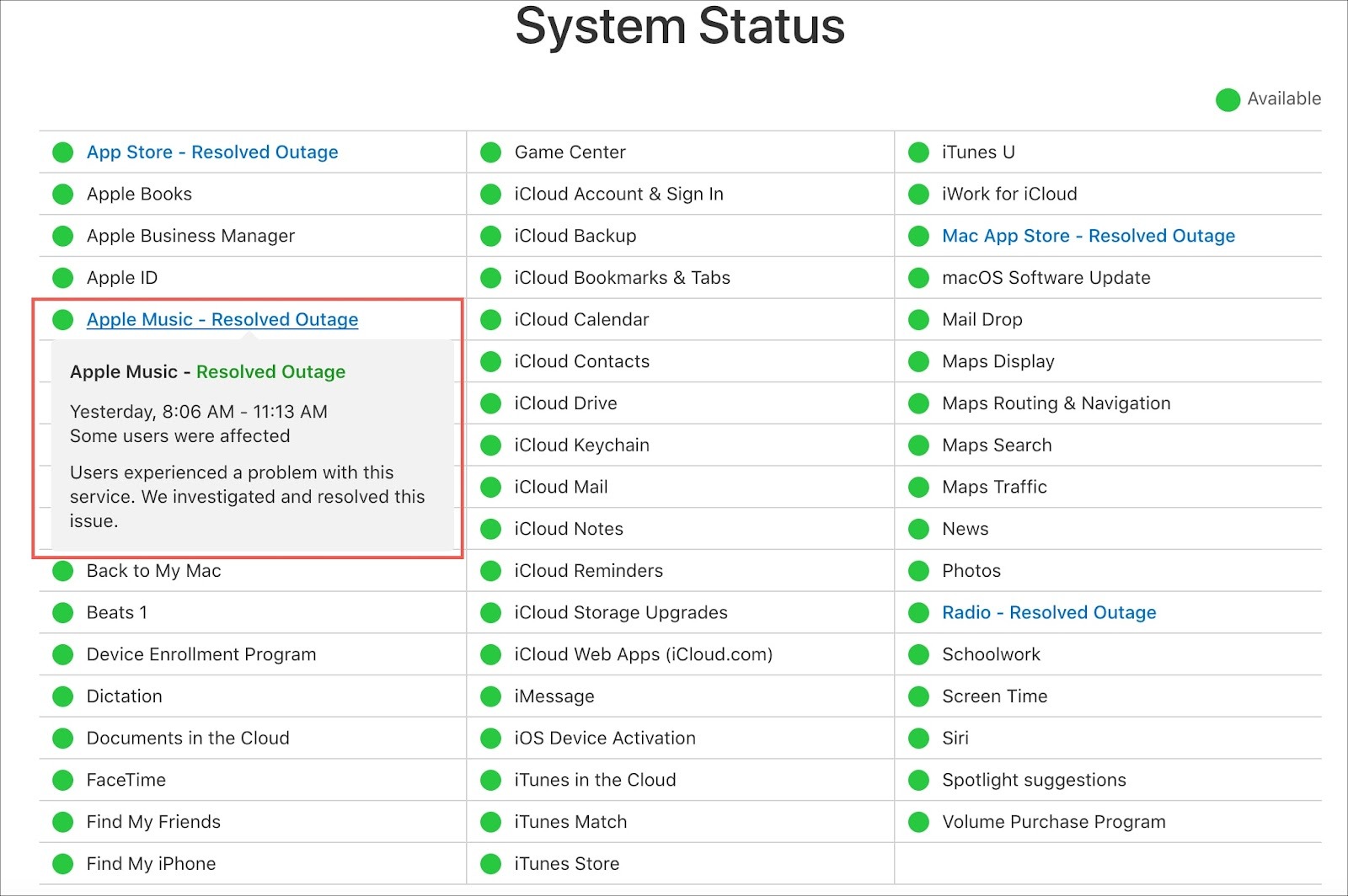
The disruption, reported by users and confirmed on Apple’s system status page, appeared to impact several consumer-facing services simultaneously. While functionality was gradually restored, Apple had not, at the time of reporting, provided a detailed explanation of the root cause.
For developers, startups, and platform-dependent businesses worldwide, the incident underscored how deeply modern digital operations rely on centralized service layers operated by a handful of global technology companies.
What went wrong — and what remains unclear
User reports surfaced as Apple TV streams failed to load, App Store downloads stalled, and Apple Maps experienced delays or outages. Apple acknowledged service interruptions across multiple products, suggesting a shared backend or infrastructure issue rather than isolated application failures.
However, the company did not publicly specify whether the outage was caused by internal cloud infrastructure problems, configuration errors, or issues with third-party dependencies. As with many large-scale incidents, technical postmortems — if released at all — typically follow days or weeks after service restoration.
The lack of immediate detail reflects the company;s historically limited transparency around operational failures, even as its services footprint continues to expand.
Why Apple outages matter beyond consumers
Apple’s services business has become a critical pillar of the company’s global revenue and ecosystem strategy. Products like the App Store and Apple TV are not just consumer conveniences — they are foundational platforms for developers, media companies, and startups distributing software and content worldwide.
When those services go down, the impact extends well beyond individual users. Developers may lose sales, startups may see onboarding disrupted, and businesses that depend on the company’s distribution channels can experience sudden, unplanned downtime.
For early-stage companies built entirely on Apple’s platforms, even short outages can have disproportionate operational and financial consequences.
Platform reliability as an ecosystem risk
Apple has long differentiated itself on control, integration, and reliability. Outages like this challenge that narrative, particularly as Apple’s services portfolio grows more complex and interconnected.
Unlike open cloud platforms, Apple’s ecosystem offers limited redundancy for developers. There is no alternative App Store for iOS distribution, and no workaround when Apple TV or Maps infrastructure fails. That centralization simplifies user experience — but concentrates risk.
For startups, the incident is a reminder that platform dependency is not just a strategic choice, but a systemic exposure.
Implications for startups and developers
For startups building consumer apps, media services, or location-based products, the company’s outage highlights several recurring challenges:
- Single-platform exposure: Businesses tied exclusively to the company services face limited recourse during disruptions.
- Revenue concentration risk: App Store downtime directly affects transactions and subscriptions.
- Operational opacity: Developers often receive the same limited status updates as consumers, complicating incident response.
Some founders mitigate these risks by maintaining cross-platform strategies or diversifying distribution channels. Others accept the tradeoff in exchange for access to the company’s user base and monetization tools.
A broader pattern in big-tech reliability
Apple’s outage follows a series of high-profile service disruptions across major technology companies over the past year. As consumer platforms scale globally, failures increasingly reflect systemic complexity rather than isolated bugs.
In the United States, where much of the world’s consumer tech infrastructure is headquartered, these incidents have drawn attention from policymakers and enterprise customers alike. While there is no indication of regulatory involvement in this outage, recurring disruptions across large platforms are fueling broader conversations about transparency and resilience.
For global markets, the lesson is similar: reliance on a small number of platform operators amplifies both efficiency and vulnerability.
Legacy scale meets modern expectations
Apple’s services ecosystem spans hundreds of millions of users, multiple regions, and tightly integrated hardware-software stacks. That scale introduces operational challenges that even the company’s resources cannot fully eliminate.
Modern users expect uninterrupted access to digital services, particularly from companies synonymous with premium reliability. Each outage, however brief, chips away at that expectation and raises questions about how future growth will be managed.
At the same time, the company’s ability to restore services relatively quickly reflects the maturity of its infrastructure — even if the absence of public detail leaves unanswered questions.
What to watch next
Apple is expected to continue expanding its services portfolio, making reliability an increasingly central strategic concern. Whether the company provides further clarification on this outage remains uncertain.
For startups, developers, and platform partners, the episode reinforces a familiar but critical reality: control and convenience come with tradeoffs. As platforms grow more powerful, the cost of dependency grows alongside them.
The company services outage may prove short-lived. Its implications for how digital businesses assess platform risk, however, are likely to last much longer.


