
Finnish music technology company Neural DSP has unveiled the Quad Cortex Mini, a smaller and more accessible version of its flagship Quad Cortex amp modeler. The launch marks a notable shift for one of the most influential startups in digital guitar processing, as it seeks to expand beyond professional touring musicians into a wider global creator market.
The Quad Cortex Mini retains much of the core technology that made the original Quad Cortex a benchmark in amp modeling, but packages it in a more compact and pedalboard-friendly form factor. While pricing and availability vary by region, the product is positioned as a more portable and approachable option for musicians who may not require the full power — or footprint — of the original unit.
For Neural DSP, the move reflects a broader trend in music technology: hardware innovation increasingly mirrors the needs of a decentralized, creator-led economy rather than traditional studio or arena-focused workflows.
From niche innovation to global relevance
Neural DSP began as a software-focused startup, building a loyal following through high-quality amp simulation plugins used by producers and guitarists worldwide. Its transition into hardware with the Quad Cortex represented a major step, placing the company in direct competition with established players in digital modeling.
The Quad Cortex quickly gained traction among touring professionals and studio musicians, particularly in the U.S. and Europe, where demand for all-in-one digital rigs has grown. However, its size, price point, and complexity also limited its appeal to a narrower segment of users.
The Quad Cortex Mini appears designed to address that gap. According to early product details, the unit emphasizes portability, reduced physical controls, and streamlined use cases — features that align closely with home studios, small venues, and content creation setups.
What the Quad Cortex Mini offers — and what remains unclear
Based on publicly available information, the Quad Cortex Mini uses the same core modeling and capture technology as its larger counterpart, allowing users to recreate the sound and behavior of real amplifiers, cabinets, and pedals. Neural DSP’s proprietary neural capture approach has been one of its key differentiators, praised for realism and responsiveness.
What remains less clear is how much processing power has been scaled back to achieve the smaller form factor. Neural DSP has not publicly detailed whether the Mini supports the same number of simultaneous signal chains or complex routing options as the full Quad Cortex.
Similarly, long-term software support, expandability, and compatibility with future updates have not been fully outlined. These details will matter to users deciding whether the Mini is a complement to — or replacement for — larger rigs.
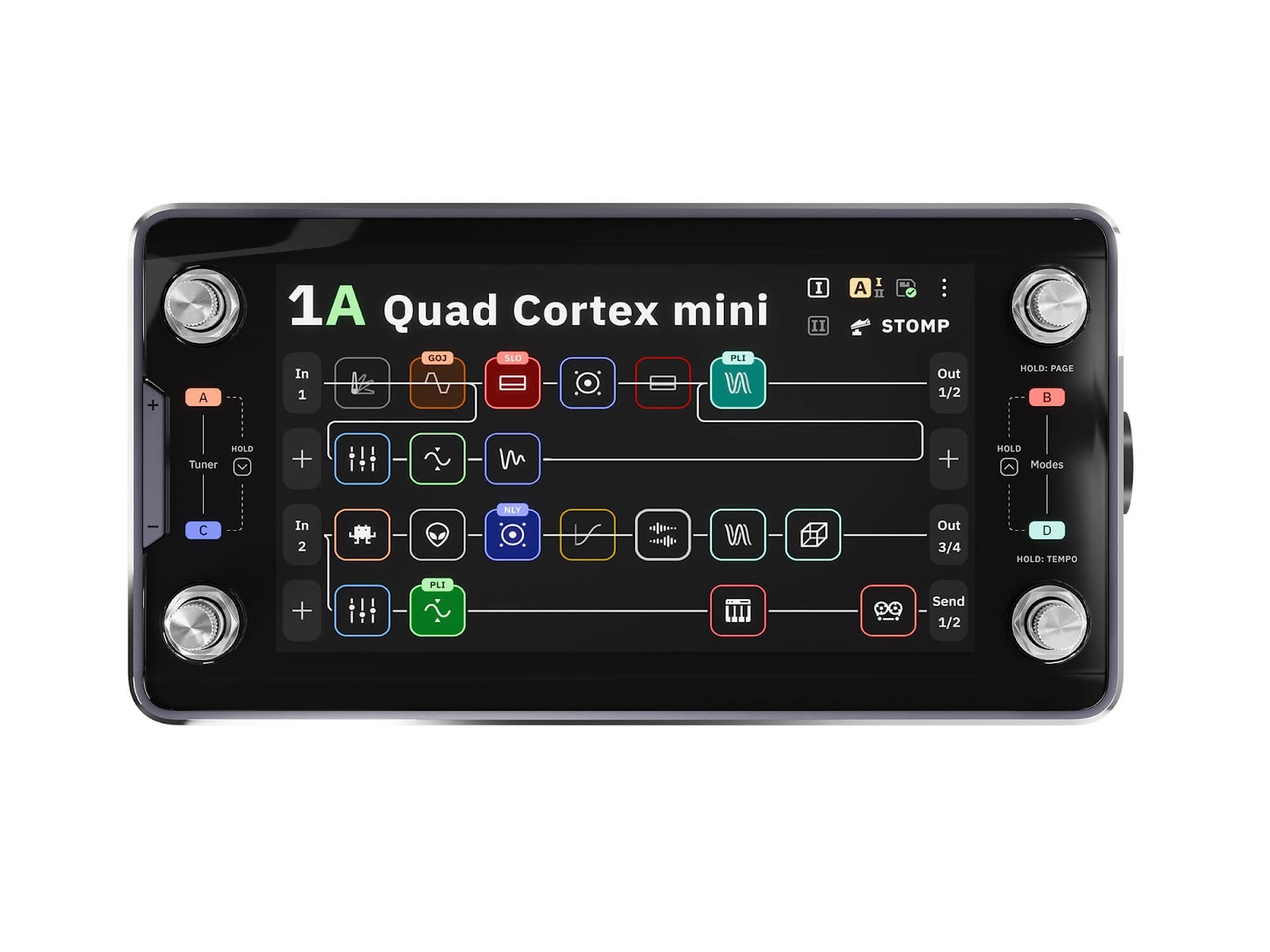
Why compact hardware matters now
The timing of the Quad Cortex Mini launch is significant. Musicians today are increasingly operating outside traditional studio and touring environments. Bedroom producers, independent artists, and online educators represent a growing share of the market for music technology.
Compact, high-quality hardware fits neatly into this shift. Products that can move seamlessly between home recording, live streaming, rehearsal, and small-stage performance are in high demand.
For startups like Neural DSP, this trend represents both an opportunity and a challenge. Expanding the addressable market requires balancing accessibility with the performance expectations set by flagship products.
Competitive pressure in the modeling market
Neural DSP enters a crowded and competitive space. Digital amp modeling has matured rapidly, with established brands offering compact, lower-cost alternatives that target similar use cases.
However, Neural DSP’s advantage lies in brand credibility among serious musicians and its strong software ecosystem. The Quad Cortex Mini leverages that reputation while lowering the barrier to entry.
In the U.S. market especially, where creators often build hybrid rigs combining software and hardware, the Mini could appeal to musicians who already use Neural DSP plugins and want a consistent sound across platforms.
Implications for the music tech startup ecosystem
Although music gear may seem niche compared to consumer electronics or AI, companies like Neural DSP illustrate how specialized hardware startups can scale globally by focusing on passionate, professional user bases.
The Quad Cortex Mini reflects a strategic maturation: moving from flagship-first innovation to portfolio expansion. This mirrors patterns seen in other technology sectors, where startups establish credibility at the high end before broadening access.
For hardware-focused startups, the lesson is clear. Success increasingly depends not just on technical excellence, but on adaptability to changing workflows and user expectations.
Global reach, localized demand
While Neural DSP is based in Finland, its customer base is global. The U.S. remains one of its largest markets, driven by a strong culture of guitar-centric music and early adoption of digital gear. Europe and parts of Asia also represent growing opportunities, particularly as live performance and creator economies rebound.
Compact products like the Quad Cortex Mini are easier to distribute globally, face fewer logistical barriers, and appeal to users with limited space or travel-heavy lifestyles.
This global scalability is especially important for hardware startups navigating supply chain constraints and fluctuating consumer demand.
Not just smaller — but strategic
It would be easy to view the Quad Cortex Mini as merely a downsized product. In reality, it signals a deeper strategic recalibration. Neural DSP is acknowledging that the future of music technology is not defined solely by professional stages or elite studios.
Instead, it is shaped by millions of independent creators who demand professional sound without professional complexity.
Whether the Quad Cortex Mini becomes a breakout success will depend on execution — particularly pricing, availability, and long-term software support. Early reception suggests strong interest, but sustained adoption will require continued investment in usability and ecosystem integration.
What comes next
Neural DSP has not announced whether additional hardware variants are planned, but the Mini opens the door to a more modular product lineup. Future releases could further segment the market by use case, price, or form factor.
For now, the Quad Cortex Mini stands as a signal moment for both Neural DSP and the broader music technology startup landscape: innovation is no longer just about doing more — it is about doing enough, in the right size, for the right audience.
As creators continue to reshape how music is made and shared, startups that align hardware ambition with real-world workflows are likely to define the next phase of the industry.


