
Artificial intelligence is no longer confined to text boxes, chat interfaces, or cloud dashboards. According to a new research overview from Microsoft, the next major phase of Artificial intelligence development will focus on enabling machines to perceive, reason, and act in the physical world — a shift with far-reaching implications for robotics, automation, and global startups.
In a research briefing published by Microsoft Research, the company outlined how advances in perception, simulation, and large-scale learning are converging to create what researchers describe as “physical AI” — systems capable of interacting with real-world environments rather than purely digital ones.
The push signals a strategic evolution for AI at a time when enthusiasm for generative models is colliding with practical demands from industry, governments, and investors for real-world impact.
From language models to embodied intelligence
Over the past two years, Artificial intelligence progress has been dominated by breakthroughs in large language models and multimodal systems. While those tools have transformed software workflows, Microsoft argues they represent only part of AI’s long-term potential.
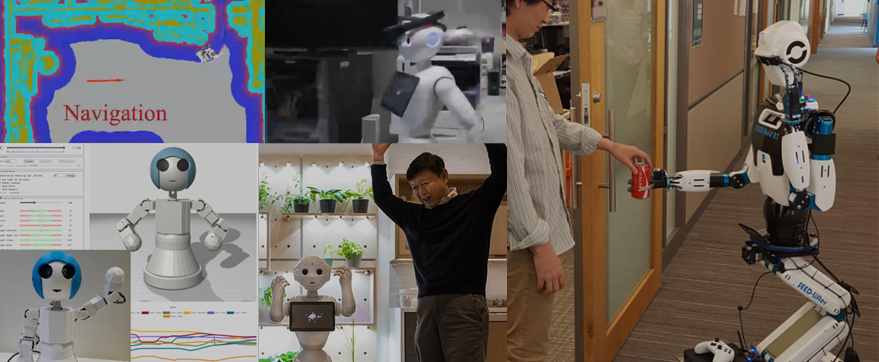
The company’s researchers describe a growing focus on embodied intelligence — AI systems that integrate perception, reasoning, and control to operate in physical environments. This includes robots that can navigate warehouses, machines that assist in manufacturing, and autonomous systems that adapt to unpredictable conditions.
Unlike purely digital Artificial intelligence, physical-world systems must contend with friction, uncertainty, and safety constraints. That complexity has historically slowed progress, but Microsoft says recent advances in simulation, reinforcement learning, and sensor fusion are narrowing the gap.
Why the physical world matters now
The renewed emphasis comes as industries face mounting labor shortages, rising operational costs, and pressure to increase efficiency. From logistics and healthcare to agriculture and energy, demand is growing for intelligent systems that can operate outside controlled digital settings.
For U.S.-based companies, the implications are immediate. Automation driven by physical AI could reshape domestic manufacturing and supply chains, areas policymakers increasingly view as strategic.
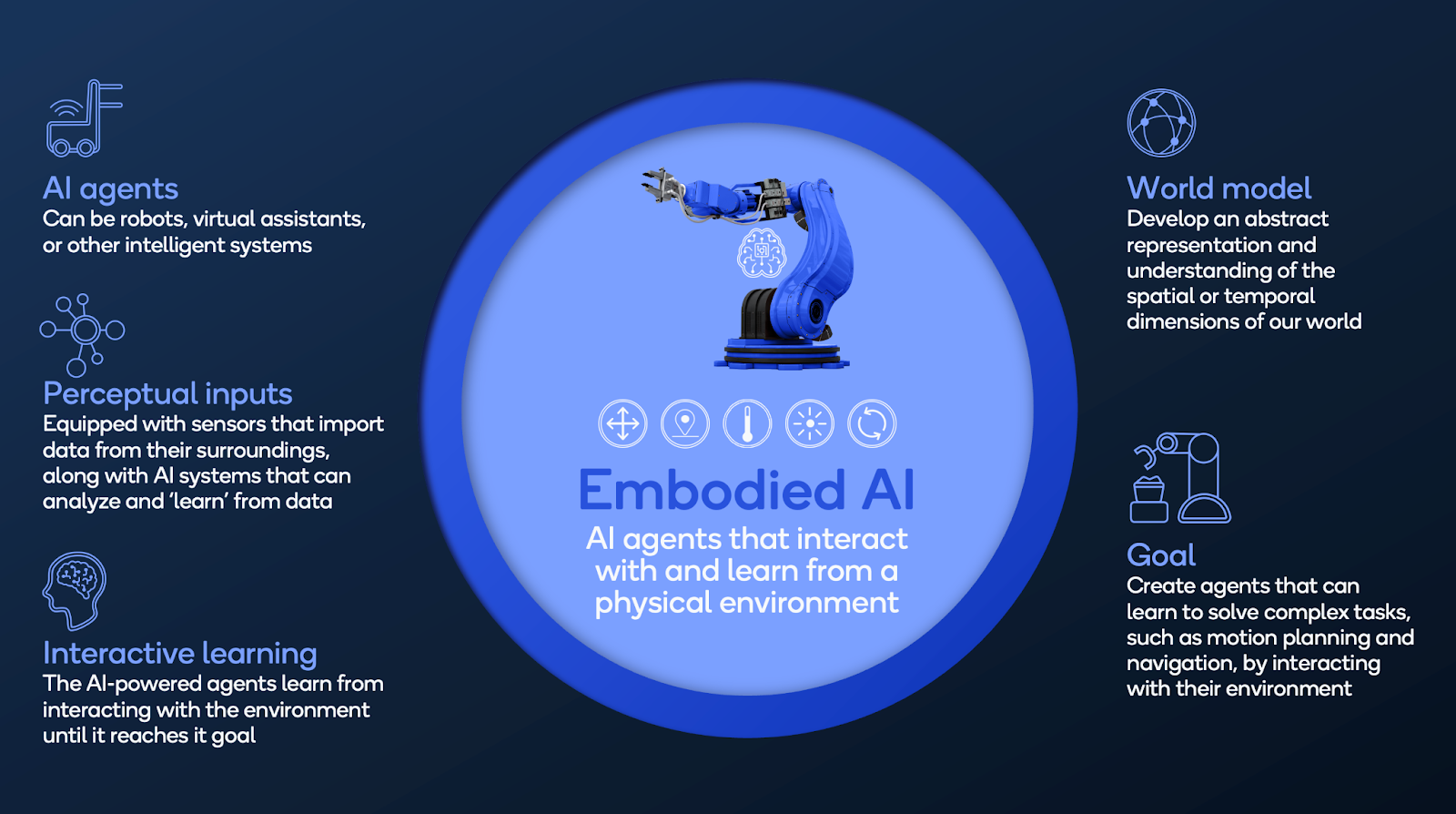
Globally, the opportunity is even broader. Emerging markets, where infrastructure and labor dynamics differ significantly, may leapfrog traditional automation models by adopting Artificial intelligence-driven physical systems tailored to local conditions.
Research pillars behind Microsoft’s approach
Microsoft Research highlighted several foundational areas underpinning its work:
- Advanced simulation environments that allow Artificial intelligence systems to train safely before deployment in real settings
- Multimodal perception, combining vision, audio, and sensor data to understand complex environments
- Learning from limited data, reducing the need for exhaustive real-world training
- Human-AI collaboration, where systems assist rather than replace human operators
The company emphasized that progress depends on tightly coupling software intelligence with hardware capabilities — a challenge that requires cross-disciplinary research rather than isolated model improvements.
Implications for startups and the AI ecosystem
While Microsoft’s research efforts are large-scale, their downstream effects are likely to be felt most acutely by startups. Physical AI lowers barriers for new companies building in robotics, logistics automation, industrial inspection, and healthcare devices.
Startups can increasingly build on foundational research — including open tools, cloud infrastructure, and pretrained models — rather than starting from scratch. That dynamic mirrors what generative Artificial intelligence did for software startups, but with higher capital requirements and longer deployment cycles.
For venture investors, the shift toward physical-world Artificial intelligence represents both promise and risk. Returns may take longer, but successful systems are harder to replicate and more defensible than purely digital applications.
Competition and geopolitical context
Microsoft is not alone in pursuing physical AI. Tech companies across the U.S., Europe, and Asia are investing heavily in robotics and autonomous systems, often with government support.
In the U.S., physical Artificial intelligenceis increasingly framed as a competitiveness issue, intersecting with debates over manufacturing resilience, national security, and workforce transformation. China, meanwhile, has made robotics and intelligent manufacturing a core pillar of its industrial strategy.
Microsoft’s research positioning reflects an awareness that leadership in AI will not be measured solely by software benchmarks, but by deployment in real-world systems at scale.
Safety, responsibility, and real-world constraints
Operating in the physical world raises stakes that differ sharply from digital AI. Errors can cause physical damage, safety risks, or regulatory violations. Microsoft acknowledged that advancing physical AI requires parallel investments in safety frameworks, testing methodologies, and governance.
The company has not disclosed timelines for commercial deployment tied directly to this research, and it remains unclear which projects will move from lab to product in the near term. As with much early-stage research, translation into market-ready solutions may take years.
A long-term bet on tangible impact
Microsoft’s focus on physical AI suggests a long-term strategic bet: that the next wave of AI value creation will come from systems that move atoms, not just information.
For startups, the message is both encouraging and sobering. The opportunity space is vast, but success will demand deep technical expertise, patient capital, and close integration with real-world industries.
As AI matures, its future may be defined less by what it can say — and more by what it can do.


