
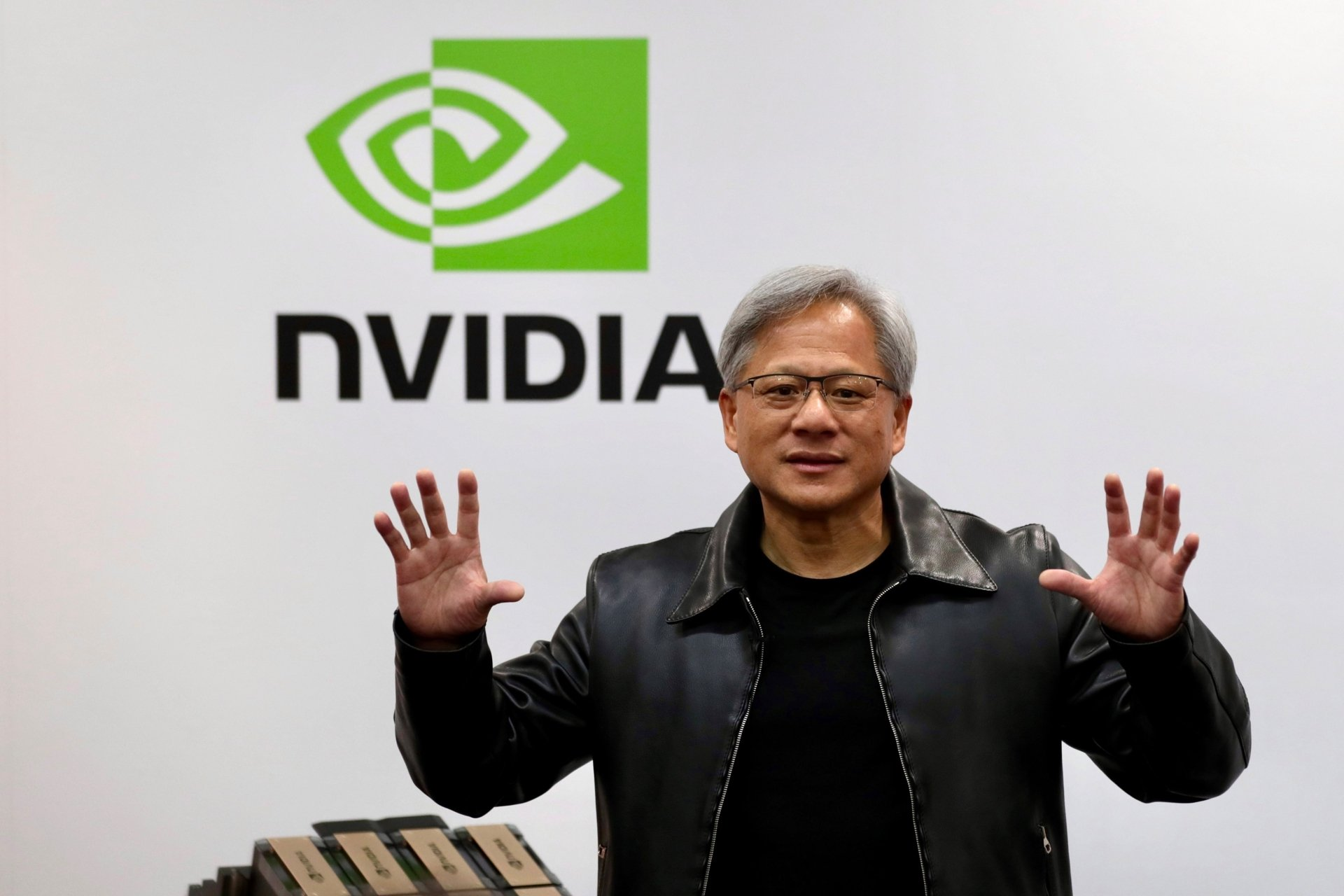
Nvidia has invested $150 million in AI inference startup Baseten, underscoring a strategic shift toward the infrastructure needed to deploy and run AI models at scale. The deal highlights growing industry focus on inference as AI workloads move from training into real-world use.
Nvidia is extending its influence beyond the training of large AI models into the less glamorous but increasingly critical phase of deployment. The chipmaker has invested $150 million in Baseten, a startup focused on AI inference — the process of running trained models efficiently in production environments.
The investment signals how Nvidia sees the next constraint in artificial intelligence: not building models, but serving them reliably, cheaply, and at scale as enterprises integrate AI into products and operations.
As generative AI moves from experimentation to everyday usage, inference costs are emerging as a defining economic challenge.
For Nvidia, the deal reinforces a strategy that increasingly spans the full lifecycle of AI.
Why inference is becoming the center of gravity
Training large language models still commands headlines, but inference now accounts for a growing share of compute demand. Every user query, image generation, recommendation, or automated decision requires inference — often in real time.
Baseten builds software designed to help companies deploy and manage machine learning models across cloud environments more efficiently. Its tools focus on optimizing performance, reducing latency, and lowering infrastructure costs — all pain points for companies moving AI from demos into production.
By backing Baseten, Nvidia is aligning itself with a layer of the AI stack that directly shapes customer experience and operating margins.
Strategic logic behind the investment
Nvidia already dominates the market for AI training chips, but inference presents a different competitive landscape. Cloud providers, custom silicon vendors, and open-source optimization tools are all vying to reduce reliance on high-end GPUs for serving workloads.
An investment in Baseten allows Nvidia to stay closely tied to how its hardware is used — and optimized — in production. Rather than competing directly with customers or partners, Nvidia is positioning itself as an enabler of efficient deployment across diverse environments.
The move also reflects a broader industry realization: AI adoption will stall if inference costs remain unpredictable or prohibitively expensive.
Baseten’s position in the AI stack
Baseten operates in a crowded but fast-growing segment that includes model hosting, orchestration, and performance optimization platforms. What differentiates inference-focused startups is their emphasis on reliability and economics, not just raw capability.
For enterprises, the challenge is less about training frontier models and more about running existing ones at scale without runaway cloud bills or operational complexity.
Baseten’s software targets that gap, making it attractive not only to startups building AI products, but also to larger companies modernizing legacy systems with machine learning components.
What this says about Nvidia’s broader AI strategy
The investment fits into Nvidia’s expanding role as more than a chip supplier. Over the past several years, the company has steadily built a software and ecosystem strategy around CUDA, AI frameworks, and deployment tooling.
Inference is a natural extension of that approach. As AI becomes embedded across industries — from customer support to logistics to finance — Nvidia’s long-term growth depends on sustained demand across both training and inference workloads.
Backing startups like Baseten helps ensure that Nvidia-powered systems remain central even as customers look for efficiency gains.
Implications for startups and investors
For AI startups, the deal sends a clear signal: infrastructure that lowers real-world deployment friction is increasingly valuable. Investors have poured capital into model builders, but attention is shifting toward companies that make AI economically viable at scale.
For the broader ecosystem, Nvidia’s move underscores how the AI arms race is maturing. The next phase is less about breakthroughs and more about execution, reliability, and cost control.
Inference may lack the glamour of model training, but Nvidia’s $150 million bet suggests it could define who wins — and who stalls — in the next stage of AI adoption.


