
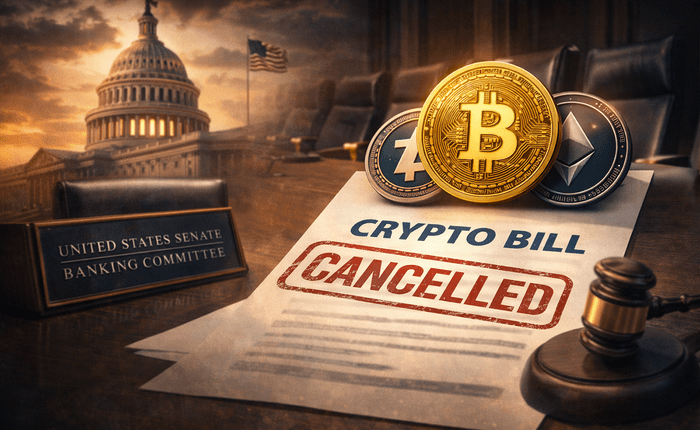
A major US crypto bill has been delayed after a key Senate panel shifted its agenda toward housing legislation aligned with Donald Trump’s policy priorities. The move extends uncertainty for the digital asset industry awaiting clearer federal rules.
Momentum behind comprehensive US cryptocurrency legislation has stalled again. A Senate committee expected to advance a long-awaited crypto bill has instead redirected its focus to housing-related measures tied to President Donald Trump’s policy agenda, pushing digital asset regulation further down the legislative calendar.
The delay underscores how crypto policy, despite bipartisan interest, remains vulnerable to shifting political priorities. For an industry that has spent years calling for regulatory clarity, the latest pause prolongs a period of uncertainty that continues to shape investment and business decisions.
A crowded agenda sidelines crypto
The legislation, which aims to establish clearer federal oversight of digital assets, had been expected to move forward this month. Instead, the Senate panel overseeing the bill pivoted to housing initiatives viewed as a near-term priority for the Trump administration.
The decision reflects a broader reality on Capitol Hill: crypto policy must compete with politically urgent issues such as housing affordability, inflation, and economic growth.
Lawmakers involved have not ruled out revisiting the crypto bill, but no new timeline has been set.
Why the bill matters to the industry
The delayed legislation is designed to clarify how cryptocurrencies are regulated in the United States, including which federal agencies oversee different classes of digital assets.
Without such guidance, companies continue to operate under a patchwork of enforcement actions and state-level rules. Industry leaders argue that this environment discourages innovation and drives activity overseas.
The pause comes as other jurisdictions move ahead with formal frameworks, increasing pressure on US lawmakers to act.
Political dynamics at play
The shift in focus highlights how digital asset regulation has become entangled in broader political strategy. With housing a central theme in Donald Trump’s economic agenda, Senate leadership has prioritized legislation that aligns more directly with those goals.
While crypto has supporters on both sides of the aisle, it lacks the immediacy of issues that directly affect voters’ day-to-day costs, such as rent and home prices.
For now, crypto policy appears to be a secondary concern.
Implications for startups and investors
For startups, the delay means continued legal ambiguity around product design, compliance, and fundraising. Many have already structured operations to reduce exposure to US regulatory risk, including incorporating abroad or limiting certain offerings domestically.
Investors face similar challenges. Unclear rules complicate valuations and long-term planning, particularly for companies building financial infrastructure or token-based products.
The absence of legislation also leaves enforcement agencies with outsized influence over how rules are interpreted.
What comes next
Lawmakers say crypto legislation remains on the agenda, but its progress will depend on how quickly the Senate clears higher-priority items. With an election-year policy environment still taking shape, timing remains uncertain.
For the digital asset industry, the message is familiar: regulatory clarity is coming — just not yet.
Until Congress refocuses, crypto companies will continue operating in a holding pattern, waiting for rules that promise stability but remain politically fragile.


