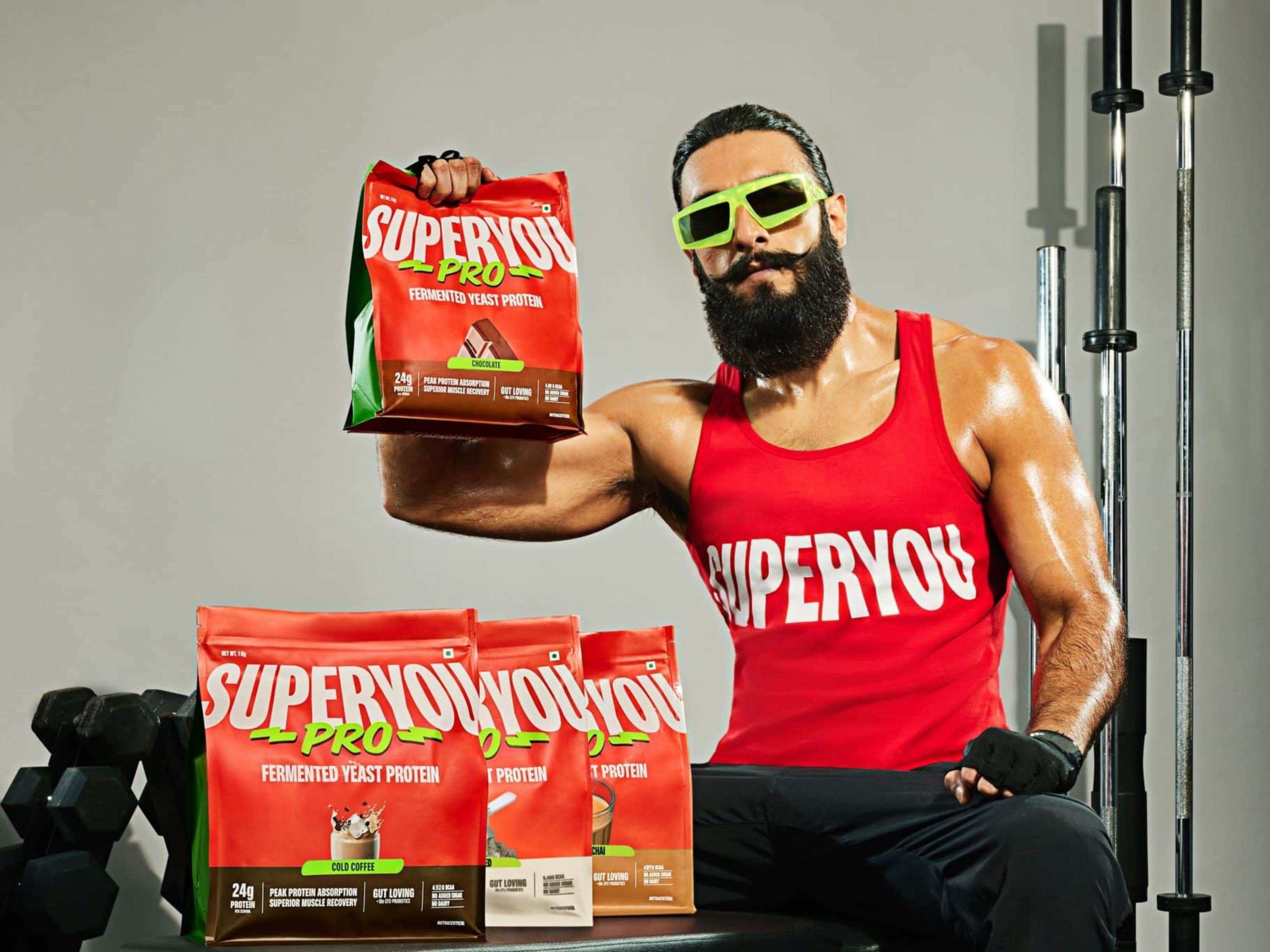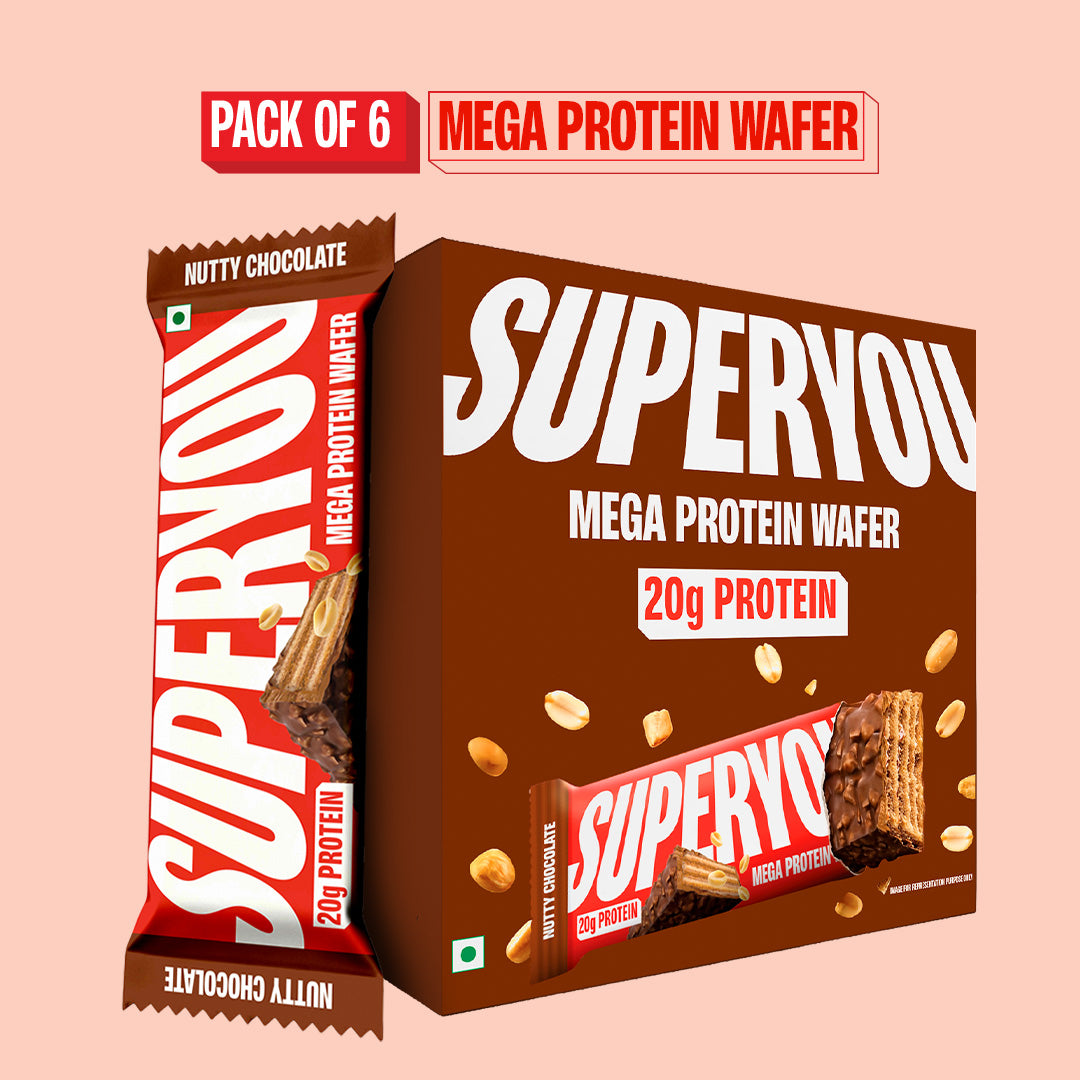
SuperYou has launched the Mega Protein Wafer, a new high-protein snack delivering 20 grams of protein per wafer. The product debuts exclusively on Swiggy Instamart and SuperYou’s website, reflecting the brand’s focus on quick-commerce distribution.
Protein is moving from the margins of fitness culture into everyday Indian eating habits, and snack brands are racing to keep up. The latest signal comes from SuperYou, the protein-first snacking startup co-founded by actor Ranveer Singh and entrepreneur Nikunj Biyani, which on Thursday unveiled what it calls its most protein-forward product yet: the Mega Protein Wafer.
The new wafer packs 20 grams of protein in a single serving, a figure that places it well above most mass-market snack options and even many protein bars currently sold in India. For SuperYou, the launch marks both a product escalation and a strategic bet on how urban consumers are discovering and buying food.
A wafer designed around protein, not the other way around
SuperYou’s original proposition was to make protein snacks feel indulgent rather than medicinal. Wafers — long associated with light, sweet treats — became the brand’s entry point. With the Mega Protein Wafer, the company is attempting to stretch that format to its upper limit.
The product is layered with chocolate wafers, topped with salted peanuts, and positioned as a “Nutty Chocolate” flavour. It is made with atta and jowar, contains no palm oil, and avoids added sugar — claims that align with a growing clean-label narrative across India’s packaged food sector.
But the headline number remains protein content. At 20 grams per wafer, SuperYou is explicitly targeting consumers who want a substantial protein hit without switching to shakes or supplements. The company says the product is designed for multiple use cases: pre- and post-workout fuel, mid-day hunger gaps, and on-the-go snacking.
That breadth matters. Protein consumption in India has traditionally been linked to gyms and athletes, but brands are now reframing it as a daily nutritional requirement for office workers, students, and time-constrained urban households.
Why distribution matters as much as formulation
The Mega Protein Wafer is priced at ₹120 and will be available exclusively at launch on Swiggy Instamart and SuperYou’s own website, before expanding to other quick-commerce and e-commerce platforms.
The choice of Instamart as a launch partner is telling. Quick commerce has become a critical discovery channel for new food brands, especially in metros, where consumers increasingly expect instant access rather than planned grocery purchases. For impulse-friendly categories like snacks, being one scroll away on a 10-minute delivery app can matter more than shelf space in a supermarket.
SuperYou’s distribution strategy mirrors a broader shift among digital-native food startups, many of which now prioritise quick commerce over traditional retail rollouts. The approach allows brands to test demand, collect data, and iterate faster — particularly for premium or functional products that may not yet have mass-market penetration.
Celebrity co-founding, but product-first messaging
Ranveer Singh’s involvement gives SuperYou visibility, but the brand has largely avoided leaning on celebrity glamour in its product positioning. In a statement accompanying the launch, Singh framed the Mega Protein Wafer as a long-in-the-making iteration rather than a vanity extension.
“We’ve been working on building a 20g protein wafer offering, and with this one, finally, we’ve got it just right,” Singh said, describing the product as “delicious, crunchy” and positioned for both casual snacking and protein goals.
For Indian consumers, celebrity-backed food brands have had mixed outcomes. The ones that endure tend to foreground utility and taste over endorsement. SuperYou’s messaging around protein density, ingredients, and everyday use suggests an attempt to stay on the right side of that line.
Nikunj Biyani, SuperYou’s co-founder, reinforced that framing. He described the product as a response to “big hunger” and “long days,” arguing that if a snack is labelled “Mega,” it should deliver materially more value — in this case, protein — rather than just size or sweetness.
The competitive context in India’s protein economy
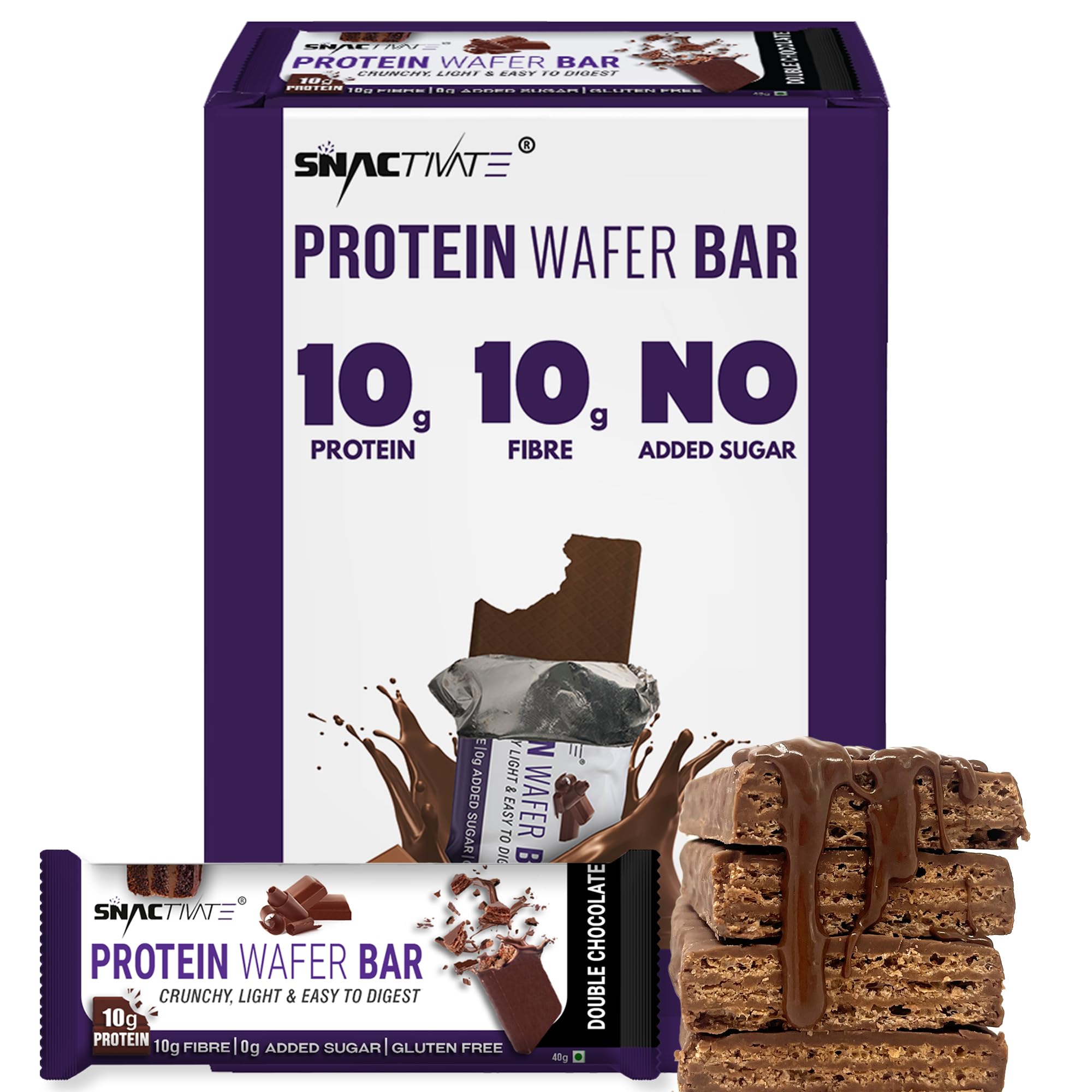
India’s protein foods market has become increasingly crowded, with offerings spanning bars, cookies, chips, shakes, and ready-to-drink beverages. Global brands coexist with domestic startups, many of which emphasise local grains, vegetarian formulations, and affordability.
What distinguishes SuperYou’s move is its attempt to push protein density within a familiar, indulgent format. While protein bars often struggle with taste fatigue, wafers carry fewer functional expectations — a gap SuperYou appears intent on exploiting.
At the same time, higher protein content typically brings formulation challenges, particularly around texture and aftertaste. Whether mainstream consumers will accept a 20g protein wafer as a repeat purchase, rather than a novelty, will be a key test.
A broader play by Think9’s venture-building model
SuperYou is part of a growing portfolio built by Think9 Consumer Technologies, a venture studio focused on digital-native consumer brands. Think9’s model emphasises data-led brand building and rapid experimentation across food, wellness, and lifestyle categories.
The Mega Protein Wafer fits neatly into that thesis: a differentiated product, launched via digital-first channels, aimed at a clearly defined but expanding consumer segment. Success here would likely inform future product extensions — either within wafers or adjacent snack formats.
For now, SuperYou is reinforcing its core identity rather than diversifying. The company already sells protein wafers, multigrain chips, and fermented yeast protein powders. The Mega variant sharpens that portfolio by raising the ceiling on what its flagship category can deliver.
What the launch signals
Beyond the product itself, the Mega Protein Wafer underscores how India’s snack market is evolving. Consumers are no longer choosing strictly between indulgence and nutrition; they are expecting both, often at a moment’s notice via their phones.
For startups like SuperYou, the challenge is sustaining that balance at scale — maintaining taste, affordability, and nutritional claims while competing in an increasingly noisy protein economy.
With its latest launch, SuperYou is betting that the future of protein in India won’t look like a supplement aisle, but like a familiar snack — just engineered to do more.