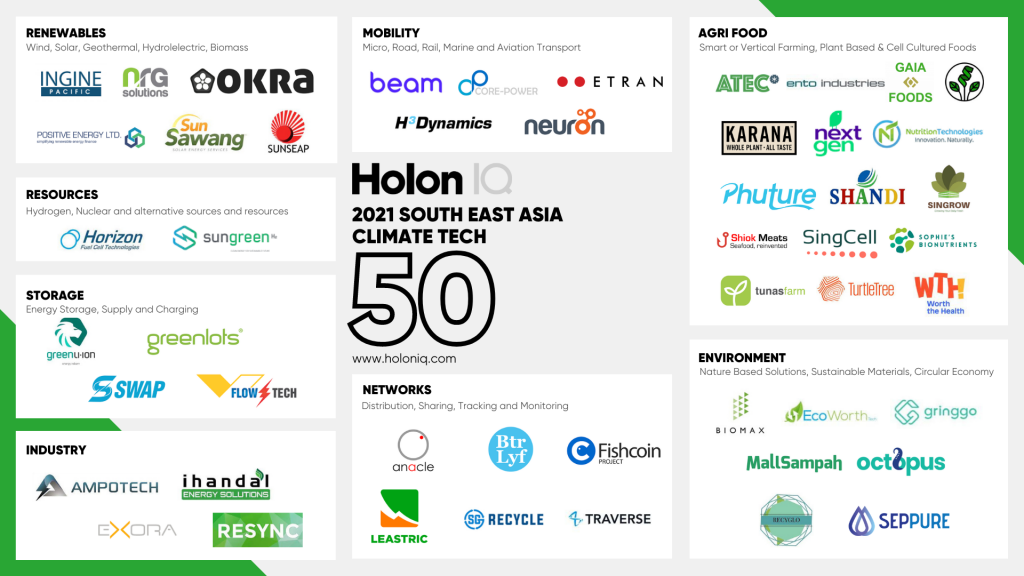
A new list of Asia’s 50 rising cleantech startups highlights how climate technology in the region is moving beyond pilots into commercially viable solutions spanning energy, mobility, carbon management, and industrial decarbonisation.
Asia’s climate technology ecosystem is entering a more consequential phase. A newly released list of 50 rising cleantech startups across the region underscores a clear shift: climate innovation in Asia is no longer centred on experimentation alone, but on solutions that can scale commercially across vast, complex markets. Curated by Tech in Asia, the list spans energy, transportation, carbon management, circular economy, and industrial sustainability, reflecting where capital and policy attention are increasingly converging.
What stands out is not just the diversity of sectors represented, but the maturity of many of the companies. These startups are moving beyond lab-stage technologies and pilot deployments, focusing instead on infrastructure-heavy, revenue-generating models suited to Asia’s manufacturing hubs, dense cities, and fast-growing middle class.
From Energy Transition to Energy Infrastructure
Renewable energy remains a cornerstone of Asia’s cleantech story, but the emphasis is shifting from generation to integration. Several startups on the list are tackling grid stability, energy storage, and demand management, recognising that solar and wind adoption at scale requires resilient infrastructure. In markets such as India, Southeast Asia, and parts of East Asia, intermittent power supply and grid congestion remain structural barriers. Startups addressing battery storage, smart grids, and AI-driven energy optimisation are increasingly seen as enablers of the wider energy transition, not peripheral players.
This infrastructure-first approach reflects a more pragmatic phase of cleantech development, one aligned with government net-zero roadmaps and utility procurement cycles rather than consumer sentiment alone.

Mobility and the Push Beyond Electric Vehicles
Electric mobility continues to feature prominently, but the narrative is evolving beyond passenger EVs. A significant share of the highlighted startups focus on commercial fleets, two- and three-wheelers, and logistics vehicles, segments that account for a disproportionate share of urban emissions in Asia. The focus is less on brand-led consumer EVs and more on fleet economics, battery swapping, and charging networks designed for dense, price-sensitive markets.
This reflects a broader understanding that decarbonising transport in Asia requires solutions tailored to how people and goods actually move, rather than importing models designed for Western cities.
Carbon, Materials, and Industrial Decarbonisation
Climate Tech Moves Into Heavy Industry
One of the strongest signals from the list is the growing presence of startups targeting industrial emissions. Cement, steel, chemicals, and manufacturing remain among Asia’s largest sources of carbon output, and startups working on carbon capture, alternative materials, and process efficiency are gaining traction. These companies often operate further upstream, selling to enterprises and governments rather than consumers, but their potential impact is substantial.
Carbon accounting and monitoring platforms also feature prominently, reflecting rising regulatory and investor pressure on Asian companies to measure and disclose emissions accurately. As export-oriented manufacturers face tightening carbon standards from Europe and North America, demand for credible data and compliance tools is accelerating.
Circular Economy Goes Mainstream
Waste management and circular economy startups are also gaining visibility, particularly those converting agricultural waste, industrial by-products, or consumer waste into usable materials or energy. In regions where landfill constraints and pollution concerns are acute, these models are increasingly supported by local governments and corporate buyers.
Why Investors Are Paying Attention Now
The cleantech startups highlighted share a common trait: they are built for Asia’s scale. Large populations, fast urbanisation, and policy-driven climate commitments create both complexity and opportunity. Investors are increasingly drawn to founders who understand local regulatory environments, supply chains, and cost sensitivities, rather than those pursuing one-size-fits-all global solutions.
Importantly, many of these startups are aligning with government-led climate initiatives, public procurement programmes, and corporate sustainability mandates. That alignment is helping reduce the commercial risk historically associated with climate technologies.
What This Means for Asia’s Climate Economy
Asia is responsible for more than half of global emissions, but it is also where much of the world’s climate innovation will be tested, deployed, and scaled. The emergence of a new generation of cleantech startups suggests the region is moving from climate ambition to execution.
For policymakers, the list reinforces the need to support infrastructure, financing, and regulatory clarity that allow these companies to scale. For investors, it signals that cleantech in Asia is no longer a peripheral bet, but a core part of the region’s economic and industrial future.
The message from Asia’s rising cleantech cohort is clear: climate solutions are no longer just about mitigating risk. They are becoming engines of growth, competitiveness, and long-term resilience across the region.