
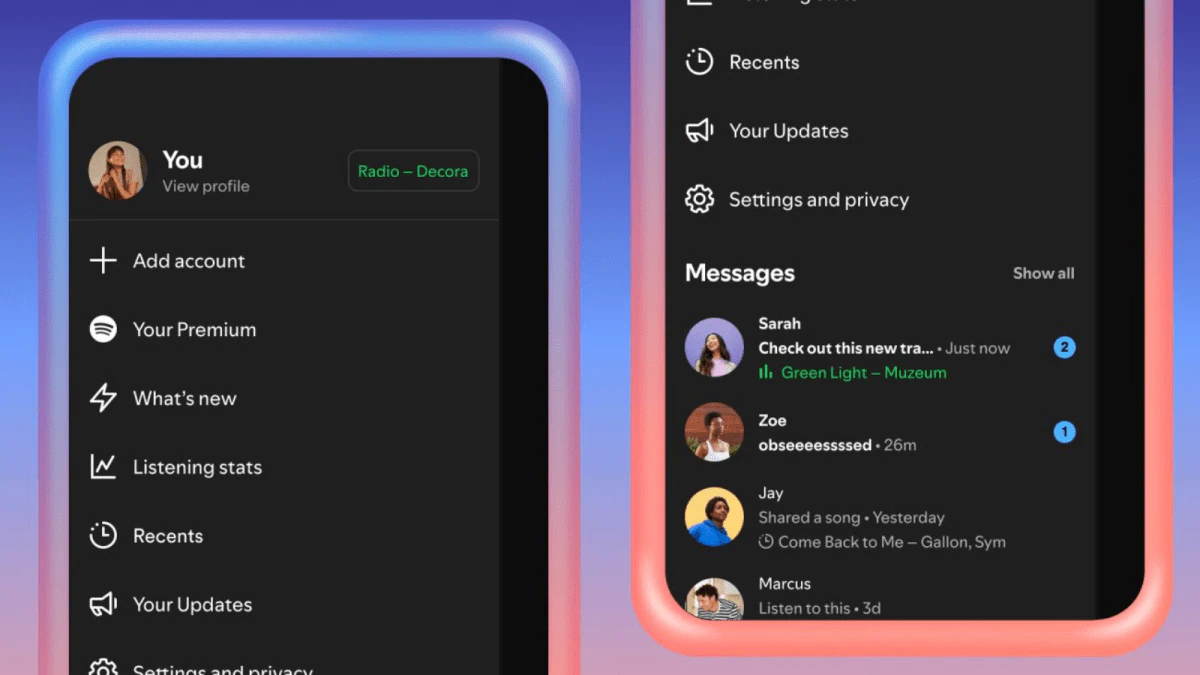
Spotify has begun rolling out group chats, allowing users to discuss music, share tracks, and react in real time inside the app. The feature marks Spotify’s latest move to strengthen social engagement and keep users spending more time within its ecosystem.
The company is expanding its social ambitions with the rollout of group chats, a new feature designed to let users communicate directly inside the app around shared music experiences. The update signals a continued shift by the streaming giant toward becoming not just a place to listen to music, but a destination for social interaction built around audio.
The feature, first reported by TechCrunch, allows users to create group conversations where participants can share songs, playlists, and reactions in real time, without leaving The company. The chats live alongside listening activity, reinforcing Spotify’s long-standing bet that discovery and community drive retention.
Why Spotify Is Leaning Further Into Social
Music streaming has matured into a fiercely competitive market, with growth increasingly dependent on engagement rather than pure subscriber additions. For The company, social features have become a strategic lever to keep users active between listening sessions and reduce churn.
Group chats build on existing tools such as collaborative playlists, Blend playlists, and activity sharing, but go a step further by introducing persistent conversation threads. Instead of music discovery happening across external platforms like WhatsApp or Instagram, the platform is attempting to internalise those discussions.
From a product perspective, the move reflects a broader trend among consumer apps: keeping users inside a single ecosystem for longer by combining content, communication, and community.
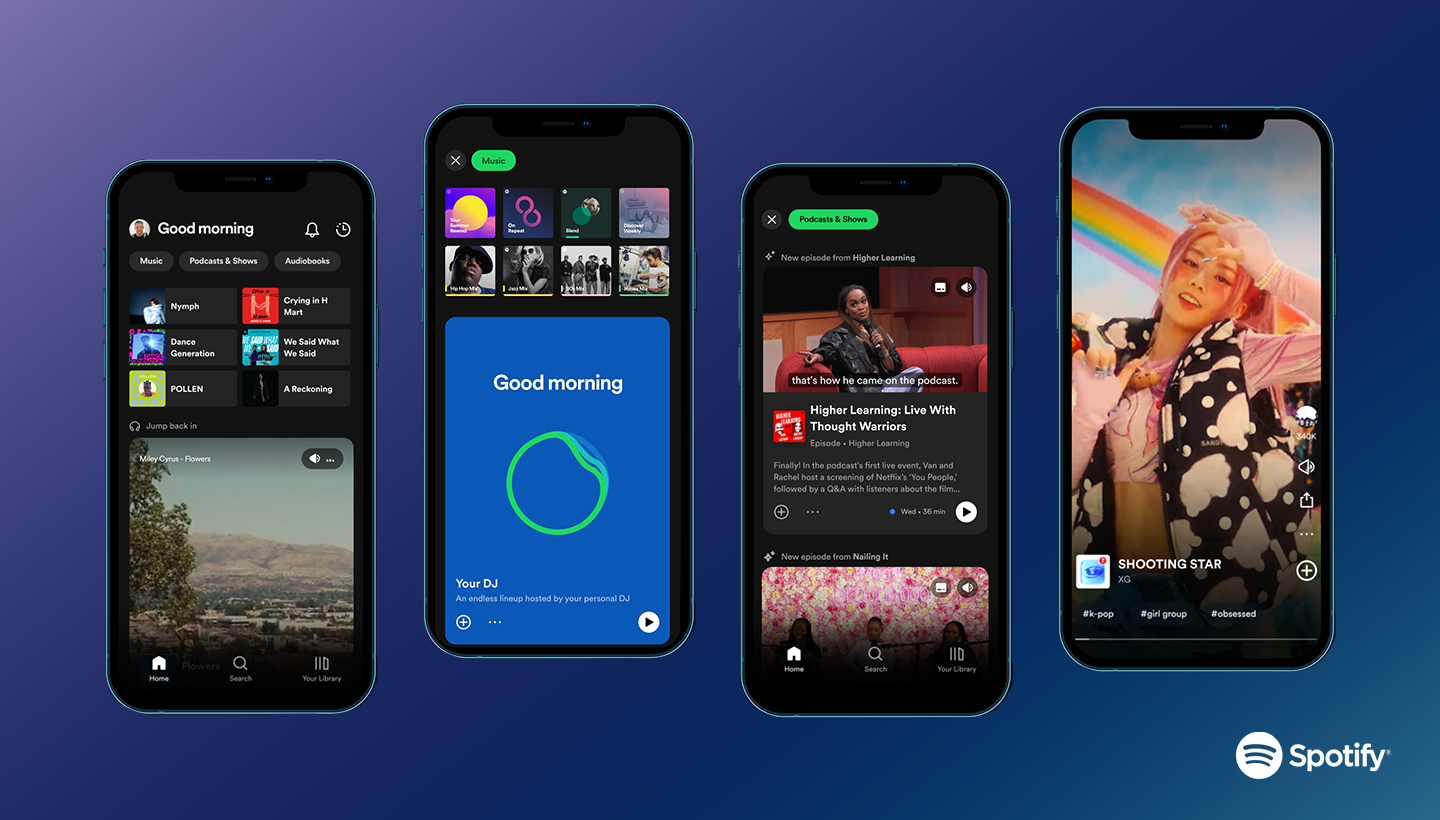
How Group Chats Work
Spotify’s group chats are designed for small, private groups rather than public forums. Users can invite friends to a chat, share tracks or playlists directly into the conversation, and respond with messages or emojis while listening.
Built Around Shared Listening Moments
The chats are closely tied to playback, allowing conversations to form around what people are listening to at that moment. This positions group chats as a companion to listening, rather than a standalone messaging feature, reducing the risk of Spotify competing head-on with full-scale chat platforms.
A Controlled Rollout
The company is rolling out the feature gradually, suggesting it is still testing how users interact with chat-based functionality. Spotify has a history of experimenting with social tools before deciding which features scale globally, and group chats are likely to follow a similar path.
Competitive and Ecosystem Implications
For Spotify, group chats strengthen its positioning against rivals such as Apple Music and YouTube Music, which have historically lagged in social-native features. The addition also aligns Spotify more closely with platforms like Discord, where music sharing and conversation already intersect, particularly among younger users.

At the same time, Spotify is walking a careful line. Overloading the app with social features risks alienating users who prefer a lean, listening-first experience. By keeping chats optional and private, the company appears to be prioritising utility over virality.
What to Watch Next
The rollout raises key questions about how far Spotify plans to push into social territory. If group chats see strong adoption, they could become a foundation for richer community features, artist-led conversations, or fan groups tied to tours and releases. If engagement remains limited, Spotify may refine the feature or keep it as a lightweight add-on.
For now, the introduction of group chats underscores a clear strategic direction: as streaming economics tighten, Spotify is betting that music is more powerful when it is shared and discussed, not just played.


