
Napster has launched an AI-powered music creation app weeks after shutting down its streaming service, positioning itself against major record labels while facing multiple royalty lawsuits. The move signals a broader shift as Napster pivots from music distribution to AI-driven creator tools and data ownership.
A Radical Pivot After Streaming Shutdown
Three weeks after quietly shutting down its low-usage streaming service, Napster has returned to the spotlight with a sharp strategic turn: an AI-powered music creation app that openly challenges the role of major record labels in the future of music. The relaunch comes amid ongoing legal battles over unpaid royalties and a broader transformation of Napster into an AI and metaverse-adjacent technology company.
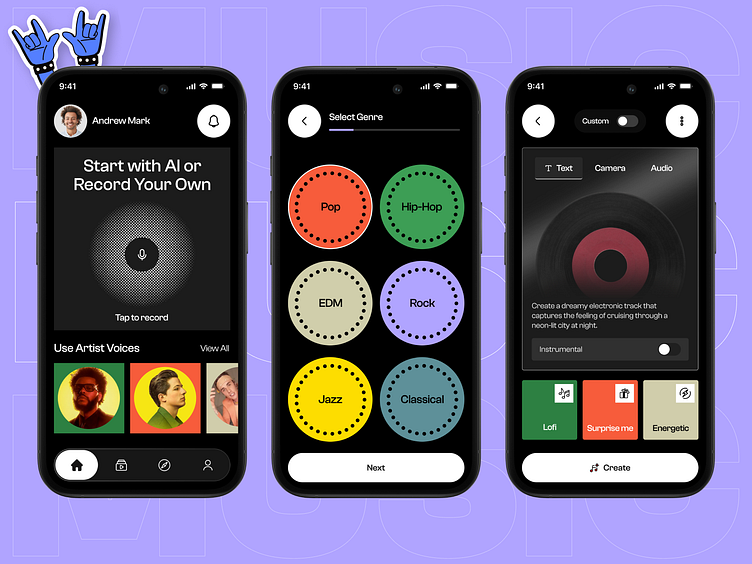
The new Napster app, now live on iOS and Android, layers a chatbot-style interface onto prompt-based music generation, placing it in the same functional category as AI music tools like Suno. Napster’s differentiation lies in personality-driven creation. The company says users can “jam” with more than 15,000 AI personas, framed not as tools but as collaborative “AI artists.” The system is powered by Google’s Gemini models, according to the company.
Napster CEO John Acunto has made little effort to soften the company’s stance toward the traditional music industry. “We don’t think that the future of music involves the labels anymore,” he said in an interview with Rolling Stone. “I just think they’re dead.”
AI Music, But With a Copyright Line

Unlike the original Napster, whose name became synonymous with copyright infringement in the early 2000s, the current company insists its AI models are trained ethically and will be licensed in a copyright-compliant way. Napster executives say the platform is designed around user ownership: when users generate music, they own what they create.
CTO Edo Segal describes the experience as intentionally social and iterative rather than transactional. The goal, he says, is to replicate the human process of collaboration and improvisation, with AI acting as a creative partner rather than a replacement. This emphasis on interaction reflects a broader shift in AI creativity tools, where engagement and identity are becoming as important as output quality.
Still, the timing of the launch is contentious. Napster is currently being sued by Sony Music, which alleges the company owes $9.2 million in unpaid royalties and continued streaming Sony’s catalog after a licensing agreement ended in mid-2025. Royalty collection agency SoundExchange has also filed suit, while several other labels and distributors have publicly complained about missing payments.
Music Is Now Only One Piece of Napster
For its current owners, AI music is only a slice of a much larger ambition. The brand was acquired in March 2025 for $207 million by Infinite Reality, which has been repositioning Napster as a consumer-facing AI platform rather than a pure music company.
That strategy includes products such as Station, an AI concierge kiosk, and the company View, a $99 holographic display that projects AI companions above a laptop screen. Users are also encouraged to create AI clones of themselves, which they can chat with and, eventually, collaborate with musically. According to Segal, these digital doubles are meant to reinforce the idea that identity, data, and creativity belong to the user, not the platform.
Acunto has been explicit that many of Napster’s future products will have little to do with music at all. Music, he says, remains culturally important but will be one of many ways the company connects with audiences globally.
Turbulence Behind the Relaunch
The AI app arrives during a volatile period for Napster’s business. A previously announced $3 billion funding round collapsed last year after an investor reportedly disappeared, an incident the company has described as misconduct and referred to law enforcement. Napster has declined to comment publicly on its current cash position but maintains it remains operational and continues to execute its product roadmap.
Despite the turbulence, the company has pointed to recent visibility wins, including awards at CES for Napster View and a regional partnership announcement with Lenovo in the Middle East. These moves suggest Napster is attempting to establish credibility outside the traditional music ecosystem, even as legal disputes remain unresolved.
A Direct Challenge to Label-Backed AI Rivals
Napster’s confrontational posture sets it apart from other AI music platforms that are actively partnering with major labels. Rivals such as Suno and Udio have secured licensing deals, including agreements with Warner Music Group, giving them access to catalog data and institutional support. Acunto argues that those partnerships repeat old power structures in a new technological wrapper.
In his view, allowing labels to shape AI music platforms means giving them control over data and creative output, something Napster is explicitly trying to avoid. He frames the company as an underdog fighting for creator ownership in a landscape increasingly dominated by large technology firms and legacy rights holders.
Data Ownership as the Core Narrative
Underlying Napster’s AI push is a broader ideological argument about data ownership. Acunto frequently returns to the idea that data is the most valuable asset in the AI era and that individuals currently give it away too easily. He positions Napster as a vessel for reopening debates that began with the original file-sharing service: who owns digital content, who controls distribution, and who benefits from technological progress.
This narrative resonates beyond music. As generative AI tools proliferate across writing, art, video, and software, questions around intellectual property and compensation remain unsettled. Napster’s bet is that a brand once synonymous with disruption can again serve as a rallying point for creators skeptical of centralized control.
An Uncertain but Symbolic Comeback
Whether Napster’s AI music app gains traction remains unclear. The company is entering a crowded field with well-funded competitors and faces unresolved legal and financial challenges. Yet the relaunch is symbolically potent. More than two decades after it upended the music industry, Napster is once again positioning itself against incumbents, this time arguing that the real battle is not over songs, but over data, identity, and ownership in an AI-driven world.



