NASA Brings Athena Supercomputer Online as High-End Computing Demands Intensify

Share via:

NASA has brought its Athena supercomputer online at the Ames Research Center, delivering 20.13 petaflops of CPU-based performance using AMD EPYC Turin processors. The system replaces the retired Pleiades supercomputer and expands NASA’s high-end computing capacity amid growing demand from science and mission teams.

A New Flagship System at Ames Research Center

NASA has activated its newest high-performance computing system, Athena, at the agency’s Modular Supercomputing Facility within the Ames Research Center. The system delivers 20.13 petaflops of peak performance and forms part of NASA’s High-End Computing Capability program, marking a significant upgrade over the decommissioned Pleiades supercomputer, which provided 7.09 petaflops before being retired earlier this month. Athena will be available to NASA researchers as well as external scientists supporting NASA missions through an application-based allocation process.

Built on AMD EPYC Turin CPUs

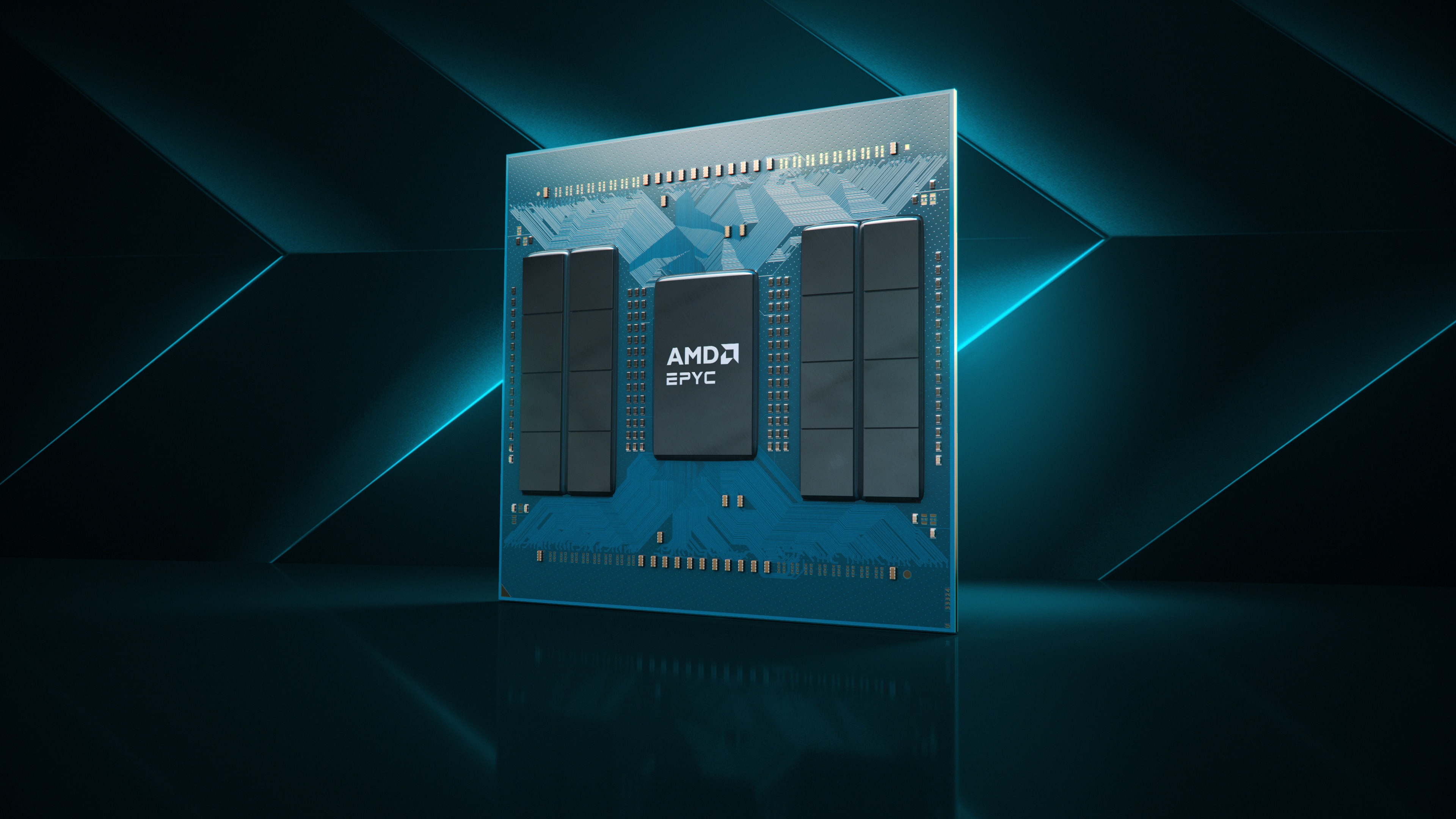
Athena is a CPU-centric system built from 1,024 nodes powered by AMD EPYC Turin processors and is supported by 786 terabytes of system memory. The architecture reflects NASA’s continued reliance on large-scale CPU compute for workloads spanning aerospace engineering, climate modeling, astrophysics, and mission simulation. According to the agency, Athena is designed to support evolving computational requirements across both near-term missions and long-horizon science programs. Kevin Murphy, NASA’s chief science data officer, said the system would enable more tailored computing resources as mission complexity grows.

How Athena Fits Into NASA’s Supercomputing Fleet

https://media.datacenterdynamics.com/media/images/NASA_Athena.original.jpg

Athena joins a broader portfolio of NASA-owned supercomputers that collectively underpin the agency’s research operations. These include the 20.67-petaflop Cabeus system, the 13.12-petaflop Aitken, the 8.32-petaflop Electra, the 8.1-petaflop Discover, and the 154.8-teraflop Endeavour. While Athena strengthens the upper end of this fleet, it also highlights a structural issue flagged by internal watchdogs: most of NASA’s high-end systems remain heavily CPU-based at a time when many scientific workloads are shifting toward accelerated architectures.

Oversubscription and Structural Constraints

A 2024 report by the NASA Office of Inspector General found that space-tech high-end computing resources were increasingly insufficient for mission needs. The report concluded that systems were oversubscribed and overburdened, with mission directorates requesting more compute time than existing capacity could deliver. It also noted that reliance on CPU-only architectures limited performance for emerging workloads, particularly those involving large-scale data analytics, AI, and advanced simulations. Among its recommendations, the OIG urged Space-tech to establish stronger executive oversight to realign computing investments with specialized mission requirements.

Incremental Moves Toward Acceleration
https://www.amd.com/content/dam/amd/en/images/pr-feed/1295710.png

Space-tech has begun addressing some of these concerns. In March 2025, the agency added 350 Nvidia GH200 nodes to the Cabeus supercomputer, boosting its performance by more than 13 petaflops and doubling its peak capability. That upgrade marked a shift toward heterogeneous computing, though Athena itself remains CPU-based. The coexistence of Athena and GPU-accelerated systems like Cabeus suggests NASA is pursuing a mixed strategy rather than a wholesale architectural transition.

Why Athena Matters Now

Athena’s deployment comes at a critical moment for NASA, as the agency’s demand for advanced computing power is accelerating faster than ever. Modern space exploration increasingly depends on high-resolution Earth system models, complex spacecraft and mission simulations, and data-intensive scientific workloads that push existing infrastructure to its limits. At the same time, NASA is expanding its use of AI-assisted analysis to process massive volumes of data generated by satellites, telescopes, and exploratory missions.

While Athena does not completely close the capacity and architectural gaps previously highlighted by the NASA Inspector General, it delivers a meaningful boost to the agency’s computing capabilities. The new system significantly increases available processing power and replaces aging, less efficient hardware with a modern, higher-density platform designed to handle more demanding workloads. This upgrade improves reliability, energy efficiency, and scalability at a time when older systems were becoming a bottleneck.

For the broader space-tech ecosystem, Athena serves as both a stopgap solution and a strategic signal. It underscores that high-end computing remains foundational to scientific discovery and space exploration, even as space-tech faces mounting pressure to rethink how computing resources are provisioned, integrated, and modernized for the future.


Disclaimer

We strive to uphold the highest ethical standards in all of our reporting and coverage. We StartupNews.fyi want to be transparent with our readers about any potential conflicts of interest that may arise in our work. It’s possible that some of the investors we feature may have connections to other businesses, including competitors or companies we write about. However, we want to assure our readers that this will not have any impact on the integrity or impartiality of our reporting. We are committed to delivering accurate, unbiased news and information to our audience, and we will continue to uphold our ethics and principles in all of our work. Thank you for your trust and support.

Sreejit
Sreejit Kumar is a media and communications professional with over two years of experience across digital publishing, social media marketing, and content management. With a background in journalism and advertising, he focuses on crafting and managing multi-platform news content that drives audience engagement and measurable growth.

Popular

More Like this

NASA Brings Athena Supercomputer Online as High-End Computing Demands Intensify

NASA has brought its Athena supercomputer online at the Ames Research Center, delivering 20.13 petaflops of CPU-based performance using AMD EPYC Turin processors. The system replaces the retired Pleiades supercomputer and expands NASA’s high-end computing capacity amid growing demand from science and mission teams.

A New Flagship System at Ames Research Center

NASA has activated its newest high-performance computing system, Athena, at the agency’s Modular Supercomputing Facility within the Ames Research Center. The system delivers 20.13 petaflops of peak performance and forms part of NASA’s High-End Computing Capability program, marking a significant upgrade over the decommissioned Pleiades supercomputer, which provided 7.09 petaflops before being retired earlier this month. Athena will be available to NASA researchers as well as external scientists supporting NASA missions through an application-based allocation process.

Built on AMD EPYC Turin CPUs

Athena is a CPU-centric system built from 1,024 nodes powered by AMD EPYC Turin processors and is supported by 786 terabytes of system memory. The architecture reflects NASA’s continued reliance on large-scale CPU compute for workloads spanning aerospace engineering, climate modeling, astrophysics, and mission simulation. According to the agency, Athena is designed to support evolving computational requirements across both near-term missions and long-horizon science programs. Kevin Murphy, NASA’s chief science data officer, said the system would enable more tailored computing resources as mission complexity grows.

How Athena Fits Into NASA’s Supercomputing Fleet

https://media.datacenterdynamics.com/media/images/NASA_Athena.original.jpg

Athena joins a broader portfolio of NASA-owned supercomputers that collectively underpin the agency’s research operations. These include the 20.67-petaflop Cabeus system, the 13.12-petaflop Aitken, the 8.32-petaflop Electra, the 8.1-petaflop Discover, and the 154.8-teraflop Endeavour. While Athena strengthens the upper end of this fleet, it also highlights a structural issue flagged by internal watchdogs: most of NASA’s high-end systems remain heavily CPU-based at a time when many scientific workloads are shifting toward accelerated architectures.

Oversubscription and Structural Constraints

A 2024 report by the NASA Office of Inspector General found that space-tech high-end computing resources were increasingly insufficient for mission needs. The report concluded that systems were oversubscribed and overburdened, with mission directorates requesting more compute time than existing capacity could deliver. It also noted that reliance on CPU-only architectures limited performance for emerging workloads, particularly those involving large-scale data analytics, AI, and advanced simulations. Among its recommendations, the OIG urged Space-tech to establish stronger executive oversight to realign computing investments with specialized mission requirements.

Incremental Moves Toward Acceleration

https://www.amd.com/content/dam/amd/en/images/pr-feed/1295710.png

Space-tech has begun addressing some of these concerns. In March 2025, the agency added 350 Nvidia GH200 nodes to the Cabeus supercomputer, boosting its performance by more than 13 petaflops and doubling its peak capability. That upgrade marked a shift toward heterogeneous computing, though Athena itself remains CPU-based. The coexistence of Athena and GPU-accelerated systems like Cabeus suggests NASA is pursuing a mixed strategy rather than a wholesale architectural transition.

Why Athena Matters Now

Athena’s deployment comes at a critical moment for NASA, as the agency’s demand for advanced computing power is accelerating faster than ever. Modern space exploration increasingly depends on high-resolution Earth system models, complex spacecraft and mission simulations, and data-intensive scientific workloads that push existing infrastructure to its limits. At the same time, NASA is expanding its use of AI-assisted analysis to process massive volumes of data generated by satellites, telescopes, and exploratory missions.

While Athena does not completely close the capacity and architectural gaps previously highlighted by the NASA Inspector General, it delivers a meaningful boost to the agency’s computing capabilities. The new system significantly increases available processing power and replaces aging, less efficient hardware with a modern, higher-density platform designed to handle more demanding workloads. This upgrade improves reliability, energy efficiency, and scalability at a time when older systems were becoming a bottleneck.

For the broader space-tech ecosystem, Athena serves as both a stopgap solution and a strategic signal. It underscores that high-end computing remains foundational to scientific discovery and space exploration, even as space-tech faces mounting pressure to rethink how computing resources are provisioned, integrated, and modernized for the future.

Disclaimer

We strive to uphold the highest ethical standards in all of our reporting and coverage. We StartupNews.fyi want to be transparent with our readers about any potential conflicts of interest that may arise in our work. It’s possible that some of the investors we feature may have connections to other businesses, including competitors or companies we write about. However, we want to assure our readers that this will not have any impact on the integrity or impartiality of our reporting. We are committed to delivering accurate, unbiased news and information to our audience, and we will continue to uphold our ethics and principles in all of our work. Thank you for your trust and support.

Website Upgradation is going on for any glitch kindly connect at office@startupnews.fyi

Sreejit
Sreejit Kumar is a media and communications professional with over two years of experience across digital publishing, social media marketing, and content management. With a background in journalism and advertising, he focuses on crafting and managing multi-platform news content that drives audience engagement and measurable growth.

More like this

Napster Re-emerges With AI Music App, Reigniting Its Long-Running...

Napster has launched an AI-powered music creation app weeks...

I’ve Tested 1,000+ Sex Toys. These 8 Are What...

I started writing about sexual wellness in 2010. I...

Best Internet Providers in Portland, Oregon

What is the best internet provider in Portland?CNET's experts...

Popular

iptv iptv iptv iptv iptv iptv iptv iptv iptv iptv iptv iptv iptv iptv iptv iptv iptv iptv iptv iptv iptv iptv iptv iptv melhor iptv portugal lista melhor iptv portugal lista melhor iptv portugal lista melhor iptv portugal lista melhor iptv portugal lista melhor iptv portugal lista melhor iptv portugal lista melhor iptv portugal lista melhor iptv portugal lista melhor iptv portugal lista melhor iptv portugal lista melhor iptv portugal lista melhor iptv portugal lista melhor iptv portugal lista melhor iptv portugal lista melhor iptv portugal lista melhor iptv portugal lista melhor iptv portugal lista melhor iptv portugal lista melhor iptv portugal lista melhor iptv portugal lista melhor iptv portugal lista melhor iptv portugal lista melhor iptv portugal lista melhor iptv portugal lista melhor iptv portugal lista melhor iptv portugal lista melhor iptv portugal lista melhor iptv portugal lista melhor iptv portugal lista melhor iptv portugal lista melhor iptv portugal lista melhor iptv portugal lista melhor iptv portugal lista melhor iptv portugal lista melhor iptv portugal lista melhor iptv portugal lista melhor iptv portugal lista melhor iptv portugal lista melhor iptv portugal lista melhor iptv portugal lista melhor iptv portugal lista melhor iptv portugal lista melhor iptv portugal lista melhor iptv portugal lista melhor iptv portugal lista melhor iptv portugal lista melhor iptv portugal lista melhor iptv portugal lista melhor iptv portugal lista melhor iptv portugal lista melhor iptv portugal lista melhor iptv portugal lista melhor iptv portugal lista melhor iptv portugal lista melhor iptv portugal lista melhor iptv portugal lista melhor iptv portugal lista melhor iptv portugal lista melhor iptv portugal lista melhor iptv portugal lista melhor iptv portugal lista melhor iptv portugal lista melhor iptv portugal lista melhor iptv portugal lista melhor iptv portugal lista best iptv best iptv best iptv best iptv best iptv best iptv best iptv best iptv best iptv best iptv best iptv best iptv best iptv best iptv best iptv best iptv best iptv best iptv best iptv best iptv best iptv best iptv best iptv best iptv best iptv best iptv best iptv best iptv best iptv best iptv best iptv best iptv best iptv best iptv best iptv best iptv best iptv best iptv best iptv best iptv best iptv best iptv best iptv best iptv best iptv best iptv best iptv best iptv best iptv best iptv best iptv best iptv best iptv best iptv best iptv best iptv best iptv best iptv best iptv best iptv best iptv best iptv best iptv best iptv best iptv best iptv best iptv best iptv best iptv best iptv best iptv best iptv best iptv best iptv best iptv best iptv best iptv best iptv best iptv best iptv best iptv best iptv best iptv best iptv best iptv best iptv best iptv best iptv best iptv best iptv best iptv best iptv best iptv best iptv best iptv best iptv best iptv best iptv best iptv best iptv best iptv best iptv best iptv best iptv best iptv best iptv best iptv best iptv best iptv best iptv best iptv best iptv best iptv best iptv best iptv best iptv best iptv best iptv best iptv best iptv best iptv best iptv best iptv best iptv best iptv best iptv best iptv best iptv best iptv best iptv best iptv best iptv best iptv best iptv best iptv best iptv best iptv best iptv best iptv best iptv best iptv best iptv best iptv best iptv best iptv best iptv best iptv best iptv best iptv best iptv best iptv best iptv best iptv best iptv best iptv best iptv best iptv best iptv best iptv best iptv best iptv best iptv best iptv best iptv best iptv best iptv best iptv best iptv best iptv best iptv best iptv best iptv best iptv best iptv best iptv best iptv best iptv best iptv best iptv best iptv best iptv best iptv best iptv best iptv best iptv best iptv best iptv best iptv best iptv best iptv best iptv best iptv best iptv best iptv best iptv best iptv best iptv best iptv best iptv iptv iptv iptv iptv iptv iptv iptv iptv iptv iptv iptv iptv iptv portugal iptv portugal iptv portugal iptv portugal iptv portugal iptv portugal iptv portugal iptv portugal iptv portugal iptv portugal iptv portugal iptv portugal iptv iptv iptv iptv iptv iptv iptv iptv iptv iptv iptv iptv
