
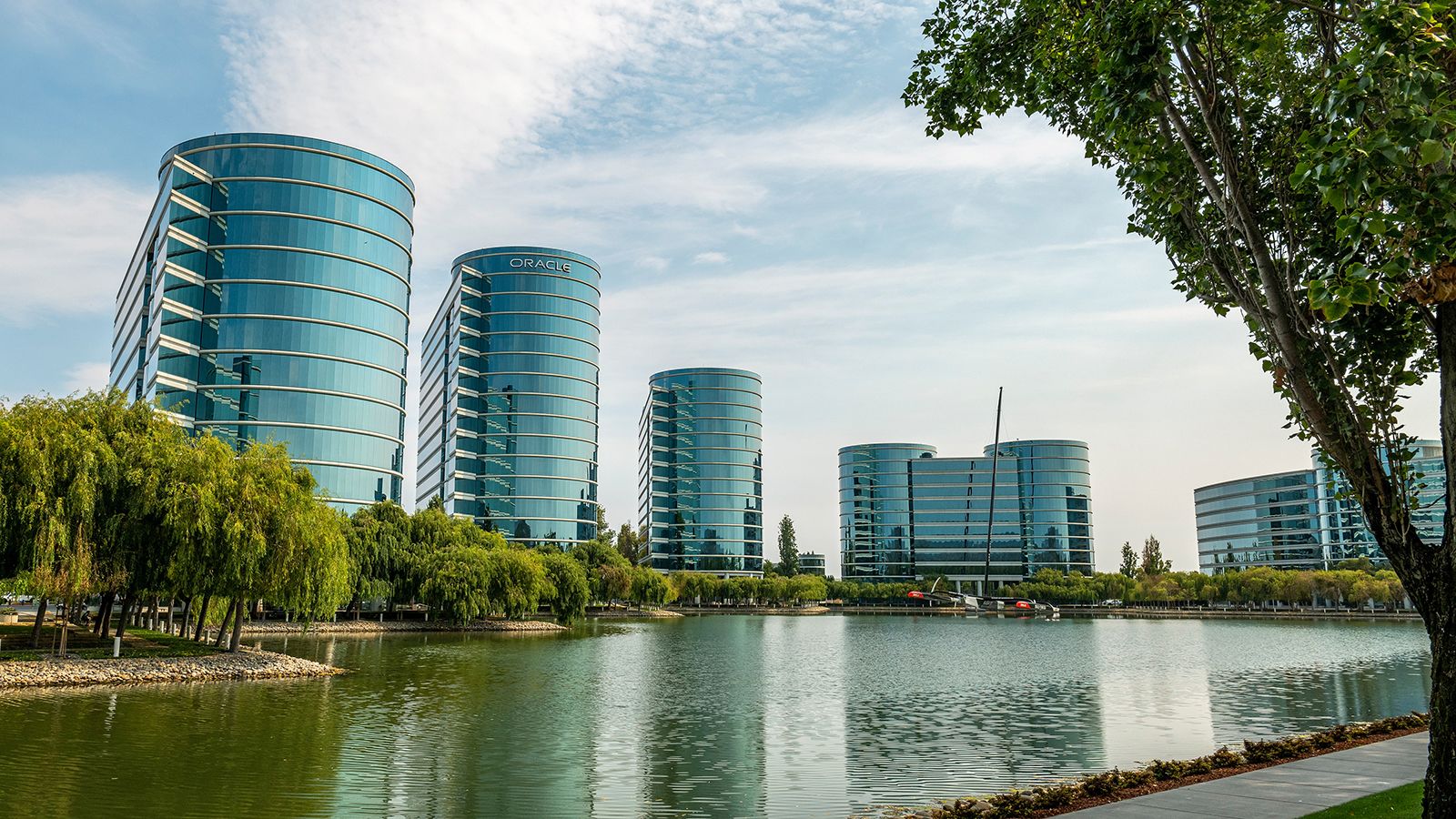
Oracle shares fell after the company revealed plans to raise up to $50 billion, highlighting investor unease over capital intensity and return timelines in the AI-driven cloud race.
Oracle’s shares dropped sharply after the company disclosed plans to raise as much as $50 billion in funding, a move that immediately unsettled investors despite management framing it as fuel for long-term growth.
For Oracle, the reaction underscores a broader tension playing out across Big Tech: while AI infrastructure spending is widely seen as unavoidable, markets are increasingly sensitive to how much capital companies deploy — and how quickly returns materialise.
Why Oracle wants more capital
The company has been aggressively repositioning itself as a core infrastructure provider for AI workloads, particularly through its cloud business. Large-scale AI training and inference demand massive investments in data centers, networking, and specialized hardware.
Raising $50 billion would give Oracle the financial firepower to:
- Expand global data center capacity
- Compete more directly with hyperscalers
- Support enterprise AI deployments at scale
From a strategic standpoint, the rationale is clear. From a market perspective, the timing is more complex.
Why investors reacted negatively

The immediate stock decline reflects concerns around dilution, leverage, and execution risk. Unlike consumer-facing AI products, infrastructure investments carry long payback periods.
Investors are asking:
- Will AI demand justify the scale of spending?
- Can the company maintain margins amid rising costs?
- How does this affect capital discipline?
Oracle’s cloud business has grown steadily, but it still trails market leaders. The funding plan raises expectations — and scrutiny.
AI spending meets market realism
Over the past year, markets rewarded companies announcing AI initiatives almost reflexively. That dynamic is changing.
As AI transitions from promise to deployment, investors are differentiating between:
- Revenue-generating AI adoption
- Capital-intensive infrastructure bets
Oracle’s disclosure lands firmly in the second category.
A calculated gamble
The company has historically succeeded by serving regulated, mission-critical enterprise workloads — areas where switching costs are high. If AI becomes embedded in those environments, the companycould benefit disproportionately.
But the $50 billion figure puts pressure on management to demonstrate not just growth, but efficiency.
The stock reaction may be short-term, but it sends a clear signal: AI ambition alone is no longer enough. Markets now want proof of sustainable returns.



