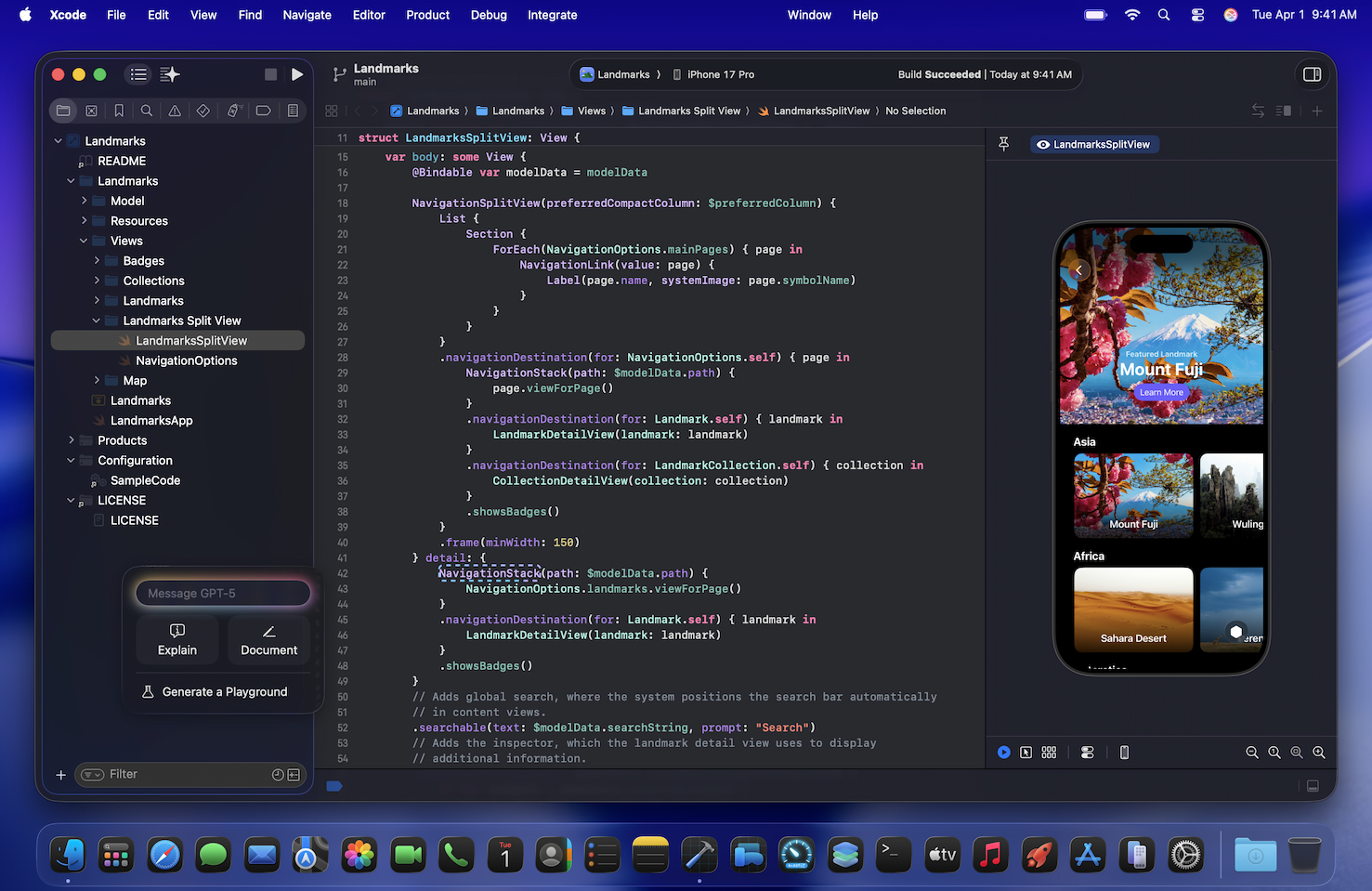
Apple is expanding Xcode’s AI capabilities with deeper integrations of OpenAI and Anthropic models, signaling a shift toward agentic coding workflows inside its core developer environment.
Apple is taking a more assertive step into AI-assisted software development, positioning Xcode not just as a code editor, but as an increasingly autonomous development partner.
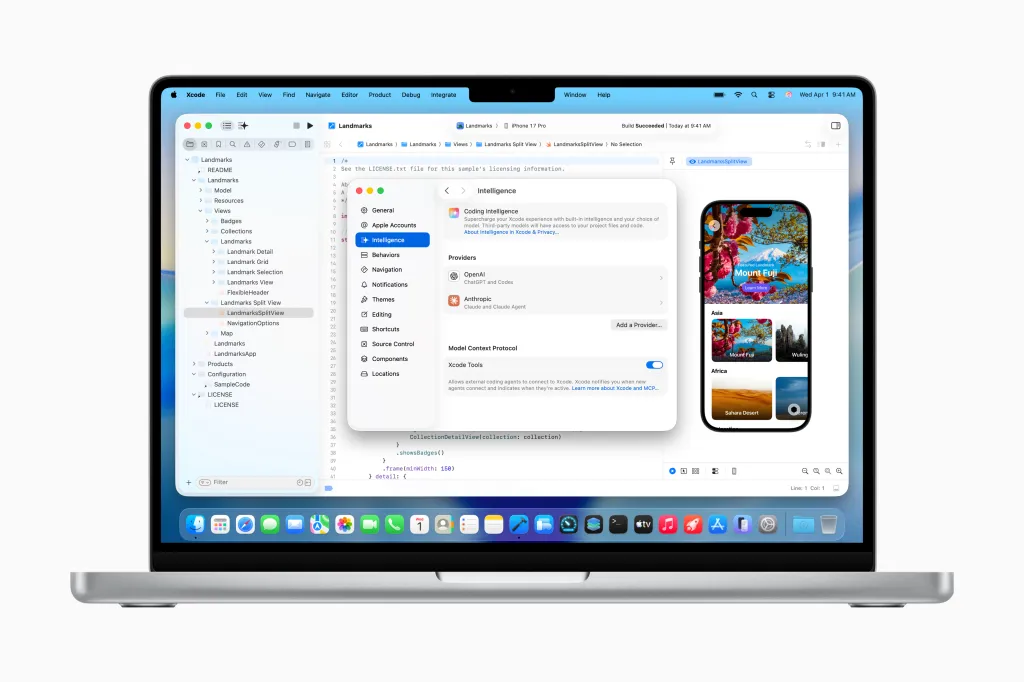
According to recent disclosures, Apple is expanding Xcode’s integration with large language models from OpenAI and Anthropic, moving beyond simple code suggestions toward what the industry calls agentic coding — systems that can plan, reason, and execute multi-step development tasks.
From autocomplete to autonomy
Early AI coding tools focused on autocomplete: predicting the next line of code or suggesting functions. Agentic coding goes further.
In an agentic setup, the system can:
- Interpret high-level developer intent
- Break tasks into subtasks
- Write, test, and refine code
- Iterate autonomously with limited human input
Apple’s direction suggests Xcode will increasingly support workflows where developers describe outcomes rather than implementations.
Why Apple is doing this now
The competitive pressure is mounting. Tools like GitHub Copilot, Cursor, and AI-native IDEs are redefining expectations for developer productivity.
For Apple, the stakes are higher:
- Xcode underpins iOS, macOS, watchOS, and visionOS ecosystems
- Developer experience directly affects platform loyalty
- AI tooling is becoming table stakes
By embedding OpenAI and Anthropic models directly, Apple avoids having to build frontier models itself while retaining control over the developer environment.
How the integrations work
Rather than a single AI model, Xcode can route tasks to different systems depending on context. OpenAI models may be used for broad reasoning and code generation, while Anthropic’s models — often praised for structured reasoning — can assist with complex refactoring or safety-critical logic.
Apple maintains that developers remain in control, with AI acting as a collaborator rather than an unchecked executor.
Implications for developers
For individual developers, agentic coding could:
- Reduce boilerplate work
- Speed up prototyping
- Lower the cognitive load of large codebases
For teams, it introduces new questions around:
- Code ownership
- Review practices
- Debugging AI-generated logic
Apple’s challenge will be integrating autonomy without undermining trust.
A broader shift in software creation
Xcode’s evolution reflects a deeper industry transition: software is moving from hand-crafted artifacts toward supervised automation.
Apple’s embrace of agentic coding suggests it believes the future developer is less a typist — and more an architect guiding intelligent systems.
If successful, Xcode may become one of the first mainstream IDEs where AI does not just assist, but actively participates in building software.