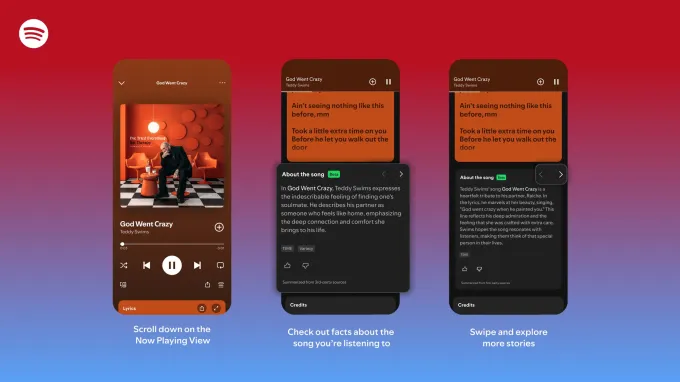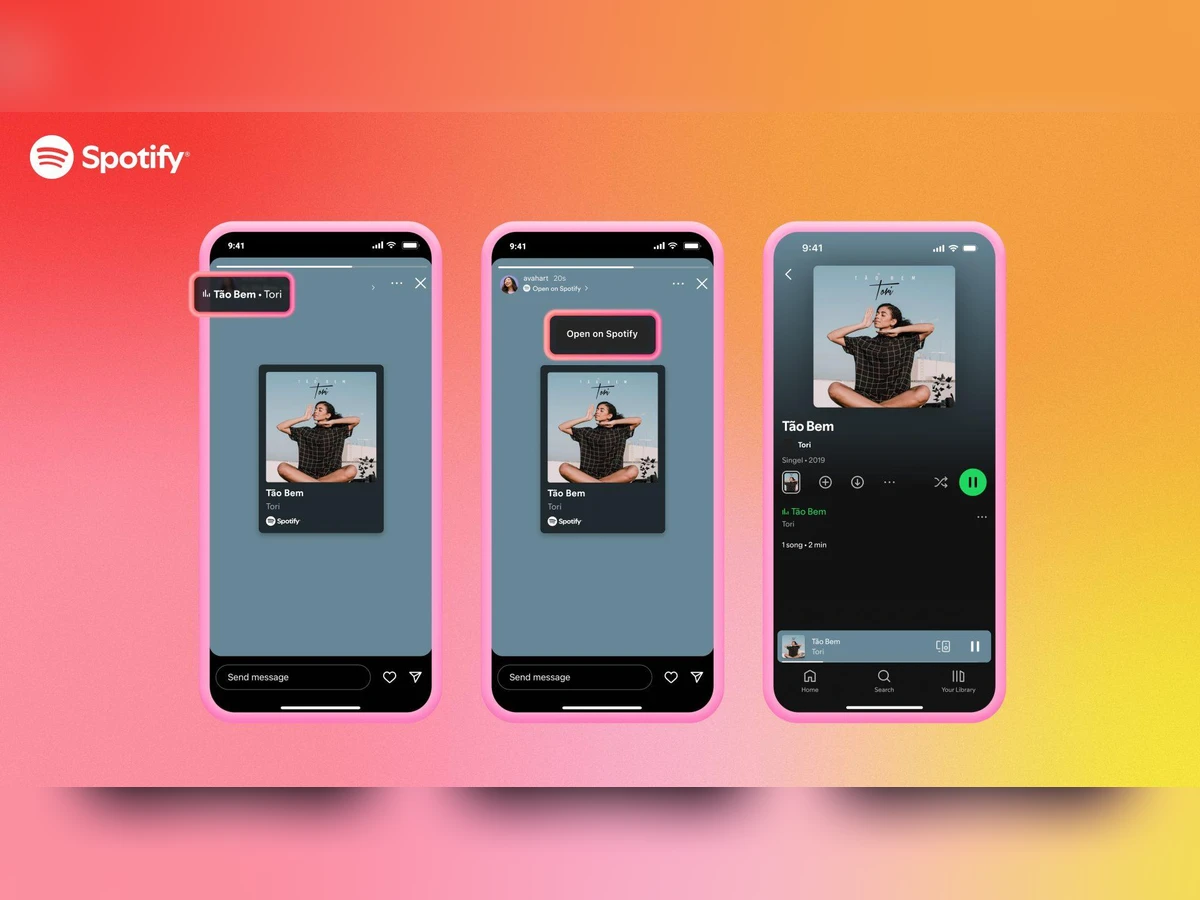
Spotify has introduced a feature that lets listeners explore background information, credits, and narrative context for the songs they are playing. The move reflects a broader push by streaming platforms to increase engagement beyond passive listening.
Music streaming is no longer just about access to vast catalogs. As growth in subscriptions slows across mature markets, platforms are increasingly competing on how deeply users connect with what they hear.
This week, Spotify began rolling out a feature designed to surface the story behind individual tracks while users are listening. The tool brings together artist commentary, songwriting credits, production notes, and cultural context in a single in-app experience, turning songs into entry points for exploration rather than standalone plays.
The update signals how streaming services are reframing discovery—not just as finding new music, but as understanding it.
Moving beyond the play button
For years, Spotify’s product strategy has centered on playlists, recommendations, and algorithmic discovery. While effective at driving listening hours, those tools largely treat songs as interchangeable units optimized for engagement metrics.
The new context feature takes a different approach. Instead of pushing users to the next track, it invites them to linger—learning why a song was written, who contributed to it, and how it fits into an artist’s broader body of work.
That shift aligns with changing listener behavior. As short-form video platforms and social media increasingly shape music discovery, audiences often encounter songs alongside narratives: behind-the-scenes clips, songwriting explanations, or viral moments that add meaning beyond the audio itself.
Spotify appears to be folding some of that dynamic directly into its own platform.
Why context matters for artists and labels
For artists, especially emerging ones, context can be a differentiator. Songs released into a saturated streaming environment often struggle to stand out, even when they perform well algorithmically.
Providing listeners with insight into lyrics, collaborators, or inspiration gives artists another way to build identity and loyalty without relying solely on external platforms like TikTok or Instagram. Labels, meanwhile, gain a controlled environment to highlight credits and contributors who are often invisible in standard streaming interfaces.
The feature also reinforces Spotify’s longer-term positioning as more than a distribution channel. By hosting editorial and artist-supplied context, the platform strengthens its role as an intermediary between creators and fans—an area where competition with rivals is intensifying.
Part of a broader engagement strategy
The update fits into a wider pattern across consumer tech. As user growth plateaus, platforms are looking to increase time spent per session and deepen emotional attachment.

Spotify has already experimented with podcasts, audiobooks, live audio, and creator tools. Adding richer song context complements those efforts by turning listening into a more active experience, even within its core music product.
Importantly, the feature does not fundamentally alter how music is streamed. Instead, it layers additional value on top of existing behavior—a lower-risk way to test whether narrative engagement translates into retention.
What it signals for streaming’s next phase
The rollout underscores how competition in music streaming is shifting from scale to differentiation. Catalog size and pricing have largely converged across major services, leaving product experience as one of the few remaining levers.
For listeners, the change may feel subtle. For the industry, it reflects a recognition that music consumption is increasingly intertwined with storytelling, identity, and context.
As streaming platforms search for growth beyond raw play counts, the story behind the song is becoming part of the product itself.