
Roblox uses a combination of document verification, facial analysis, and account signals to confirm user age for certain features. The system reflects growing pressure on platforms to prove—not assume—who their users are.
For years, platforms aimed at young users relied on trust-based age declarations. That model is breaking down.
Roblox, which hosts millions of daily users—many of them children and teenagers—is increasingly relying on age verification systems to control access to features like voice chat, social interactions, and age-restricted content. The changes come as regulators, parents, and child safety advocates demand stronger safeguards across digital platforms.
Rather than a single check at signup, Roblox’s approach layers multiple signals to determine whether a user meets age thresholds.
Inside the verification process
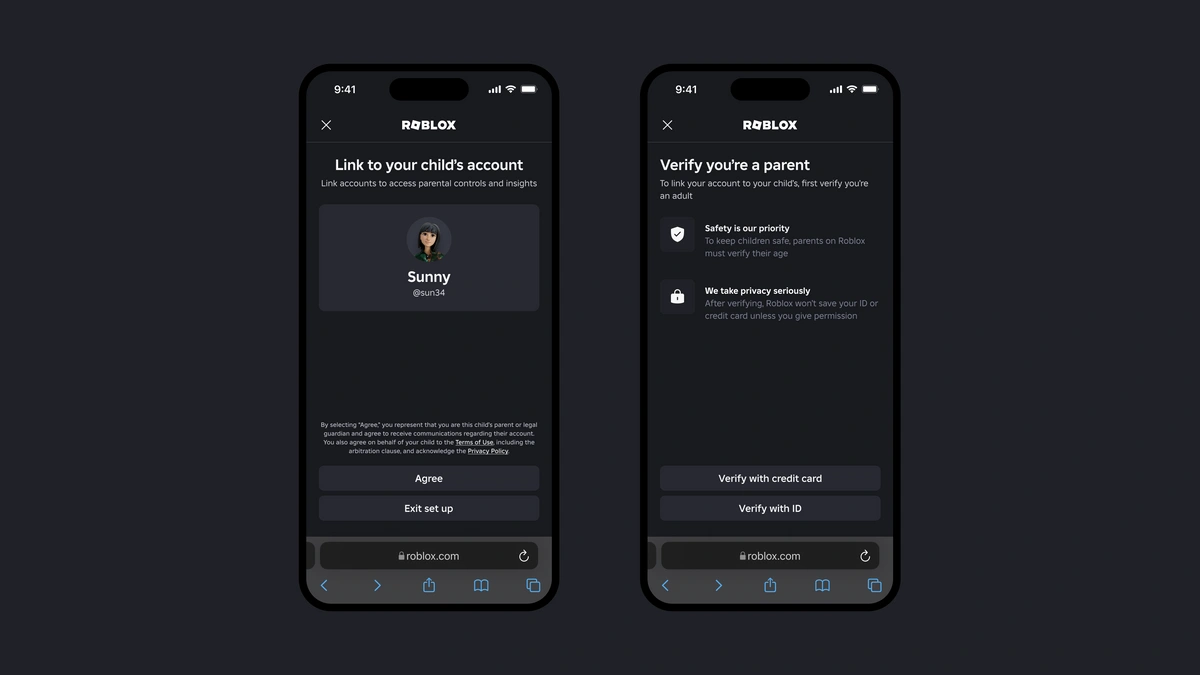
At the center of Roblox’s system is identity-based age confirmation. Users seeking access to certain features may be prompted to upload a government-issued ID, such as a passport or driver’s license. The platform then uses third-party verification tools to confirm authenticity and extract age data.
In some regions, Roblox supplements document checks with facial analysis, comparing a selfie video to the uploaded ID to confirm the user is a real person and roughly matches the age claimed. According to the company, biometric data is processed for verification purposes and not stored long-term.
For younger users who cannot provide formal ID, Roblox continues to rely on parental controls and account-level restrictions, placing responsibility on guardians to manage access.
Why Roblox is tightening controls
The shift is driven by more than internal policy.
Governments in the U.S., Europe, and elsewhere are increasingly scrutinizing platforms that host minors, particularly those with social features that can expose children to inappropriate content or contact. Proposed and enacted laws are moving away from voluntary safeguards toward demonstrable compliance.
For Roblox, whose business depends on a broad age range interacting in shared virtual spaces, the stakes are high. Overly strict checks risk excluding users; weak enforcement risks regulatory penalties and reputational damage.
The age verification system is an attempt to thread that needle—restricting access where required while keeping the platform broadly open.
Limits and trade-offs
Age checks are not foolproof. Critics note that document-based systems can disadvantage users without access to formal identification, while facial analysis raises ongoing privacy and bias concerns.
Roblox has acknowledged these tensions, framing its system as evolving rather than final. The company says it adjusts thresholds and methods based on regional regulations and user feedback.
What is clear is that the era of self-declared age is ending. Platforms built for young audiences are being asked to prove they know who is on the other side of the screen.
For Roblox, age verification is no longer a niche safety feature—it is becoming core infrastructure.



