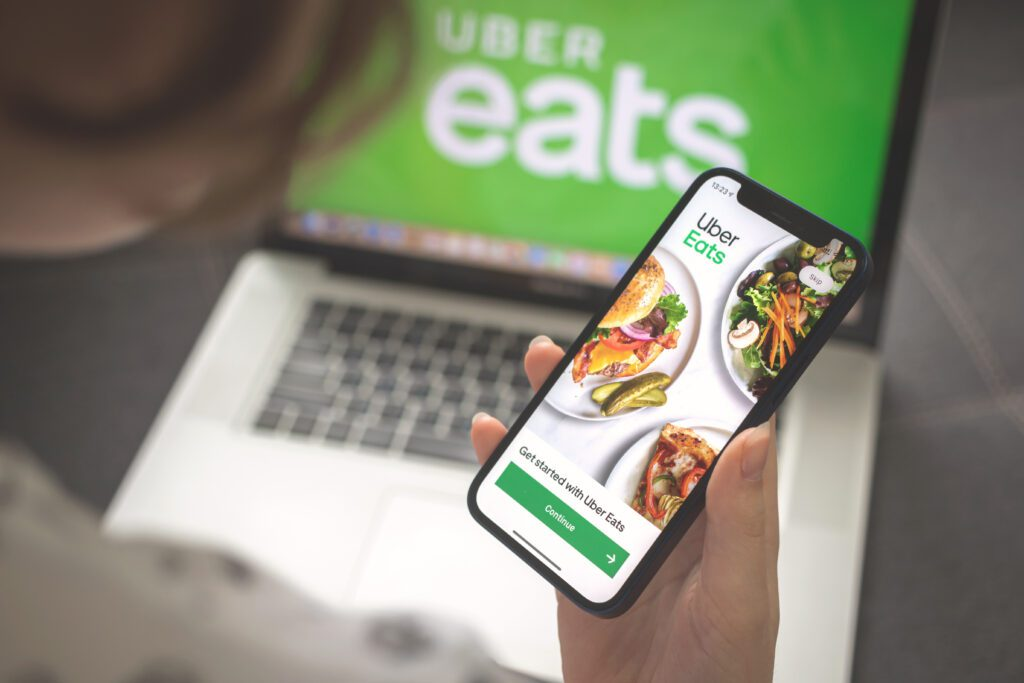
Uber Eats has launched an AI-powered assistant that helps users build grocery carts by suggesting items, substitutions, and quantities.
Artificial intelligence is steadily moving from novelty feature to core shopping infrastructure.
Uber Eats has introduced a new AI assistant designed to help users build grocery carts more efficiently within its app, according to TechCrunch.
The feature reflects growing competition among delivery platforms to reduce friction in online grocery shopping — a category where cart size and repeat usage drive profitability.
From search to suggestion
Traditional grocery ordering requires users to manually search for items and assemble carts product by product.
An AI assistant can generate shopping lists based on prompts, dietary preferences, or past orders.
This reduces time-to-checkout and may increase average order value through intelligent suggestions.
Grocery as strategic growth vertical
For Uber Eats, grocery has become an increasingly important revenue stream beyond restaurant delivery.
Unlike prepared meals, grocery orders tend to include higher item counts and more repeat purchasing behavior.
Improving cart-building efficiency could strengthen retention and encourage weekly usage patterns.
Competitive AI layering in commerce
Ecommerce platforms are embedding generative AI into search, discovery, and checkout workflows.
Retailers view AI assistants as tools to personalize recommendations and optimize basket composition.
However, accuracy and relevance are critical; poorly targeted suggestions can undermine trust.
Operational implications
Grocery logistics are more complex than restaurant delivery, involving inventory management and substitution handling.
AI-driven cart creation may help reduce substitution rates by anticipating availability and suggesting alternatives upfront.
Improved prediction models can align digital suggestions with real-time store inventory.
Monetization and ecosystem effects
As AI assistants guide purchasing decisions, platforms gain deeper visibility into consumer preferences.
This data can inform advertising, promotions, and supplier partnerships.
Retail brands may compete for algorithmic visibility within AI-generated lists.
A gradual behavioral shift
Consumers increasingly expect apps to anticipate needs rather than respond to manual inputs.
AI-assisted grocery building reflects a broader transition toward proactive digital commerce.
If effective, the assistant could reduce friction in one of the most operationally challenging segments of delivery.
For Uber Eats, the move signals that AI integration is no longer peripheral — it is becoming embedded into core transaction flows.