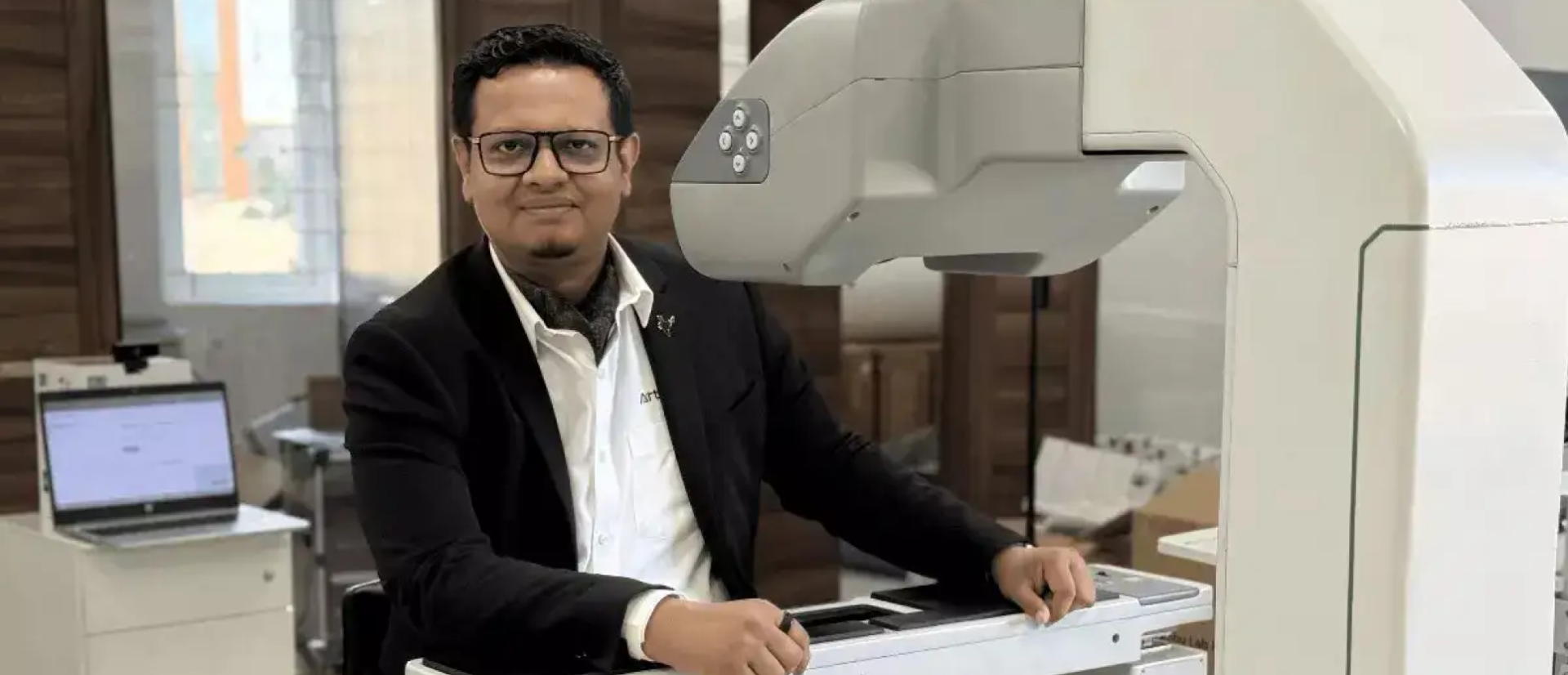
Articulus Surgical has raised a seed funding round led by Kalaari Capital to scale deployment of its India-built surgical robotics systems for minimally invasive procedures
Robotic surgery remains a small fraction of global procedures despite its clinical advantages.
India-based Articulus Surgical has raised a seed round led by Kalaari Capital, marking its transition from product development to commercial rollout.
The company is building an indigenous, interoperable surgical robotics ecosystem aimed at expanding access to minimally invasive soft-tissue surgery.
A large gap in surgical robotics penetration
More than 200 million abdominal surgeries are performed globally each year, yet robotic surgery penetration stands at roughly 5% worldwide and below 1% in India.
That gap reflects high system costs, limited infrastructure, and dependence on imported platforms.
Articulus aims to address this structural imbalance with an India-built platform designed for high-volume procedures across varied healthcare settings.
The company says its systems have undergone years of engineering and clinical validation and are now market-ready.
Building a modular robotics ecosystem
Articulus’ flagship system, Pulsar, is described as a modular surgical robotics platform tailored for minimally invasive procedures.
Alongside Pulsar, the company has developed:
- Galaxi, an intelligent surgical optics robot
- Nebula, a surgical robotics simulation and training system already in production and commercial deployment
By combining surgical hardware with training and simulation infrastructure, Articulus is positioning itself as a vertically integrated robotics platform rather than a single-device manufacturer.
Founder and CEO Saurya Mishra said the funding enables the company to accelerate hospital adoption while maintaining a Make-in-India focus.
Capital deployment and rollout strategy
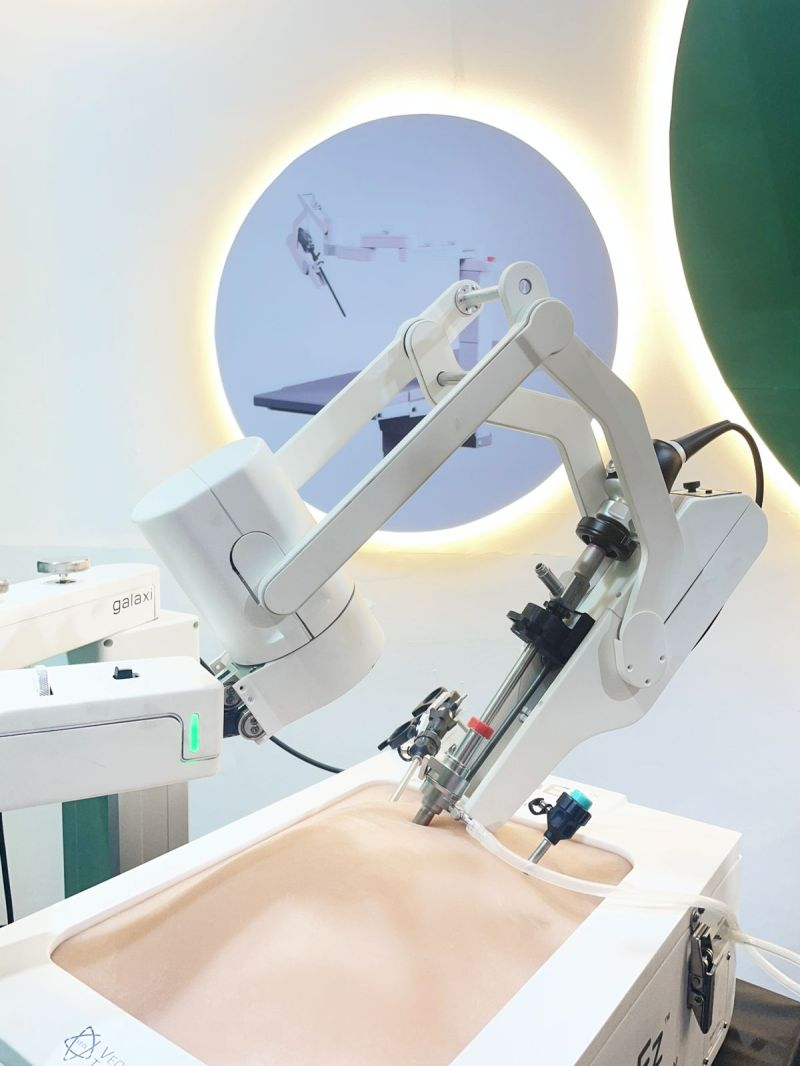
The newly raised capital will be directed toward:
- Expanding hospital deployments across India
- Establishing surgeon training centers
- Deepening partnerships with healthcare institutions
- Scaling production and field support capabilities
Over the next 12 to 18 months, the company plans to focus on high-volume specialties including general surgery, gynecology, urology, gastrointestinal surgery, and surgical oncology.
Training remains central to adoption, as robotic platforms require surgeons to adapt to new workflows and instrumentation.
The India medtech opportunity
India has historically relied on imported medical technology, particularly in high-end surgical equipment.
Policy efforts promoting domestic manufacturing have sought to reduce import dependence and lower system costs.
If locally built robotics systems can achieve price efficiency without compromising performance, they could expand access beyond tertiary urban hospitals.
Kalaari Capital’s Pranav Koshal described surgical access as a significant whitespace opportunity in India, emphasizing affordability and precision as key differentiators.
Competitive and operational challenges
The global surgical robotics market is dominated by established multinational players with extensive patent portfolios and clinical track records.
New entrants must demonstrate reliability, clinical outcomes, and long-term service support.
Hospital procurement decisions in high-risk surgical environments are typically conservative and data-driven.
For Articulus, scaling from pilot installations to broad institutional adoption will require consistent performance, surgeon buy-in, and regulatory compliance.
A structural shift toward domestic capability
India’s surgical robotics penetration remains low compared to developed markets, reflecting both cost barriers and ecosystem limitations.
An indigenous platform with modular architecture and localized manufacturing could lower entry costs for hospitals.
At the same time, success will depend on proving durability in operating rooms, not just engineering labs.
Articulus’ seed round marks an early commercial milestone, but the larger test lies ahead: translating technological capability into sustained clinical adoption.
If domestic robotics platforms gain traction, they could reshape how advanced surgical technologies are distributed across India’s healthcare system.
The opportunity extends beyond market share — it touches access, affordability, and long-term self-reliance in critical medical infrastructure.