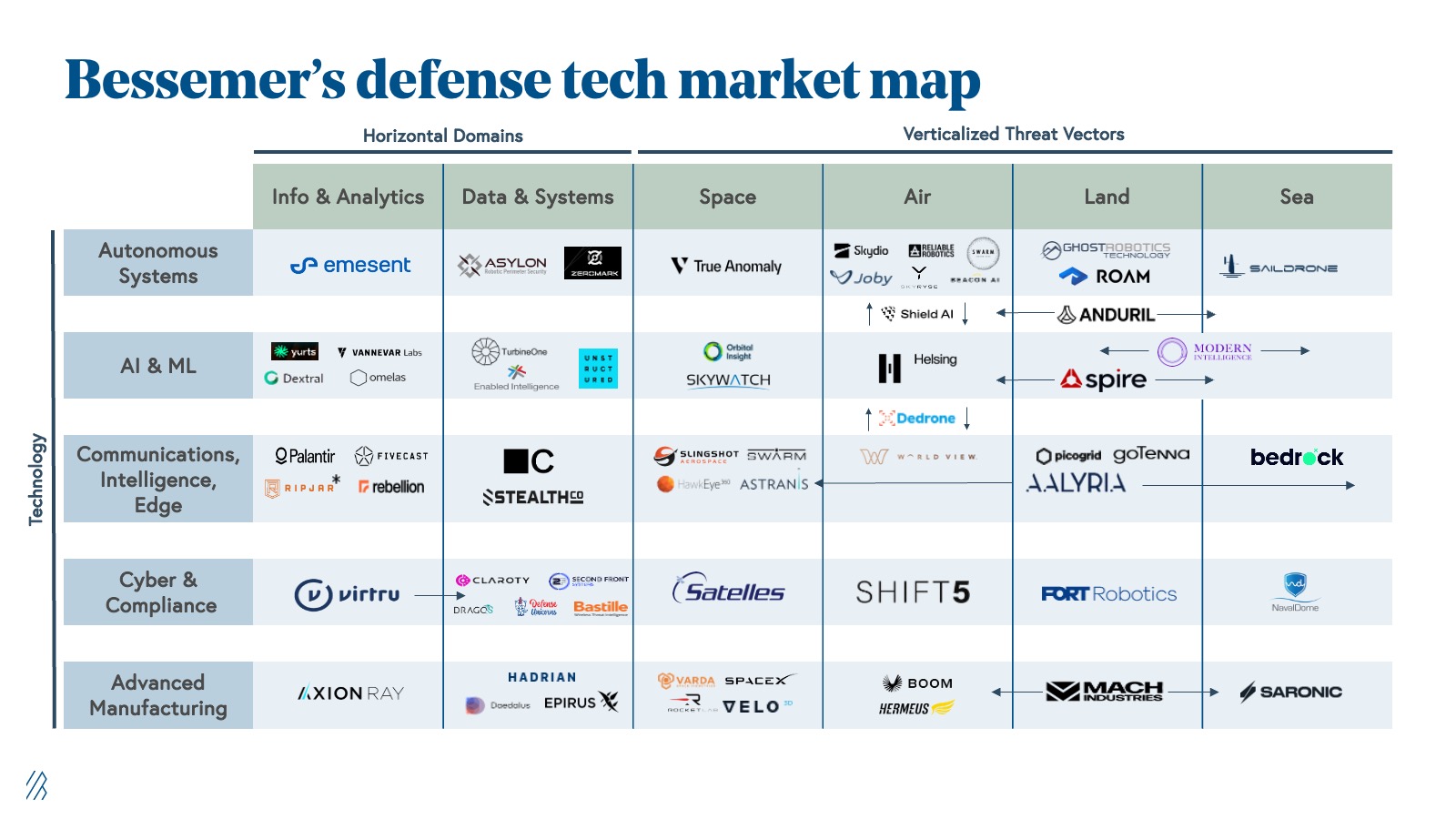
Bessemer Venture Partners has led a $6 million seed round in a US defense technology startup, underscoring sustained investor appetite for dual-use innovation amid rising geopolitical tensions.
Venture capital continues to flow into defense technology as geopolitical uncertainty reshapes investment priorities.
Bessemer Venture Partners has led a $6 million seed round in a US-based defense tech startup, reflecting the growing normalization of private capital in national security innovation. Early-stage defense startups are increasingly attracting mainstream investors, a shift from earlier periods when defense-focused funding was more specialized.
The seed round underscores a structural shift in how advanced technologies reach military and government applications.
Dual-use momentum
Modern defense startups often build technologies with both civilian and military applications.
These may include:
- AI-driven analytics platforms
- Autonomous systems
- Secure communications infrastructure
- Advanced sensing technologies
Dual-use positioning allows companies to tap commercial markets while serving government clients.
For investors, this diversifies revenue potential and mitigates procurement cycle risks.
National security meets venture capital
Historically, defense procurement relied heavily on large contractors.
However, rapid advances in AI, robotics, and cybersecurity have opened space for agile startups.
Venture firms like Bessemer are increasingly comfortable investing in companies navigating government contracts, especially as defense agencies seek faster innovation cycles.
The Pentagon and allied institutions have signaled openness to private-sector partnerships.
Early-stage risk calculus

A $6 million seed round indicates early-stage validation rather than full-scale deployment.
Defense tech startups face unique challenges:
- Lengthy procurement timelines
- Security clearance requirements
- Compliance complexities
- Revenue concentration risk
Investors entering at seed stage are effectively betting on long-term government adoption curves.
Competitive funding landscape
US defense tech has seen renewed funding momentum in recent years, particularly in AI-enabled systems.
Firms specializing in autonomy, cybersecurity, and space technology have attracted significant capital.
Bessemer’s participation signals that defense is no longer a niche vertical in venture portfolios.
Strategic timing
Heightened geopolitical tensions and modernization initiatives across NATO and allied countries have expanded defense technology budgets.
Startups positioned around software-defined capabilities and AI integration may benefit from policy alignment.
Venture normalization of defense
The involvement of mainstream venture capital firms suggests defense technology is entering a new era of funding normalization.
Innovation cycles in national security increasingly resemble those in enterprise SaaS — iterative, software-led, and capital-efficient.
The $6 million seed round may be modest by AI infrastructure standards.
But it represents continued structural integration of venture capital into defense modernization.