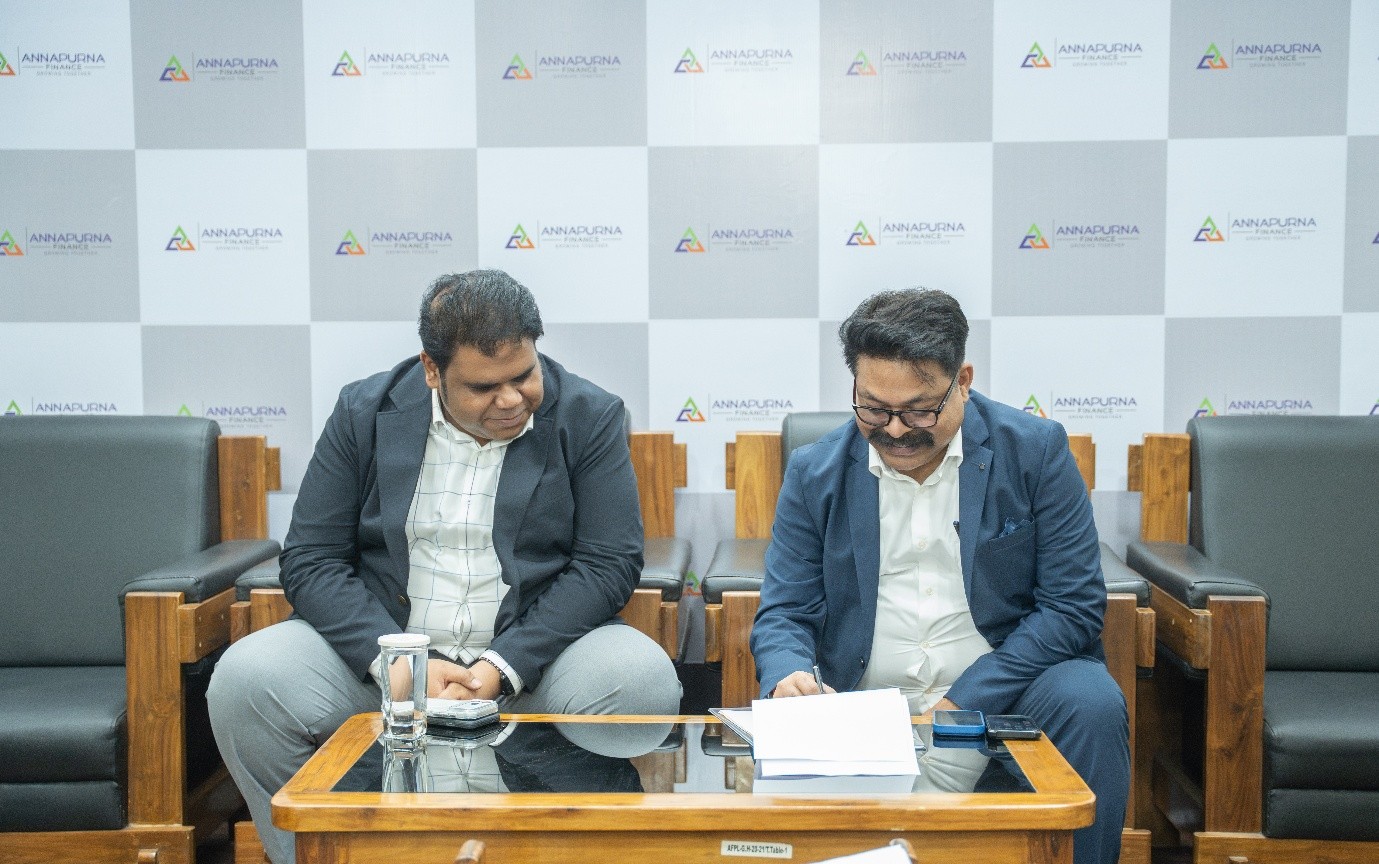
Annapurna Finance Private Limited has raised $100 million through a syndicated multi-currency term loan facility denominated in USD and JPY, alongside a $50 million greenshoe option. Structured as a social loan, the transaction is designed to support inclusive lending initiatives and expand access to international capital markets.
The deal was arranged and underwritten by Standard Chartered Bank, which acted as Sole Mandated Lead Arranger, Underwriter, and Bookrunner.
Multi-currency structure signals diversification
The facility’s USD and JPY denominations mark a strategic expansion of Annapurna’s funding base.
Multi-currency loans allow non-banking financial companies (NBFCs) to:
- Diversify funding sources
- Access global liquidity pools
- Optimize cost of capital
- Strengthen balance sheet resilience
In volatile global liquidity conditions, diversified capital access is particularly valuable.
The $50 million greenshoe option provides additional flexibility if lender demand exceeds the initial tranche.
Social loan positioning
The facility is structured as a social loan, aligning capital deployment with measurable social objectives.
Such loans typically support:
- Financial inclusion
- Women entrepreneurship
- Livelihood generation
- Climate resilience initiatives
Social finance instruments have gained traction as global investors increasingly incorporate environmental, social, and governance (ESG) considerations.
For microfinance institutions, social labeling reinforces alignment between funding sources and end-use objectives.
Building on prior syndicated funding
The transaction follows a $109.5 million syndicated loan facility concluded last year, also led by Standard Chartered.
Back-to-back large syndicated raises suggest sustained lender confidence in Annapurna’s:
- Governance framework
- Portfolio quality
- Risk management systems
- Operational scale
In a challenging funding environment for non-bank lenders, repeat syndications signal credit credibility.
Market context for NBFC-MFIs
India’s microfinance sector has experienced regulatory tightening and portfolio stress in recent years.
However, demand for small-ticket credit remains robust, particularly in underserved regions.
NBFC-MFIs play a critical role in:
- Extending formal credit access
- Supporting micro-entrepreneurs
- Promoting women-led enterprises
Annapurna ranks as the fourth-largest NBFC–MFI in India, positioning it among sector leaders.
Technology and distribution footprint
The company combines a broad physical distribution network with technology-enabled processes aimed at:
- Improving underwriting efficiency
- Enhancing transparency
- Managing repayment tracking
- Strengthening compliance
Digital integration has become increasingly central to microfinance risk control.
Access to long-term international capital can support continued investment in operational infrastructure.
Balance sheet implications

Long-tenor syndicated loans strengthen asset-liability matching, an important consideration for lending institutions.
Global currency borrowing introduces foreign exchange considerations, typically managed through hedging strategies.
Diversified capital access can also reduce dependency on domestic bank funding lines.
Broader impact finance trend
International lenders have continued to back Indian financial inclusion players, particularly those with strong governance records.
Social loan structures help align global capital with local development goals.
For Annapurna, the $100 million raise represents both liquidity expansion and strategic signaling.
As microfinance evolves within a regulated framework, capital discipline remains central.
In an environment marked by tightening liquidity, successful syndications reflect trust.
And for institutions focused on inclusive finance, trust underpins scale.