
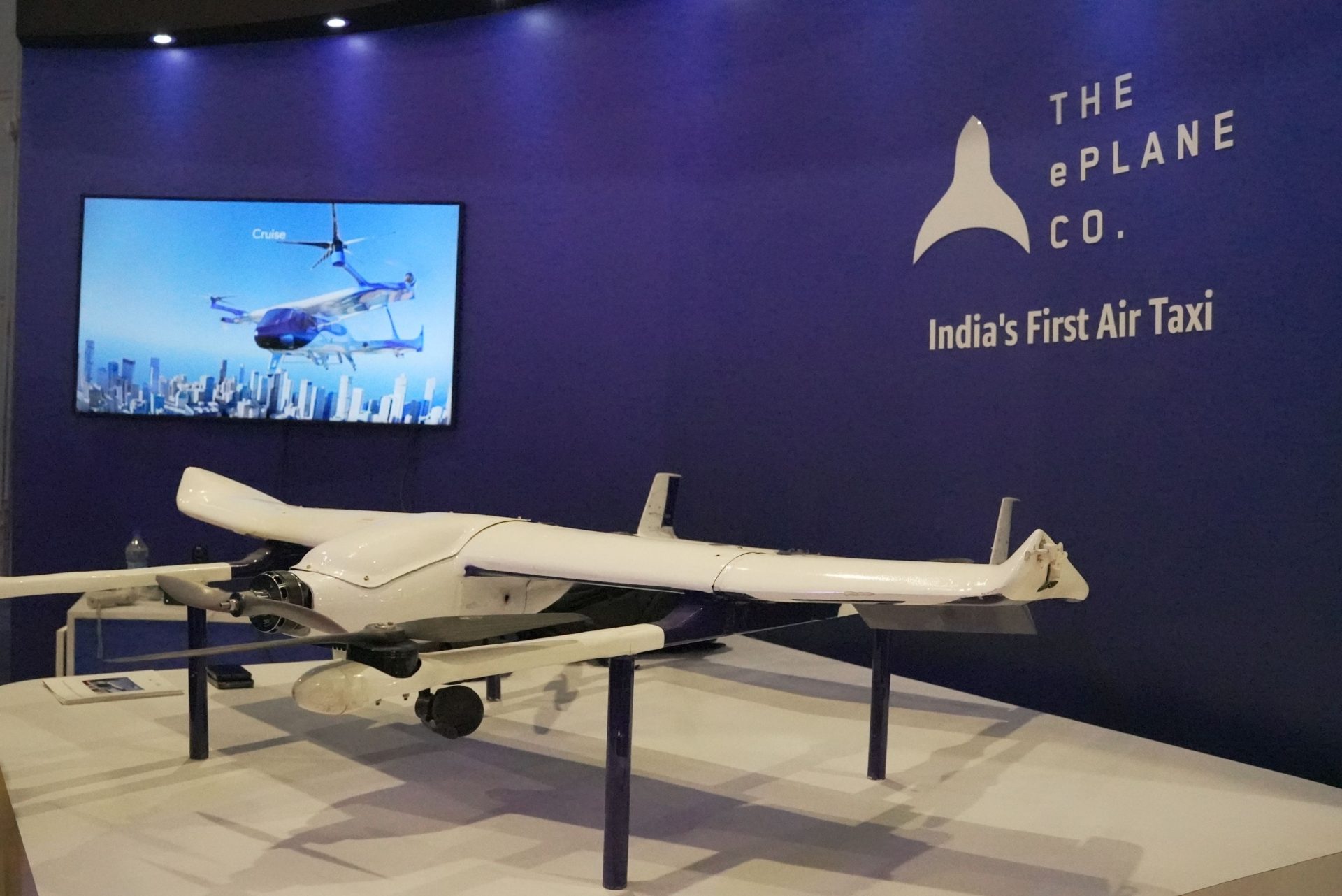
Chennai-based The ePlane Company announced it is building a physics-accurate digital twin of its e200x electric vertical takeoff and landing (eVTOL) aircraft using NVIDIA Omniverse libraries. The company also plans to integrate NVIDIA’s IGX platform as the onboard edge computing system for mission-critical applications.
The move positions ePlane as the first electric aviation original equipment manufacturer (OEM) in the Indian subcontinent to leverage Omniverse for multi-physics digital twin modeling.
Simulation before certification
Urban Air Mobility introduces layers of operational complexity not typically encountered in conventional aviation.
The e200x digital twin is designed to simulate:
- Complex aerodynamic interactions
- Sensor fusion responses
- Autonomy algorithms
- Extreme weather and edge-case scenarios
Physical testing of such scenarios can be costly and risky. By virtually flying millions of kilometers, the company aims to train and validate its flight operations suite before full-scale real-world testing.
Digital twins are increasingly central to aerospace validation, particularly for emerging aircraft architectures.
NVIDIA Omniverse as simulation backbone
NVIDIA’s Omniverse platform provides real-time, physics-accurate simulation environments capable of modeling multi-system interactions.
For ePlane, this enables:
- Realistic flight physics rendering
- Integrated avionics modeling
- Real-time sensor feedback simulation
The company also plans to explore NVIDIA Cosmos world foundation models and the Nemotron family of open models for future development phases.
The computational intensity of these simulations requires high-performance GPU infrastructure, signaling the convergence of aerospace engineering and AI compute.
Safety-critical edge computing
Beyond simulation, the aircraft itself will incorporate the NVIDIA IGX platform for onboard processing.
Edge computing in aviation must handle:
- Sensor data from cameras and radar
- Autonomous decision-making
- Visualization and situational awareness
- Fault detection and redundancy systems
Treating the aircraft, its sensors, and onboard compute as an integrated certifiable system may streamline regulatory pathways, according to company executives.
Urban air mobility aircraft operate in dense environments where real-time data fusion is critical.
ePlane Certification and sovereign capability
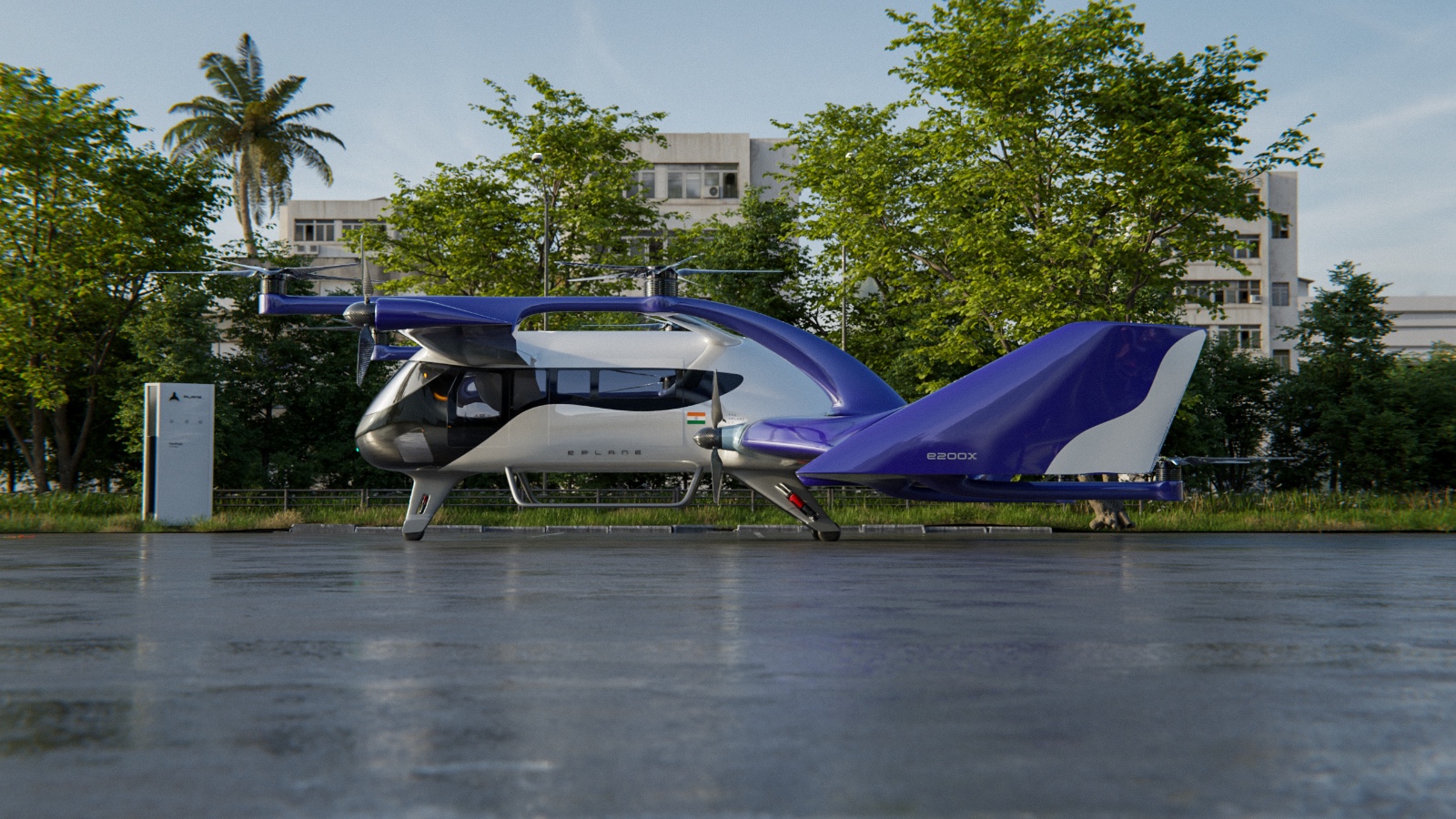
The ePlane Company holds India’s first Design Organisation Approval (DOA) for a private electric aircraft and operates a 60,000 sq. ft. manufacturing facility in Chennai.
Digital twin validation could support:
- Certification documentation
- Predictive maintenance modeling
- Lifecycle performance optimization
High-fidelity simulation can also act as a predictive analytics engine, mirroring real aircraft configurations to anticipate maintenance requirements before component failure.
The company framed the collaboration as part of building “sovereign aerospace capability,” emphasizing domestic engineering augmented by global technology partnerships.
Urban air mobility context
Electric vertical takeoff and landing aircraft are being developed globally as potential solutions to urban congestion.
Key industry challenges include:
- Battery density limitations
- Regulatory approval frameworks
- Noise management
- Airspace integration
Simulation-led development may shorten iteration cycles and reduce certification risks.
India’s deep-tech positioning
The collaboration also reflects broader momentum in India’s AI and deep-tech sectors.
By combining indigenous aircraft development with advanced compute infrastructure, the project highlights how aerospace is becoming computationally intensive.
Urban air mobility is still pre-commercial in India.
However, digital twin technology suggests a shift from hardware-first prototyping toward software-defined aviation engineering.
Long-term outlook
Electric aviation remains capital- and certification-intensive.
Digital simulation cannot replace flight testing, but it can significantly reduce uncertainty.
For ePlane, integrating NVIDIA Omniverse and IGX represents both a technical milestone and a signaling moment for India’s aerospace ambitions.
As aircraft increasingly become data-driven systems, the boundary between simulation and operation narrows.
In next-generation aviation, digital validation may precede physical flight.
And in India’s case, that future is being rendered in code before it ever leaves the ground.


